Forget zodiac signs, birth order or whatever pop-psychology wisdom people are posting about this week - if you really want to know someone, look at what’s parked in their driveway.
That spotless Range Rover? The battered Subaru with three national park stickers on the back? A Mustang revving its engine at the stoplight? They are all saying something about their drivers.
A person’s car can reveal more than their dating profile, LinkedIn page or carefully curated Instagram ever will, experts say. Vehicles are a status symbol, a coping mechanism and a personality trait all rolled into one.
The stereotypes are dead on, experts tell the Daily Mail. Melanie Musson, an auto industry expert with AutoInsurance.org, says it is almost too easy to read people based on their car.
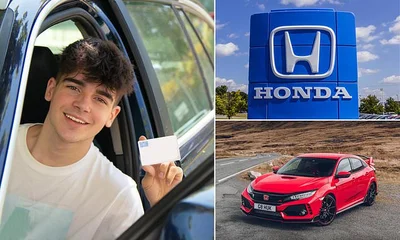
Honda drivers are the financially sensible ones, the spreadsheet people. 'You're money-conscious. You value investments over appearances,' she said of this automotive choice.
If you're behind the wheel of a Subaru, you probably have an outdoorsy streak. 'You're likely to shop at the food co-op,' said Musson. 'You're definitely going to be using your car's all-wheel drive capabilities.'
Drivers of a Ram truck, she adds, fit a slightly different mold. 'You're probably wearing a pair of Wranglers, and you have a cowboy hat somewhere in your closet.'
Whether you’ve ever actually been near a ranch is another question entirely.
Former President Bill Clinton in a 1967 Ford Mustang owned by Bob and Rochelle McNeal
Bella Hadid out for a ride in Los Angeles in a Mustang along with friends
For fans of the Ford Mustang, the stereotype is a little bolder: 'If you're driving a Mustang, you think you're hot stuff. You're definitely proud to be an American. And you don't know a lot about cars.'
But you will absolutely make sure everyone hears you coming.
Toyota drivers are known for their long-term commitment, Musson said. Low drama, low risk and deeply satisfied by reliability.
'If you're driving a Toyota, you like to keep your car for 20 years, and you're excited when you finally qualify for a permanent vehicle registration.'
Unlike standard registrations that must be renewed every year or two, a permanent registration means the vehicle has reached an age and eligibility point where the owner can pay a one-time fee and keep it legally registered for as long as they own it.
For Toyota loyalists, it is seen as a badge of honor - proof that their dependable car has survived the test of time and earned its place on the road for years to come.
At the opposite end of the spectrum sit Range Rover owners. They think it says I have arrived, I look expensive, and I will absolutely double-park outside Pilates.
'If you're driving a Range Rover, you're young, you have a lot of money, and you don't really care how much your vehicle costs you because it looks so good.'
And it's good that they are laissez-faire about costs - since Range Rovers have some of the highest breakdown rates and repair costs.
Range Rover owners, according to car experts, are typically young and have 'a lot of money'
And finally, there's the classic family hauler: the Chevrolet Suburban, or the rolling command center of suburban America.
'If you're driving a Suburban, you have kids, and they're in sports,' she says. 'You're almost certainly on the parent-teacher association, and you're probably bringing snacks to your child's soccer game on Sunday.'
Your trunk contains half a sporting goods store and you carpool a lot.
Karah Epel, general manager at Scottsdale Collision Center, says you can often tell exactly what kind of driver you’re dealing with the moment they pull into the shop.
Some drivers, she says, treat cars the way other people treat refrigerators: necessary, functional and not remotely interesting.
Prius owners fall neatly into this category. Owners of the Toyota Prius tend to be 'practical, low-maintenance, and genuinely just want to get from A to B.' Their cars are tools, not trophies.
At the other end of the spectrum are drivers of the Dodge Challenger. For them, Epel says, the car is personal. They 'treat their car like a member of the family.'
Then there are the meticulous planners - often behind the wheel of a BMW. According to Epel, those customers typically arrive already knowing every detail. They 'walk in already knowing the exact trim level, color code, and service history by heart.'
BMW owners typically arrive at the dealership 'already knowing' what kind of details they want
These are the people who have done the research, read the forums, compared the options, and reached a conclusion - and who would quite like you to know that they have done all of that.
Age also shapes what people want from their vehicles. 'Under 30 wants something practical with great tech,' she explained.
'Over 50 wants something that makes them feel young again,' which is how you end up with sports cars driven very cautiously through residential neighborhoods, as if youth might be recaptured so long as nothing too sudden happens.
'And everyone in the middle is just trying to afford whatever they can.'
Epel also says she's noticed a shift in who is buying high-end performance cars. Women, Epel says, are increasingly behind the wheel.
Customers bringing in a Porsche today 'look very different from who they were ten years ago.'
Where you live tells its own story, too. In wealthy Scottsdale, Epel says exotic cars frequently roll through the doors of the shop.
'We get McLarens in for scratches so small you need good lighting to find them.'
Car experts reveal car culture depends on where someone lives - and those preferences show up on a company's sales data
But drive a couple of hours north, and the cars are older - and louder in a different way. Someone might arrive in a battered Honda Civic that has clearly seen better days - just hoping to keep it running a little longer.
Ryan Salata, marketing director at Specialty Auto Parts USA, says car culture in America often comes down to one simple factor: geography.
Different regions, he explained, have completely different priorities when it comes to what they want from their vehicles - and the parts they buy reflect that.
He said, 'the South of California concerns itself with aesthetics, Texas with horsepower for drag racing, and the Midwest durability when it comes to winter.'
Those preferences show up clearly in the company's sales data. 'Parts sales show those regional differences, with California ordering more polished parts while Texas orders high-output ignition systems.'
In other words, while some drivers want their cars to shine under the sun, others are focused on squeezing every ounce of power out of the engine - or simply making sure their vehicle can survive months of snow and ice.