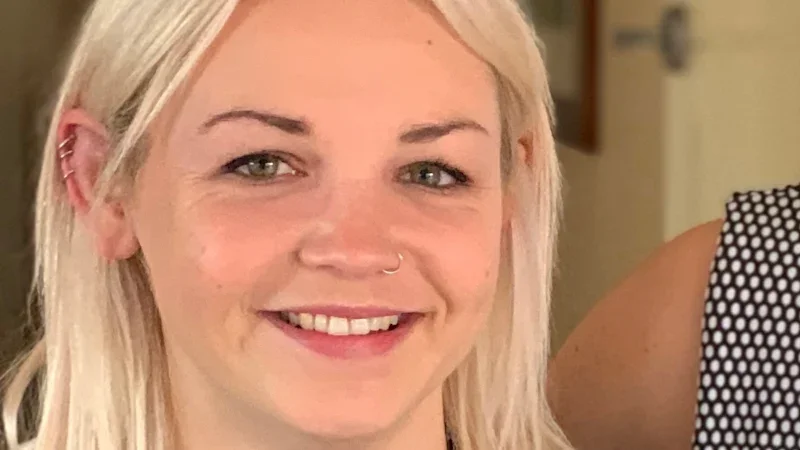
On a sunny summer morning in February 2024, Michelle Sposito was jolted awake by a series of texts from her eldest daughter’s partner.
“Amy relapsed. Ambulance are here. I woke up to her barely breathing,” one of the texts read.
Sposito called him immediately and was handed to a paramedic. She would soon learn that her daughter, Amy Bowden, had been unconscious for nearly a day without any help.
The paramedic told Sposito they’d gone to extreme measures to try to keep the 26-year-old alive, but she was already gone.
From her Newport home, it would take Sposito weeks to piece together how Bowden died. On the hard wooden floor of a bedroom hundreds of kilometres from where she grew up, Bowden had overdosed on heroin.
Her partner, South Australian man Ethan Ross, had found her unresponsive but did not call Triple Zero. Instead, he called a drug dealer and injected her with methamphetamine to try to reverse the effects of the “downer” with an “upper”.
A couple of years earlier, in the midst of the COVID-19 pandemic, Bowden – pursuing her dreams of studying pharmaceutical science at RMIT University – fell into depression, leading her to seek out company through online gaming platforms.
She sought help from a psychiatrist, but influenced by people she’d met online, she tried Xanax and eventually began experimenting with other drugs.
She entered rehab for six weeks and was coming out the other side when she met Ross.
Within a matter of months, Ross was regularly at Amy’s family home with an array of dodgy characters in tow.
Fearing for the safety of her family with a revolving door of strangers and drug dealers coming through the house, Sposito reached her limit. In October 2023, she told Bowden and Ross they needed to leave.
“That next day I spoke to Amy, saying you can come back any time,” she says. “Just not with him.”
Bowden instead decided to relocate to Redwood Park, a suburb about 30 minutes north-east of Adelaide’s CBD, with her partner. For him, it was home; his family and friends were all in South Australia. But Bowden didn’t know anyone.
“It terrified me knowing that she was going to South Australia, because she had no one there,” Sposito says. “She had no friends. It was only people that he knew, and I didn’t know where they would go or what support she would have.”
As responses from Bowden dwindled, Sposito knew she was losing her daughter to a man who, she says, was heavily involved in the drug scene and isolated her within it.
On that morning in February 2024, not knowing if there was any chance to save her daughter, Sposito begged the universe to let her trade places with her.
“I was outside, waiting, calling on the gods to just take me instead. Please, just leave Amy. Just take me. I don’t care. She doesn’t deserve to die,” she says, tears streaming down her face. “It was the worst moment of my life.”
Over the coming months, Sposito learnt that after Bowden overdosed, Ross heard what he thought was snoring and assumed she was fine. But hours later, when he couldn’t rouse her, he didn’t call Triple Zero.
Instead, he called a drug dealer, scored some methamphetamine and took her life into his hands. It was 24 hours between the time she suffered the initial overdose and when he finally called an ambulance.
After Bowden was pronounced dead, Ross was arrested and charged – but not with causing her death. Instead, he was charged with, and later pleaded guilty to, administering a controlled drug to a person. He received a prison sentence of nine months.
“I bear in mind that the neglect on your part, that dangerous decision to administer methylamphetamine rather than to call for emergency medical assistance, does not form part of the charge to which you have pleaded guilty,” the sentencing judge said.
“You are not charged with performing an act that endangered life, or performing an act that contributed to Ms Bowden’s passing. You are not charged with criminal neglect.”
He remained in custody until further charges of supplying drugs to a child were dropped by prosecutors last month, with an impending trial also vacated. He is now a free man.
If Bowden had died in Victoria, her boyfriend could have been charged completely differently. But in South Australia, there is no clear law to criminalise the failure to call for medical assistance when someone is in dire need of help. That is something Bowden’s parents are now fighting to change.
From her family home in Melbourne, Sposito is petitioning for law reform in South Australia to criminalise the failure to call emergency services in situations where a person’s life is at risk.
“Knowing that Amy’s death was needless and a result of neglect brings a trauma that cannot even be fathomed,” she wrote in a letter to South Australian Premier Peter Malinauskas and Attorney-General Kyam Maher begging for change.
“Reform would recognise that in intimate relationships, responsibility does not end when violence or a medical crisis occurs. A clear statutory obligation would reinforce that failing to seek help in a life-threatening emergency is not a neutral act; it is a serious failure of care.”
When asked if the South Australian government would consider legislative change, a spokesperson said it had “already requested legal advice regarding the current status and operation of the relevant legal provisions, including how the laws apply in different jurisdictions” across Australia.
Those words, however, bring little solace to a mother who says she should not have to live without her baby girl, and who will continue fighting to ensure no other victims are treated this way.
Be the first to know when major news happens. Sign up for breaking news alertson email or turn on notifications in the app.