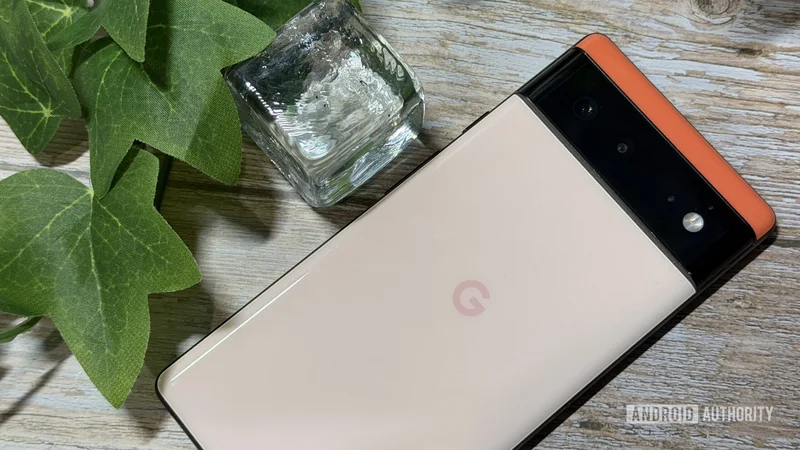
The Pixel 6 was a glorious mess, and Google is better for it
Aug 2, 2026 — 5:30 AM ET
I have a complicated relationship with the Google Pixel 6, but I still find news of its demise to be bittersweet. I appreciate that Google extended support for another couple of years beyond the original expiration and that it has done an excellent job optimizing new software updates for aging hardware.
Beyond the nuts and bolts, the Pixel 6 represents a seismic shift in the history of Google’s smartphones. For better or worse, it ushered in the Tensor era and gave Pixels the identity they still have today. The Pixel 6 was a complicated beast, and it’s the perfect encapsulation of Google’s hardware adventures.
What are your memories of the Google Pixel 6?
The Pixel 6 was supposed to be the future
Prior to the Pixel 6, Google appeared lost in the woods with its devices. It felt like a company closer to the end of its phone journey than the beginning. The Nexus phones were a loose confederation of manufacturers and Google, but they still hold a special place in many hearts and laid the foundation for what Pixel would become.
The original Pixel and Pixel 2 were formative. I remember the first time I saw a portrait image shot on the Pixel 2 XL. It was like seeing a movie in HD for the first time, and it was head and shoulders above what any other company was doing. I power up my panda Pixel 2 XL often, longing for the days when the phones were different and special.
Excellent cameras and a stock Android experience carried early Pixels, but the hardware always felt awkward, a step behind what Samsung and others offered. I loved the Pixel 4 XL, but its small battery and 6GB of RAM were limiting.
The Pixel 5 felt like Google waving the white flag, admitting it couldn’t compete at the flagship level, and hoping the value added by its software would help carry a relatively midrange phone. It didn’t know what it wanted to be when it grew up, and it was clear the company needed a coherent plan.
The Pixel 6 was going to turn all of that around, with an exciting new chipset and quirky design; it felt like Pixels were back and Google finally had a winning direction. The days of switching things up every year seemed behind it, and Google looked poised to charge ahead with an aggressive ad campaign.
Things didn’t go according to plan
I’m being gentle when I say the Pixel 6 launch was rough. Early units suffered from any number of issues, and I experienced quite a few. My fingerprint sensor worked only 50% of the time, which was especially frustrating on a phone without face unlock. Many other buyers reported devastating connectivity issues, with Bluetooth and Wi-Fi problems.
Android 12’s release didn’t help, but it was the first-generation Tensor that caused the most problems. It regularly overheated, limiting its performance and draining the phone’s battery. I was lucky if my Pixel 6 got my three hours of screen time early on.
I'm being gentle when I say the Pixel 6 launch was rough.
Google eventually put out the fires, but the initial impression was already there, and it started two years of pain for Google. Buyers also ran into issues with the Tensor G2 on the Pixel 7.
However, the Pixel 6 had to crash so the current phones could fly. Every company has to start somewhere, and while I didn’t appreciate being an early beta tester for Tensor chips, Google’s more recent efforts have been solid. I still love my Pixel 8 Pro, and I’ve had success using the fourth- and fifth-generation Tensor chipsets.
My Pixel 6 is still going strong
Even though the Pixel 6 won’t receive any more Android upgrades, it is running well on Android 17. I love that my five-year-old device has app bubbles, giving it arguably better multitasking than some of today’s flagship phones. Performance is still snappy for common tasks, and I don’t notice my Pixel 6 overheating like it once did.
It’s a perfectly capable daily driver. If you’re a heavy user, you’ll notice the battery life isn’t up to par with what we’re used to on modern devices, but the software experience makes up for it. Android 17 didn’t come with a full slate of Gemini features, and all of Google’s AI wizardry will not trickle down to your Pixel 6. However, the cameras still produce a decent image, and the phone feels good in the hand.
I wouldn’t recommend anyone run out and buy a Pixel 6 in 2026, but if you’ve held onto one this long or pick one up as a backup phone, it’s comforting to know it has some life left.
I’m glad Google chose this path
Pixels have become divisive phones for enthusiasts, but I’m glad the company stuck it out. It had no shot competing spec-for-spec against Samsung and others, so providing value in other ways was the only hope. It’s also a relic of something we’ve lost. The base Pixel 6 started at $600, a price that would be unheard of for Google (or any other manufacturer) in 2026.
The Pixel 6 may be gone, but its tough start and solid finish mirror the path of Google’s hardware. It hasn’t always been perfect, but Pixels have found a way — even if you don’t value what they offer.