The shape of the deal
It’s a talent buy. None of Hall’s “thousands” of customers come across with the deal, because its product will be rebuilt as part of Tracksuit’s platform, Archbold said.
A new, more marketing-focused version of the artificial intelligence (AI) visibility tool will be offered to Tracksuit customers from later this year, with Hall’s customers invited to try it.
The changing landscape
It reflects the changing landscape for brands. Depending on which survey you believe, somewhere between a quarter to a half of people now ask a question about running shoes – or any other product they’re thinking of buying – on an AI platform like ChatGPT, Claude or Google’s Gemini (which is why Google has recently shoehorned AI on to the top of its search engine).
It’s the biggest shift since social media recommendations undermined Google’s dominance.
You can see the appeal.
AI search results – for now – are free of jump-the-queue search ads and other so-called “ensh*tification” measures of established platforms that prioritise monetisation over user experience.
Tracksuit chief marketing officer Tom Mansfield says people tend to type longer, more revealing questions into AI models than search engines.
Tracksuit chief marketing officer Tom Mansfield says people also behave differently with AI search.
They ask longer, more detailed questions.
Unlike a traditional search engine, answers can vary wildly each time you ask the same question.
An answer is more likely to be longer and self-contained, so far fewer people click through to any links offered by an AI.
There’s also the emerging area of AI agents, which can go shopping on a person’s behalf.
Air New Zealand chief executive Nikhil Ravishankar – during what would be his last few days as chief technology officer – told the Herald that attracting and delivering the right responses to AI agents was now a central consideration for his airline’s app and website upgrades.
Turning five
Tracksuit, which turns five this month, was founded on the notion that its nimble, user-friendly software lets you track perception of your brand far more cheaply and easily than traditional players like Nielsen.
It’s now used by more than 1000 consumer brands worldwide, from Disney to Pic’s Peanut Butter.
Tracksuit's staff has doubled to 190 over the past two years.
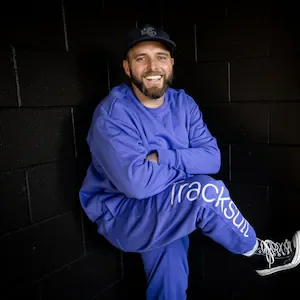
Archbold – who first appeared in the Herald as a 25-year-old lawyer in a 2013 article about a group of flatmates grappling with the cost of living – is now chief executive of 190 staff across Tracksuit’s headquarters in Auckland and offices in Sydney, London and New York.
It’s always kept its financials private, but Icehouse Ventures’ chief executive Robbie Paul earlier told the Herald, “Of the 360 companies we’ve funded, Tracksuit has been fastest to $1m, fastest to $10m, and fastest to $20m revenue”.
Bad vibes?
The 18-month-old Hall brings AI measurement into the fold, but is AI also a threat?
What’s to stop a consumer brand from simply vibe-coding its own tool to post thousands of questions about its products, then posting them to ChatGPT, Claude, Gemini and Google search’s AI option, then summarising the responses, and cataloguing the websites used for citations?
“It’s very similar to [traditional] brand tracking. You can go do your own human surveys as well. But what people like is that there is solid market research and marketing science behind how we do it,” Archbold said.
Results are presented as part of Tracksuit’s dashboards.
“Doing it at scale is really hard to vibe code up,” Archbold added.
“With vibe coding, you tend to go through the APIs of each model [the application programming interface, used by apps to talk to each other].
But if you build it at scale as a service provider [like Tracksuit], you’re doing it more through scraping and querying the models themselves rather than going through an API, which gets you kind of more correct answers.
“That is, answers closer to what you would get from a human.”
Chris Keall is an Auckland-based member of the Herald’s business team. He joined the Herald in 2018 and is the technology editor and a senior business writer.