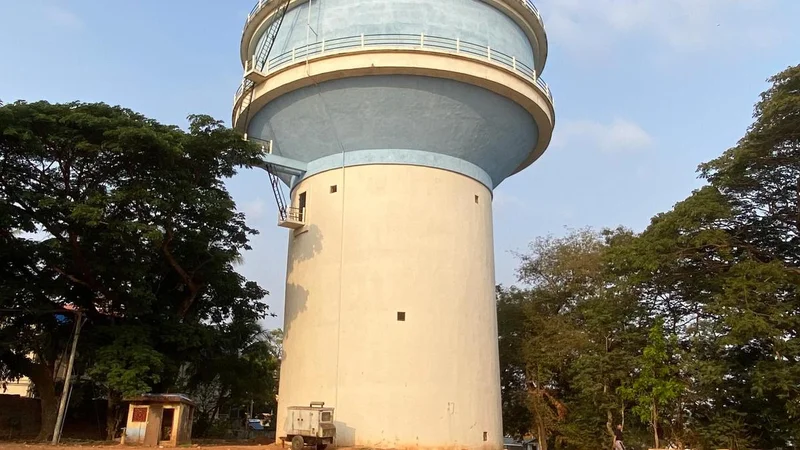
With gram panchayats facing high electricity bills and irregular drinking water supply, the Rural Development and Panchayat Raj (RDPR) Department is currently piloting a new system in Bengaluru Rural district where “solar-powered” devices installed on overhead water tanks will monitor water levels and automatically control the operation of water pumps in villages.
The system has already been installed at 1,818 locations in Bengaluru Rural district. As per the data, electricity consumption has reduced by 42% in Hoskote and 27% in Devanahalli.
Officials said that electricity used to run drinking water schemes is one of the biggest expenses for gram panchayats, with the pilot project – Rural Infrastructure for Drinking Water Supply (RIWAS) – aiming to tackle that.
Instead of relying on manual operation, the system will use Internet of Things (IoT)-based sensors to decide when pumps need to be switched on and off, therefore reducing unnecessary electricity consumption and water wastage.
Pilot project
The department has set a target of reducing electricity consumption by at least 17% across the water supply installations covered under the project. The project will cover 4,150 rural water supply installations across Bengaluru Rural district. Around 660 overhead tanks require sensors, communication devices and solar panels for automatic operation. About 100 tanks have already been fitted with the equipment.
The project will be implemented under a Public-Private Partnership (PPP) model by Nsoft India Services Private Limited. The company will be paid only if its monthly payments over the next five years achieve the promised reduction in electricity use. If the savings fall below 17%, its payments will be reduced through penalties. If the savings exceed the target, the company will receive an incentive linked to the additional savings, the officials said.
How does it work?
Under the project, sensors will be installed inside overhead water tanks to continuously measure the water level. These sensors will be connected to a small communication device fitted with a 4G modem, which will send the information to a central monitoring system. The equipment on the tank will be powered by a 20-watt solar panel, to ensure that the monitoring system can function without drawing power from the electricity grid or requiring a separate power connection.
When the water level in an overhead tank drops, the system can automatically switch on the borewell pump. Once the tank is full, the pump will switch off on its own.
The officials said this would prevent tanks from overflowing, stop pumps from running when there is little or no water in the borewell – a common reason for motor damage and avoid pumps operating longer than necessary.
The officials said the new system would also provide information that gram panchayats currently do not have readily available. It can show how much water is being pumped and supplied, how much electricity is being consumed, whether a borewell has gone dry, whether a pump has developed a fault and which equipment requires repairs or replacement. At present, much of this information is either unavailable or maintained manually.
Published - August 02, 2026 06:02 pm IST