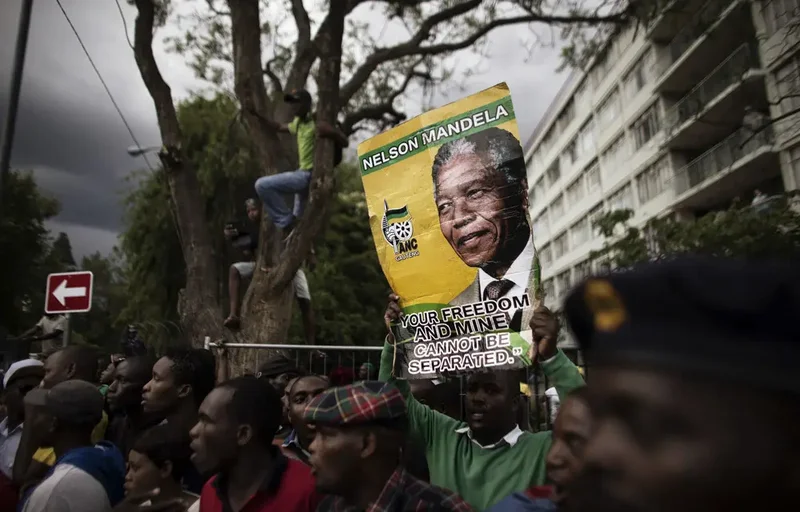
South Africa's freedom was never a purely South African achievement. The country liberated by African solidarity should not allow anger over migration to become an alibi for vigilantism. That is the uncomfortable truth that Nelson Mandela International Day should force the continent to remember.
On 18 July, the world honours Nelson Rolihlahla Mandela. But the day should be more than a ritual of admiration. It should be a test of memory — and of political conscience.
Mandela's legacy is often softened into sentiment. It should not be. He chose discipline over vengeance, constitutionalism over mob justice and reconciliation without amnesia. Those choices did not make him weak. They made him larger than the prison that held him and larger than the regime that tried to diminish him.
Apartheid was defeated by South Africans, but not by South Africans alone. Across Africa, governments and ordinary citizens paid for that freedom. They provided diplomatic cover, passports, scholarships, training camps, exile communities and material support to liberation movements. They absorbed refugees, sheltered fighters and endured retaliation from an apartheid state determined to punish those who stood with its victims.
The price was counted in lives lost, infrastructure destroyed, families displaced and sovereignty violated. From Angola and Mozambique to Zambia, Tanzania, Botswana, Lesotho and Zimbabwe, African states carried risks that were anything but theoretical. Some endured cross-border raids, destabilisation campaigns and economic retaliation because they sheltered South African liberation movements. Apartheid was not simply a South African injustice. It was an insult to Africa and to humanity. Its defeat belonged not only to South Africa but to the African conscience.
That history makes the scenes reported in South Africa in 2026 so jarring. What would Mandela say if he saw popular anger and vigilantism usurping the authority of the state over immigration? What would he say when African migrants — documented and undocumented — are treated not as human beings subject to law but as targets of collective resentment? The tragedy is not simply xenophobia; it is historical amnesia.
South Africa has every right to manage its borders. Like any sovereign country, it may regulate immigration, enforce documentation rules, fight crime and protect public services. The issue is not immigration enforcement. The issue is the outsourcing of immigration enforcement to the street.
Recent reports have described anti-immigrant demonstrations and vigilante actions targeting foreign nationals from other African countries. They have also described deaths, looted homes and businesses, displaced families, migrants sleeping outside public offices and repatriations organised or planned by affected governments, including Ghana, Mozambique, Malawi and Nigeria.
These facts should trouble Africa. Even where migration status is irregular, the remedy cannot be mob punishment. A person without the right document does not become a person without rights. A democratic government cannot allow private citizens to decide who belongs, who may trade, who may seek care or who must flee. That was the logic of apartheid: rights allocated by identity, movement policed by intimidation and dignity made conditional.
This is not an argument for open borders. It is an argument for lawful ones. South Africa has the authority to decide who enters, who stays and who works. But that authority belongs to the state under the Constitution, not to mobs armed with anger. The distinction is the line between democracy and disorder.
South Africa and the affected states should treat this not as an embarrassment to be managed but as a breach to be repaired. Where lives have been lost, there must be investigation and prosecution. Where property has been destroyed, there must be lawful redress. Where police failed to protect vulnerable communities, there must be accountability. Leaders must also resist the temptation to turn economic frustration into national scapegoating.
Mandela would have understood the grievances that make migration politically combustible: unemployment, inequality, insecurity and the anger of communities that feel abandoned. But he would not have confused grievance with licence. He would have insisted on law, accountability and moral leadership. He would have reminded South Africans that their freedom was purchased not only by their own courage but also by the blood, toil and political risks of fellow African states.
Mandela Day should therefore be a summons to rebuild African solidarity on harder ground: lawful migration systems, honest conversations about jobs and inequality, protection for migrants and host communities alike and a continental ethic that refuses to make the vulnerable pay for failures of governance.
South Africa must enforce its laws. But it must not lose the moral grammar of the struggle that made it free. The debt owed to Africa cannot be repaid in speeches on Mandela Day. It must be honoured in how South Africa treats Africans when no cameras are watching.
Anthony Ohemeng-Boamah is a development and socio-economic transformation specialist.