On June 10, 2024, Apple placed a meeting on Toby Boardman’s calendar.
Boardman had just returned from a month of protected medical leave. He had asked to discuss accommodations for anxiety and obsessive-compulsive disorder. He had also repeatedly complained about his manager, whom he accused of punishing him for raising a customer-privacy concern. Boardman believed the meeting would finally address both issues.
Apple fired him the next day.
The company said his performance was the reason, according to a lawsuit Boardman filed in San Francisco Superior Court. Boardman says that explanation was a pretext. His version of the story begins three years earlier, inside Apple’s technical relationship with the largest wireless carriers in the United States, with a category of data capable of identifying nearly every phone on the network.
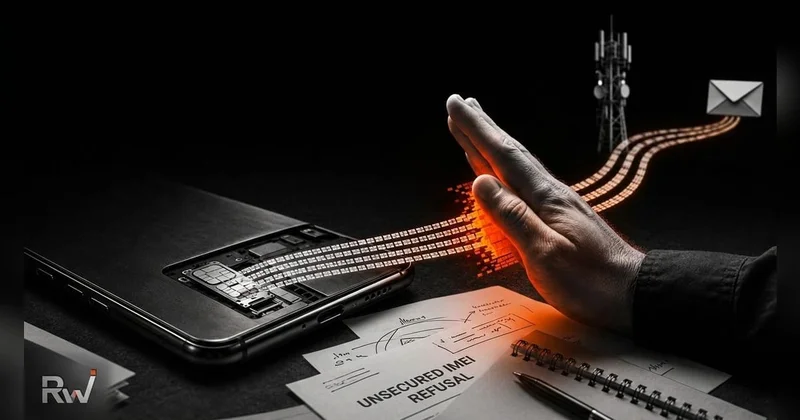
Boardman was an Enterprise Systems Engineer. When carrier technicians could not resolve a difficult problem involving an iPhone or cellular iPad, Apple’s account representatives could turn to engineers like him. One recurring request, the complaint says, was for Apple to take a device serial number and return its corresponding International Mobile Equipment Identity, or IMEI. Some requests concerned one device. Others involved batches of as many as 1,000.
Apple considered serial numbers and IMEIs personally identifiable information under its internal policies, Boardman alleges. Representatives working with carriers other than AT&T required the carrier to obtain a customer release before Apple supplied the data. The Apple representative assigned to AT&T did not enforce that requirement, according to the complaint. Boardman says the identifiers were then transmitted through “unsecured email communications.”
He reported the practice to his manager and sought guidance from Apple’s legal department. He alleges that the company never gave him a written response. When he raised the issue directly with his manager, Meg Fisher, Boardman says she told him to “stop being a pain” and move on.
Boardman did the opposite. He began refusing the AT&T requests.
The allegations appear in an employment lawsuit filed on January 22, 2026, against Apple and two of Boardman’s former managers. The case appears to have received no press coverage. Apple filed a general denial in March and said Boardman was terminated for “just cause and business reasons.” On July 14, Judge Rochelle East scheduled a jury trial for November 15, 2027.
No court has found that Apple or AT&T mishandled customer information, that the requested releases were legally required, or that Apple fired Boardman because he objected. The public file does not contain the disputed emails, the report Boardman says he made, the internal privacy policy he relied upon or an example of a customer whose data was shared. Apple’s answer does not specifically address the IMEI allegation.