University in 2027: see how much your degree will cost
Save
You have reached your maximum number of saved items.
Remove items from your saved list to add more.
AAA
The contentious Job-ready Graduates funding means a “significant minority” of arts graduates may never repay their student debt, a leading university analyst has warned, as the cost of Australian degrees rises 3.5 per cent from last year.
The federal government has released university course costings for 2027, with law, accounting, business, economics, communications, history, philosophy, political science and anthropology all costing an eye-watering $18,025 a year. Over the course of a three-year degree, students in those disciplines will pay $54,075, while students in double degrees will graduate owing $90,125.
Last year, a student in those disciplines paid $17,399, about a 3.5 per cent price rise in the past 12 months. All degrees have gone up by about 3.5 per cent on last year’s prices.
An unsuccessful attempt by Scott Morrison’s government to steer students away from the humanities through lowering the costs of degrees such as nursing and teaching also sent law, commerce and arts costs skyrocketing. The Albanese government has not yet undone the fee rises that have led to the $50,000 arts degrees.
Advocacy groups argue that the change in funding has done little to dissuade students from studying humanities, commerce and law.
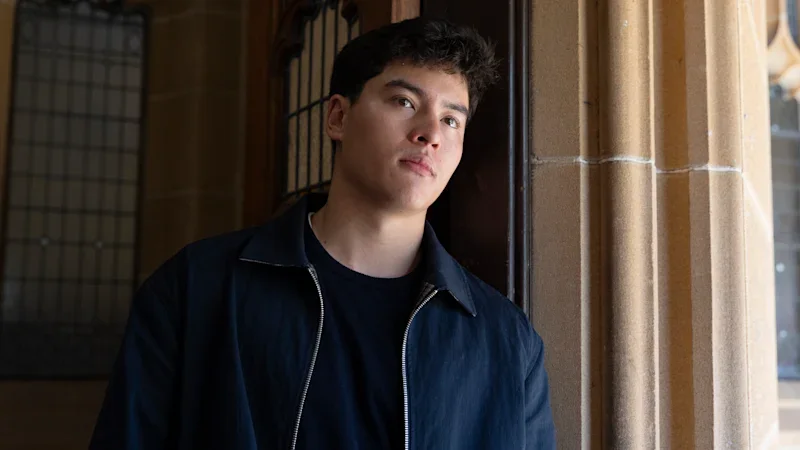
University of Sydney student Xavier Newham said that he was dubious of the policy’s effectiveness.Janie Barrett
Xavier Newham, who is in his second year of a bachelor of commerce at the University of Sydney and plans to work in finance, agreed.
“The scheme seems to assume students like me would alter their career plans, but I’m not really convinced that really reflects how people make those decisions,” he said.
“We choose according to our interests. The high fee wasn’t really going to persuade me, but I question the policy’s logic. It didn’t change my decision, but it obviously increased the debt attached to that decision.”
Higher education expert Andrew Norton warned that the Job-ready Graduates scheme risks leaving arts graduates indebted for life.
“Business and law is not as bad,” he said, noting the higher salary expectations for those graduates.
Students of pharmacy, radiography, nutrition, architecture, computer science and performing arts will pay $9880 a year or $39,520 across the course of a three-year undergraduate degree, with the government paying $16,470 a year.
Aspiring engineers and scientists will also pay $9880 a year but will receive a government contribution of $20,198.
The nation’s future doctors, dentists and vets will pay $14,046 a year while the government contributes $33,566 per annum. At that amount, students will pay $56,184 over the course of an undergraduate medicine degree or $70,230 for a five-year dentistry degree.
Students looking to leave with minimal debt should consider teaching, literature or mathematical science, with a maximum student contribution of $4908 and a government contribution of $16,470.
Last year, those students paid $4738 for the year.
Nursing students and students of European, Asian and Indigenous languages – a carve out from the blanket humanities fee rise – will also pay $4908 a year with a $20,198 government contribution.
The latest Australian government data shows there is a shortage of pre-, primary and high school teachers and nurses, but no shortage of translators or language teachers.
There is also a shortage of doctors, dentists and engineers of most disciplines.
Federal independent MP Monique Ryan blasted Education Minister Jason Clare for allowing the hated Job-ready Graduates Package to continue after vocal criticism.
“No degree should cost more than $50,000. The aim of HECS was to help more Australians get the skills we need in our workforce, not to saddle them with decades of debt,” she said.
Clare was contacted for comment.
Get the day’s breaking news, entertainment ideas and a long read to enjoy. Sign up to receive our Evening Edition newsletter.
Save
You have reached your maximum number of saved items.
Remove items from your saved list to add more.