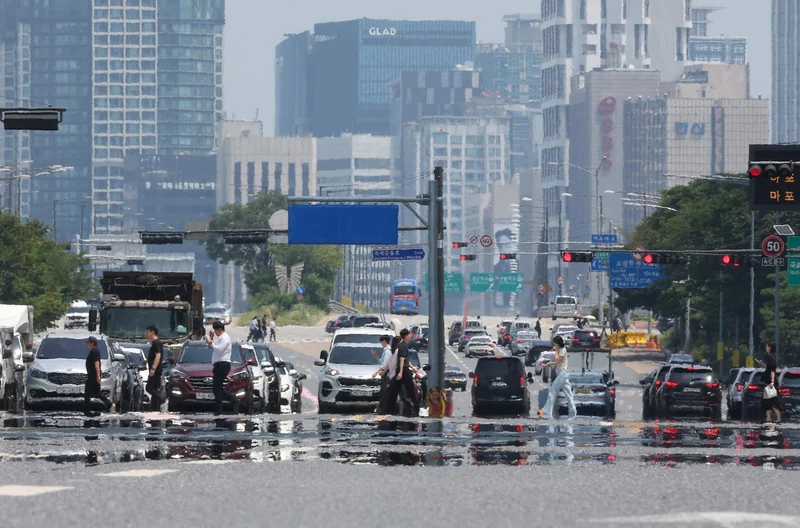
An intense heat wave gripping the Korean Peninsula is shifting westward, with the greater Seoul area bracing for conditions even hotter than in past weeks and authorities rolling out measures to protect vulnerable residents.
As of 3 p.m. Monday, the day's highest temperature reached 41.1 degrees Celsius in Gwangyang, South Jeolla Province, followed by 40.9 degrees in Daegu and 40.7 degrees in Uiryeong, South Gyeongsang Province. Seoul's highest perceived temperature reached 36.1 degrees.
The heat in western regions is expected to intensify further as low-level winds near the surface shift to easterlies, pushing the foehn phenomenon into the greater Seoul area, west of the Baekdudaegan mountain range. The range runs from Mount Baekdu in the far north to Mount Jiri in the south.
The phenomenon, which occurs when wind crosses a mountain range and becomes hotter and drier on the other side, has been a major driver of the recent record heat in South Gyeongsang Province.
The intensifying heat is already taking a toll. As of Saturday, 1,889 people had suffered heat-related illnesses and 14 had died, with the toll expected to climb further. On Monday, Incheon reported its first heat-related death of the year, while a man in his 70s died in Busan in a suspected heat-related death.
With the heat wave forecast to worsen further, the Seoul Metropolitan Government held an emergency response meeting Monday. Heat wave alerts have been in effect in the city since July 23 and highs and perceived temperatures are both expected to reach 37 degrees this week.
To reach the most vulnerable, the city's visiting nurses are checking on about 63,000 residents, including elderly people living alone, people with disabilities and those with chronic illnesses.
Seoul is also spraying water on 1,982 kilometers of roads using 205 water trucks to ease the urban heat island effect, with trucks running up to six times a day in high-traffic areas when a heat wave warning is in effect.
Some local governments are turning to drones to reach residents in areas that are harder to cover on the ground.
North Gyeongsang Province is flying drones equipped with loudspeakers and thermal imaging cameras over areas crowded with summer vacationers, broadcasting heat safety guidelines.
In Hwasun County, South Jeolla Province, local officials have partnered with a local drone soccer club to patrol 13 towns daily, advising residents to avoid outdoor work during peak heat hours.
While the heat wave persists, residents are advised to avoid outdoor activities, especially between 2 p.m. and 5 p.m. and to rest in a shaded area or shelter. Water or sports drinks are recommended over caffeinated beverages or alcohol.