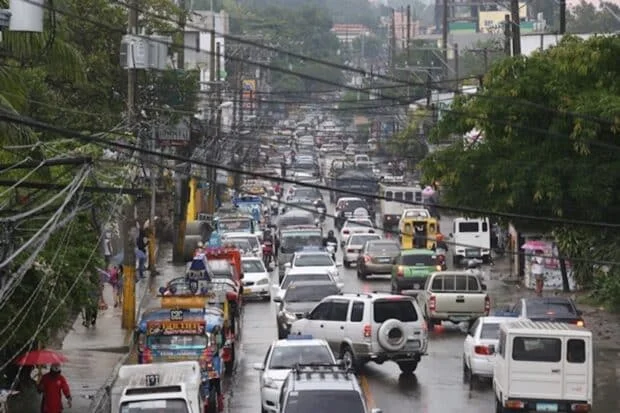
Oplan BanTal violators to start incurring fines on August 5
CEBU CITY, Philippines — Cebu City will begin strictly enforcing Oplan BanTal on Aug. 5, issuing fines to motorists and pedestrians who violate traffic rules along the Banilad-Talamban corridor.
The Cebu City Transportation Office (CCTO) said traffic enforcers will now issue citations under existing traffic ordinances instead of merely giving reminders.
The city launched Oplan BanTal: Discipline Zone on August 1 to improve traffic flow and road safety along Gov. Cuenco Avenue, one of Metro Cebu’s busiest corridors.
“We started on August 1, but we focused first on information dissemination,” CCTO head Raquel Arce said on Monday. “Mosugod ang atong strict implementation sa August 5.” (Our strict implementation starts on Aug. 5.)
No new fines
Arce clarified that Oplan BanTal does not create new traffic violations or increase penalties.
Instead, the city will strictly enforce existing provisions under the Cebu City Traffic Code and other ordinances within the Banilad-Talamban Discipline Zone.
Among the violations that will draw penalties are:
- Public utility vehicles loading and unloading outside designated lay-bys;
- Motorcycles crossing the solid lane marking or leaving the designated motorcycle lane;
- Drivers stopping in prohibited areas; and
- Pedestrians crossing outside designated pedestrian lanes or overpasses.
Violators will pay the same fines already prescribed under existing ordinances.
Crossing a double solid line and illegal stopping each carry a P1,000 penalty, while jaywalking violations remain subject to existing fines ranging from P50 to P200.
“Wala ta’y bag-o nga fees nga atong gipatuman,” Arce said. (We did not introduce new fees.)
Discipline zone
Mayor Nestor Archival said Oplan BanTal aims to improve traffic discipline rather than simply increase enforcement.
The program focuses on three major measures: mandatory use of designated loading and unloading lay-bys, strict observance of pedestrian crossings, and proper use of motorcycle lanes.
Archival said public utility vehicles stopping anywhere along the highway create unnecessary bottlenecks because they block moving traffic.
The newly designated lay-bys, he said, allow vehicles to pick up and drop off passengers without obstructing traffic.
“Kung atong himuon nga adto ta manaog sa atong gusto bisag asa, maka-create gyud ni og traffic.” (If passengers get on and off anywhere they want, it will definitely create traffic.)
He urged commuters to wait only at designated loading and unloading areas instead of flagging down public utility vehicles along the main carriageway.
The mayor also reminded pedestrians to use pedestrian lanes, footbridges, and other designated crossings.
Motorcycle riders, meanwhile, must remain within the designated outermost lane and avoid crossing solid lane markings.
LTO joins operations
Arce said the city has invited the Land Transportation Office (LTO) to participate in enforcement operations along the BanTal corridor.
She said 20 deputized LTO agents will join city personnel in conducting operations seven days a week, including weekends.
Traffic personnel from both agencies will focus on enforcing traffic laws within the discipline zone, while LTO officers will handle violations under national traffic regulations.
Public adjusting
Arce acknowledged that some motorists have complained about the new traffic scheme, but she said resistance often accompanies changes in traffic management.
She expressed confidence that compliance would improve as motorists, commuters, and pedestrians become more familiar with the rules.
“Sa every change, ang tawo aduna gyud siya’y resistance to change,” she said. (Every change naturally encounters resistance.)
She appealed to the public to cooperate, saying the city’s traffic situation can improve only through shared discipline.
“Usa ra atong syudad… kung magtinabangay ang tanan… magmalampuson ta,” she added. (We only have one city. If everyone cooperates and practices discipline, we will succeed.)
Six lay-bys each direction
Archival said the city has identified six designated loading and unloading areas for vehicles traveling toward downtown Cebu and another six for traffic heading toward Talamban.
The lay-bys form part of Cebu City’s broader strategy to maximize existing road space instead of widening Gov. Cuenco Avenue, which officials earlier ruled out because of the high cost of acquiring private property.
Oplan BanTal also serves as a pilot traffic discipline program that city officials may later replicate in other major corridors if the initiative improves traffic flow and road safety.
Disclaimer: The comments uploaded on this site do not necessarily represent or reflect the views of management and owner of Cebudailynews. We reserve the right to exclude comments that we deem to be inconsistent with our editorial standards.