Your support helps us to tell the story
From reproductive rights to climate change to Big Tech, The Independent is on the ground when the story is developing. Whether it's investigating the financials of Elon Musk's pro-Trump PAC or producing our latest documentary, 'The A Word', which shines a light on the American women fighting for reproductive rights, we know how important it is to parse out the facts from the messaging.
At such a critical moment in US history, we need reporters on the ground. Your donation allows us to keep sending journalists to speak to both sides of the story.
The Independent is trusted by Americans across the entire political spectrum. And unlike many other quality news outlets, we choose not to lock Americans out of our reporting and analysis with paywalls. We believe quality journalism should be available to everyone, paid for by those who can afford it.
Your support makes all the difference.
Read more
More than 2,200 dangerous wild animals, ranging from venomous snakes to big cats, are currently being kept as "pets" across Britain, new research has found.
Wildlife organisation Born Free revealed that creatures including pit vipers, tigers, and crocodiles are legally housed in private residences and other settings under the 50-year-old Dangerous Wild Animals Act (DWAA).
Actress Dame Joanna Lumley, Born Free’s founder patron, has now called for a change in the law.
She said: “Wild animals should never ever be kept as pets, no matter how much we feel we could give them a wonderful home.
Joanna Lumley has spoken out against the practice (PA Wire)
“Their lives should be in the wild.
“It is shocking that so many are still being legally kept in private hands, propping up a cruel and ghastly trade.”
What are the concerns?
The charity suggests that numerous individuals are likely keeping dangerous, non-native species within their homes.
This practice not only poses a potential threat to public safety but also raises serious concerns about the welfare and suffering of the animals involved.
Born Free is now urging a comprehensive overhaul of the outdated legislation governing these exotic creatures.
While some of these animals are located in educational facilities, sanctuaries, or contribute to conservation efforts – such as bison in expansive woodland enclosures – Born Free warns of a significant risk.
What the data says
Born Free also said that potentially many more dangerous wild animals are being held illegally.
The Dangerous Wild Animals Act was introduced in 1976 to control the private keeping of animals considered to pose a risk to the public.
Data obtained from local authorities, who are responsible for licences under the Act, show more than 500 venomous snakes are being kept privately across Britain.
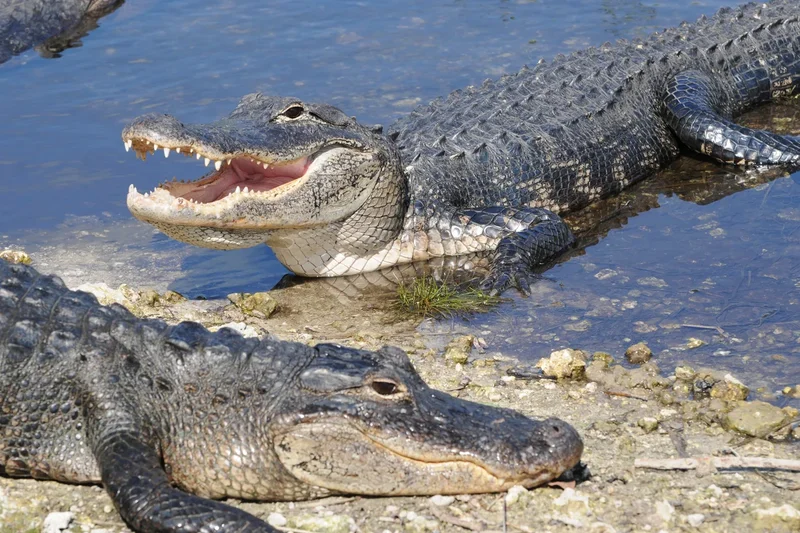
There are also nearly 300 primates in private ownership, 79 crocodiles, alligators and caimans, and 166 wild cats including lions, pumas and tigers.
Among the animals being privately kept are alligators and gila monsters in Angus and cheetahs in Cheshire, while snakes including cobras, green mambas, rattlesnakes and boomslangs are being held around the country.
The charity has released a searchable database at https://www.bornfree.org.uk/dwamapso people can see what animals have been licensed to be kept under the Act in their area.
The number of venomous snakes has risen since the charity last researched DWAA data in 2023, up from 403 then to 512, while the number of dangerous primates is up from 256 in 2023 to 293 now.
Born Free also flagged what it said was a social media-fuelled craze to own small wild cats and hybrids, which are among the most frequently licensed species, even though later generation hybrids can fall outside licensing requirement while still having significant wild traits.
The charity’s research found Scotland is home to the most licensed wild cat hybrids in Britain, while Carmarthenshire in Wales is home to the only elephant being kept under this kind of licence in the country, and the world’s deadliest snake – the saw-scaled viper – is licensed to be kept in Greater London.
Sanctuaries such as WildSide Exotic Rescue in Herefordshire highlight the damage captivity as “pets” can do to wild, non-native animals, including mountain lions Tyson and Taylor suffering a life kept for breeding in a concrete-floored cage at the back of a bungalow, and Kit, an illegally-kept lynx.
Snakes including cobras, green mambas, rattlesnakes and boomslangs are being held around the country (Ephotocorp/Alamy/PA)
The sanctuary is also home to ring-tailed lemurs kept in a shed with one window, Luna the bobcat, kept as a house pet with domestic cats and then a shed-like enclosure in the garden until her owner admitted they could no longer cope, and servals who were forced to breed.
Calls to change the law
Born Free said that DWAA licences did not mean animals were being kept in appropriate conditions, and the law needed to be reviewed and reformed to protect people and wild animals.
Chris Lewis, Born Free’s captivity research and policy manager said: “The Dangerous Wild Animals Act 1976 was intended to make the keeping of wild animals categorised as ‘dangerous’ a wholly exceptional circumstance.
“Yet 50 years on we find ourselves in a situation where nearly ten times more venomous snakes are kept in British homes than British zoos, servals continue to be unnecessarily and cruelly crossbred with domestic cats to produce ‘fashionable’ hybrids, and primates continue to be confined despite the Government acknowledging they are unsuited to being kept as pets.
“These animals are still wild, still dangerous, yet still legal to keep.
“The Government must urgently review and reform the laws governing the trade in, and keeping of, wild animals as pets.”
Born Free wants ministers to reform the laws in England and Wales, introducing evidence-based measures to prevent harm, close loopholes, strengthen enforcement and meet UK commitments to animal welfare, biosecurity, conservation and public health.
A spokesperson for the Environment Department (Defra) said: “Anyone wishing to keep an animal covered by the Dangerous Wild Animals Act must be carefully vetted and apply for a licence which sets out strict conditions under which the animals must be kept.”
Defra said a local authority must only grant a licence under the Act if it would not be contrary to the public interest on safety or nuisance grounds and the animal’s accommodation is suitable, clean and secure.
Separately, the Wildlife Trusts have called for legal reforms for animals such as bison and elk, used in conservation regimes, which are currently subject to the DWAA as well as farming rules.
They want to see a new “kept wild” status that would meet welfare requirements while allowing such animals to live more natural lives over large landscapes where they would help boost wildlife and habitats.