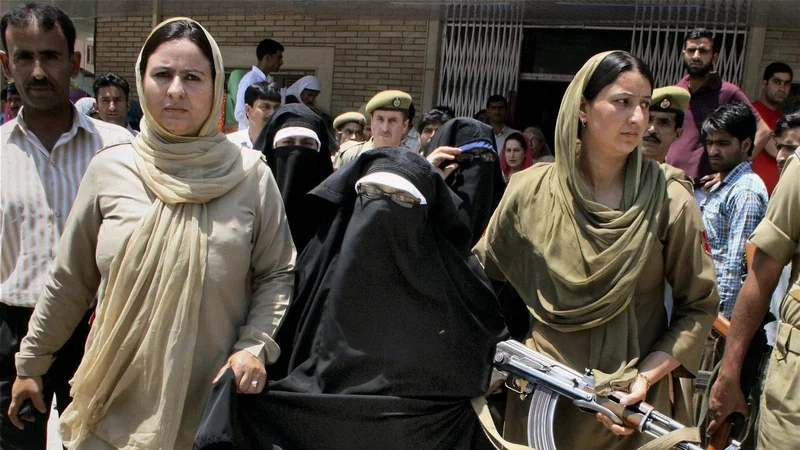
The Delhi High Court on Monday (August 3, 2026) sought the stand of the National Investigation Agency (NIA) on appeals by Kashmiri separatist leader Aasiya Andrabi and her two associates challenging their conviction in a case of conspiring to wage war against India, and being members of a terrorist organisation.
Andrabi, 62, is the chief of the banned all-women’s organisation Dukhtaran-e-Millat (DEM). She, along with her close aides, Nahida Nasreen (58) and Sofi Fehmeeda (48), were convicted on January 14 by a special NIA court on January 14, which said the trio had orchestrated a systematic campaign to destabilise Jammu and Kashmir.
On March 24, the trial court awarded life imprisonment to Andrabi, while Fehmeeda and Nasreen received a 30-year prison sentence.
On Monday (August 3), a Bench of Justices Prathiba M. Singh and Vikas Mahajan condoned the delay in filing the appeals against the trial court’s decision, and said it would issue notice to the investigating agency in the matter. It listed the matter for hearing on October 6.
The case stems from a First Information Report filed by the NIA in 2018, which accused the trio of running DEM and promoting the secession of Jammu and Kashmir from India, allegedly through violent means. The Central agency, during trial, submitted evidence, including videos and social media posts from Facebook and Twitter, which allegedly praised militants such as Burhan Wani, encouraged pelting of stones, and expressed support for Pakistan.
The trial court had framed charges against the women, including criminal conspiracy, waging war against the Government of India, sedition, promoting enmity between groups, disrupting national integration, and offences under the UAPA.
“The acts of the convict brought on record may not apparently be the direct cause of inciting violence but infusing the minds of Kashmiris, especially the youngsters, with the idea that Kashmir is not part of India and India has occupied the Kashmir illegally, and in a hostile manner can evoke the sentiments of the people of Kashmir as well as it may lead them to use all kinds of methods, including violence, to seek the supposed liberation, the idea of which is wrongly seeded in their minds,” trial court had said.
After the conviction, the NIA sought life imprisonment for Andrabi, arguing that her actions amounted to waging war against India, and that strict punishment was necessary to send a strong message against anti-state activities.
Published - August 03, 2026 11:27 pm IST