TEHRAN- The Deputy Minister of Agriculture for Agricultural Trade Development stated that after the Islamabad agreement and the lifting of the naval blockade, imports of essential goods into the country accelerated rapidly.
He said that by shifting the route from the Indian Ocean towards Russian routes and the Caspian Sea, they have been able to counter the threat of a naval and economic blockade.
Mohammad Reza Talaei, in an interview with IRNA, commented on the inventory status of essential goods in the country given the recent aggression of the American terrorist army against the soil of the Islamic Republic of Iran and its targeting of various provinces, especially the southern coastal areas.
He stated that the status of the country's essential goods reserves is in a favorable condition, and so far, the supply chain has been able to play its role well in managing the market and maintaining price stability.
Regarding changes in the import situation from southern and northern ports and the share of each of these origins in imports of goods such as grains and oilseeds, the Deputy Minister said that previously, southern ports were the gateway for essential goods, raw materials, and consumer goods. However, in the current circumstances, given the wartime conditions, the volume of import operations at southern ports has decreased, and they have shifted from open trade to a protective trade status.
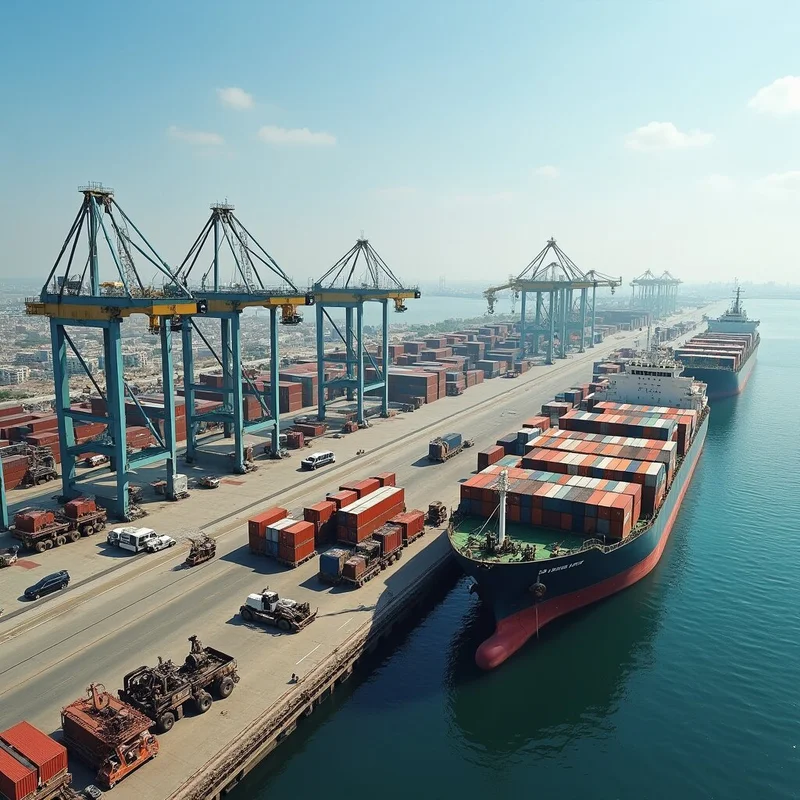
Talaei stated that currently, northern ports are the vital pulse of the economy, and part of the import pressure has been transferred from the south to this region. He added that the share of northern ports in total imports has now increased, and they are utilizing the capacity of the North-South corridor, so much so that northern ports are unloading essential and containerized goods with greater capacity.
The Deputy Minister stated that the share of northern ports in the country's total imports has now reached over 30 percent. By shifting the route from the Indian Ocean towards Russian routes and the Caspian Sea, they have been able to counter the threat of a complete economic blockade.
Regarding which items constitute the highest volume of imported goods from northern ports, Talaei said that the primary priority under these conditions is food security and production sustainability. The largest share of imports from northern ports, in terms of importance and volume, pertains to grains and oilseeds, with animal feed barley, animal feed corn, and wheat at the top. The majority of this volume is supplied from Eurasian countries.
Referring to the fact that before the war, Imam Khomeini Port was the main center for importing grains and livestock inputs, he added that the changes in routes and import corridors have financially increased transportation costs, insurance, and the final price of the products.
The Deputy Minister noted that in the "storage at sea" strategy, fleets and ships that acted as strategic floating warehouses were unloaded ahead of schedule due to the current conditions.
Referring to the American enemy's aggression against areas of Chabahar Port, and that this port was responsible for a portion of essential goods imports, he stated that Chabahar Port, as the gateway to the east of the country, plays a role beyond supplying domestic needs and is a major hub for the transit of essential goods from India to Afghanistan and Central Asia.
Talaei noted that the majority of goods that were unloaded from Chabahar Port prior to the enemy's new round of attacks are stored in covered warehouses and modern silos and are in a safe condition.
According to the Deputy Minister, operations for the safe unloading and rapid transfer of these goods to other parts of the country are currently underway. Furthermore, vessels that were at anchorage awaiting berthing were directed to safe routes for emergency departure toward alternative ports, coordinated with the Army and IRGC forces.
Regarding the exact extent of damage inflicted on infrastructure following the recent enemy aggression, he stated that assessments are in the final stages and, once finalized, documents will be prepared for submission to domestic and international insurance companies.
Regarding damage to infrastructure in the southern provinces and passive defense measures by this ministry to minimize damages, he said: The Ministry of Agriculture, in line with its assigned duties, has submitted a set of proposed and ongoing measures to the competent authorities via an official letter, and all necessary actions for securing and distributing goods have been taken to prevent any challenges.
The Deputy Minister addressed the extent of imports achieved during the naval blockade, saying: During the previous naval blockade, no issues arose in the supply and distribution of essential goods, and reviews and the market situation confirm this important fact.
Talaei emphasized that with the determination and efforts of all relevant bodies, the new naval blockade will certainly not cause any disruption in the supply of essential goods.
Recalling that approximately 25 million tons of agricultural goods are imported into the country annually via various sea, rail, and road routes, the Deputy Minister added that Iran shares land and water borders with 15 countries, and this potential has led to diversification and the supply of essential goods through various borders.
Talaei stated that in recent years, in addition to diversifying supply origins, entry points have also been diversified, and the share of imports from northern ports has increased significantly. Therefore, rail development will significantly assist the country in the import of essential goods.
EF/MA