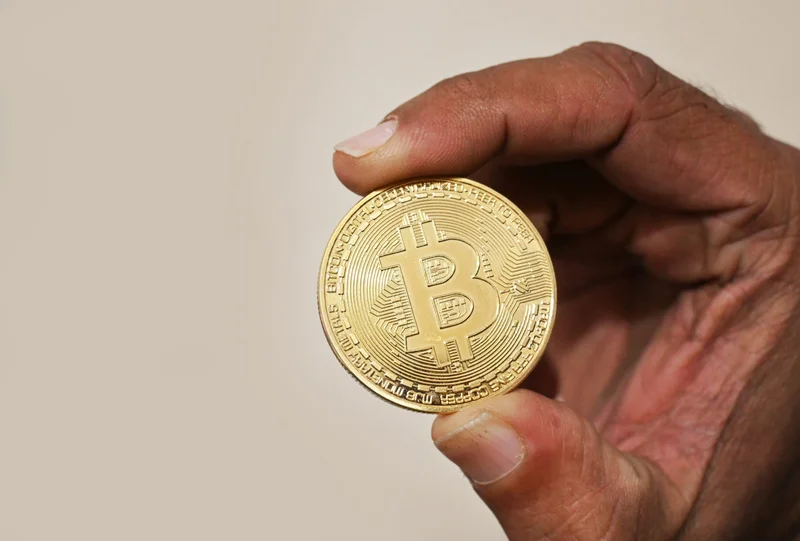
Bitcoin Steady at $63,461 as LatAm Leans on Stablecoins
Key Facts
- Bitcoin traded at US$63,461, down 0.03%,hovering in a tight range as CME futures open interest rose, signalling hedge funds are rebuilding positions.
- Ethereum fell 1.29% to US$1,858,underperforming Bitcoin as traders priced in delays to network upgrades designed to cut transaction fees.
- The US 10-year Treasury yield traded around 4.48%,keeping dollar assets relatively attractive and limiting appetite for riskier instruments like cryptocurrencies.
- Argentine households increasingly use dollar-linked stablecoins USDT and USDCto protect savings from peso depreciation, turning them into a parallel invoice currency for cross-border services.
- Brazil’s securities regulator, the CVM, has approved multiple crypto-linked ETFsthat trade on the local stock exchange, giving foreign investors onshore Bitcoin exposure with familiar protections.
- El Salvador’s Bitcoin legal-tender law aimed to lower remittance costs,but independent surveys show most citizens still prefer the US dollar for daily transactions.
Today’s Focus
Bitcoin barely moved on Monday, settling at US$63,461, while Ethereum dropped 1.29% to US$1,858. The US 10-year Treasury yield at 4.48% kept a lid on speculative appetite. But a rise in CME Bitcoin futures open interest showed institutional money rebuilding positions, not fleeing the asset class.
The real action for Latin America is happening off the main price board. In Argentina, households are leaning on dollar-linked stablecoins as a shield against currency controls and inflation. Brazil’s securities regulator is expanding a framework of crypto-linked ETFs, giving international investors a regulated onshore path to Bitcoin.
In El Salvador, the government’s Bitcoin treasury continues to test whether a sovereign can weave a volatile digital asset into its public finances. Crypto-based remittance services now compete aggressively on speed and fees against traditional wire companies for US–Brazil and US–Mexico corridors.
For a foreign investor, these three countries form a practical spectrum of crypto integration: Brazil offers a rules-based gateway, Argentina reveals informal dollarisation via stablecoins, and El Salvador represents the high-stakes sovereign experiment.
What matters today. Crypto in Latin America has split into a regulated Brazilian ETF market and an informal Argentine stablecoin economy, with El Salvador between the extremes.
01 The session in one read
Bitcoin held steady at US$63,461 in a low-volatility session, with CME futures open interest climbing as hedge funds and proprietary trading firms rebuilt positions. Ethereum slid 1.29% to US$1,858 after developers signalled delays to upgrades intended to shrink transaction fees on its smart-contract network.
The broader backdrop was a US 10-year Treasury yield of 4.48%, a level that rewards investors for staying in conventional dollar assets rather than chasing crypto volatility. That macro pressure kept a lid on the largest tokens, even as stablecoin volumes in Latin America continued to grow.
The session confirmed that Latin America’s crypto story is no longer about Bitcoin’s price alone. Brazil is building a compliance-friendly structure through CVM-approved ETFs and a digital real pilot, while Argentina’s demand for USDT and USDC reflects a pragmatic, grassroots dollarisation that runs parallel to official capital controls. The variable to watch is any sudden policy tightening from Argentina’s central bank against informal stablecoin markets, which could redirect those flows into Brazil’s regulated products.
02 The board
The main proxy assets showed a market leaning cautious. Bitcoin barely flickered at US$63,461, while Ethereum’s 1.29% drop to US$1,858 confirmed large investors still treat it as a higher-risk bet on blockchain applications rather than a digital reserve. Solana rose 0.03% to US$73.47, a fragile gain as developers pushed new code to address past network outages that had rattled professional traders.
XRP slipped 0.92% to US$1.0746, tracking fresh court docket updates in Ripple’s long-running US securities case more closely than any macro news. The copper-gold ratio, a traditional proxy for global growth expectations, sat at a cautious level, reinforcing the risk-off mood that kept crypto volumes concentrated in the largest, most liquid names.
| Asset | Level | Change |
|---|---|---|
| Bitcoin | US$63,461 | -0.03% |
| Ethereum | US$1,858 | -1.29% |
| Solana | US$73.47 | +0.03% |
| XRP | US$1.0746 | -0.92% |
Source: EODHD close, 2026-08-03. Where a commodity has no spot feed, an exchange-traded tracker or leading producer is shown as a labelled proxy.
Live Market IntelligenceThe live market board
Rio Times · Live Market Intelligence
Latin America — Cross-Market Board
| Instrument | Last | Change | YoY | Prev. | High | Low | Volume |
|---|---|---|---|---|---|---|---|
| IBOV | 178,000.24 | +0.00% | +33.86% | 177,999.00 | — | — | — |
| IPSA | 11,049.58 | +0.30% | — | 11,016.85 | 11,063 | 10,970 | 1,513,213,483 |
| IPC MEX | 66,700.17 | -0.35% | +17.74% | 66,935.53 | — | — | — |
| MERVAL | 3,274,443 | -0.51% | +43.16% | 3,304,918 | — | — | — |
| COLCAP | 2,384.67 | -0.31% | — | 9.04 | 9.05 | 9.02 | 4,133 |
| BVL PERÚ | 57,378.30 | — | — | — | — | — | — |
| USD/BRL | 5.09 | +0.29% | -8.10% | 5.07 | 5.09 | 5.09 | — |
| EUR/BRL | 5.86 | +0.08% | -8.65% | 5.85 | 5.86 | 5.85 | — |
| USD/MXN | 17.30 | -0.22% | -8.30% | 17.34 | 17.33 | 17.29 | — |
| USD/CLP | 925.12 | -0.04% | -2.30% | 925.48 | 925.12 | 925.12 | — |
| USD/COP | 3,231 | +0.88% | -21.62% | 3,203 | 3,231 | 3,230 | — |
| USD/PEN | 3.38 | -0.40% | -2.52% | 3.39 | 3.39 | 3.37 | — |
| USD/ARS | 1,494 | +0.54% | +10.56% | 1,486 | 1,494 | 1,494 | — |
| USD/UYU | 40.27 | +0.17% | +3.16% | 40.20 | 40.27 | 40.27 | — |
| USD/PYG | 5,936 | +0.08% | -18.27% | 5,931 | 5,936 | 5,936 | — |
| USD/BOB | 12.07 | -0.25% | +82.02% | 12.10 | 12.07 | 12.07 | — |
| USD/DOP | 58.13 | +1.72% | -1.73% | 57.15 | 58.13 | 57.96 | — |
| USD/CRC | 448.42 | +0.00% | -7.62% | 448.40 | 448.42 | 448.42 | — |
1 of 4names higher.
IPSAled, while
MERVALlagged.
03 What moved it
A firm US dollar and a 10-year Treasury yield near 4.48% anchored the session, drawing capital toward traditional safe assets. On the regulatory front, the SEC continued enforcement actions against exchanges listing dozens of tokens for American retail traders, while simultaneously allowing Bitcoin and Ethereum futures to trade on the regulated CME, creating a split compliance path.
Institutional flows told the real story. The Grayscale Bitcoin Trust showed modest inflows after a long stretch of outflows, and CME Bitcoin futures open interest rose, confirming that professional funds were adding exposure rather than de-risking. Meanwhile, Ethereum futures open interest grew more slowly, underscoring its status as a higher-beta play on blockchain utility.
04 The Latin American read
Brazil’s central bank is piloting a digital real on a permissioned blockchain to coexist with private cryptocurrencies, while the CVM has already approved multiple crypto-linked ETFs that trade on the B3 exchange. Brazilian digital banks Nubank and Banco Inter now offer in-app Bitcoin and Ethereum trading, pitching it as a diversification tool alongside savings accounts.
In Argentina, dollar-linked stablecoins USDT and USDC have become a parallel savings vehicle as currency controls tighten. Local exchanges quote rents and freelance work directly in USDT, and foreign investors in Argentine equities watch stablecoin volumes as a leading indicator of capital-flight pressure.
El Salvador’s 2021 Bitcoin legal-tender law and Chivo wallet aimed to cut remittance costs, but independent surveys show most citizens still prefer the US dollar for daily spending. The government’s Bitcoin treasury and proposed Bitcoin-backed bond remain a live test of sovereign crypto adoption, one that foreign creditors monitor for signs of fiscal stress.
05 The names to watch
For an outsider, Grayscale’s GBTC and CME futures open interest are the cleanest windows into whether institutional money is entering or leaving the space. In Brazil, Nubank’s crypto user numbers and CVM-registered ETF flows offer a regulated proxy for retail appetite.
In Argentina, Tether and USDC volumes on local peer-to-peer platforms matter more than any headline price, because they capture the real-time pulse of informal dollarisation. In El Salvador, adoption metrics for the Chivo wallet and any progress on the Bitcoin bond structure remain the key sovereign-risk variables.
06 The outlook
The market is settling into a pattern where Bitcoin trades less on spot speculation and more on regulated futures flows. For Latin America, the split between Brazil’s permissive, rule-of-law framework and Argentina’s informal stablecoin economy will widen, especially if any central bank crackdown redirects liquidity. El Salvador’s experiment remains the wildcard: a successful Bitcoin bond issuance would rewrite the playbook for sovereign crypto finance, but any forced liquidation of the government’s Bitcoin holdings would rattle confidence from Buenos Aires to São Paulo.
07 What to watch
- CME Bitcoin futures open interest:A sustained rise would confirm institutional conviction beyond short-term macro noise, while a sharp drop signals funds are de-risking.
- Argentine stablecoin premiums on peer-to-peer platforms:Widening premiums over the official dollar rate flag rising capital-flight pressure and potential central bank intervention.
- Brazilian crypto ETF flows on B3:Net inflows into CVM-approved products will show whether foreigners prefer regulated onshore exposure to offshore exchange accounts.
- SEC enforcement docket against major exchanges:New actions targeting altcoin listings could widen the regulatory gap between Bitcoin-Ethereum futures and the rest of the market.
Frequently Asked Questions
Why did Bitcoin barely move?
Bitcoin traded in a tight range near US$63,461 because rising CME futures open interest absorbed selling pressure, while the 4.48% US 10-year yield kept speculative buyers cautious.
Why does Argentina matter for crypto?
Argentine households use dollar-linked stablecoins such as USDT and USDC to bypass currency controls, making stablecoin volumes a real-time gauge of economic stress for foreign investors.
How can I get Bitcoin exposure in Brazil?
Brazil’s CVM has approved multiple crypto-linked ETFs that trade on the B3 exchange, giving foreign investors a regulated, audited path without opening offshore crypto exchange accounts.
Is El Salvador’s Bitcoin experiment working?
Independent surveys show most Salvadorans still use the US dollar for daily transactions, turning to Bitcoin mainly for specific cross-border transfers or promotional incentives.
This article was produced by The Rio Times’ automated newsroom system. How we use AI · Report an error
LatAm Markets: Live Signals → — real-time movers, turnover leaders and FX across Latin America.