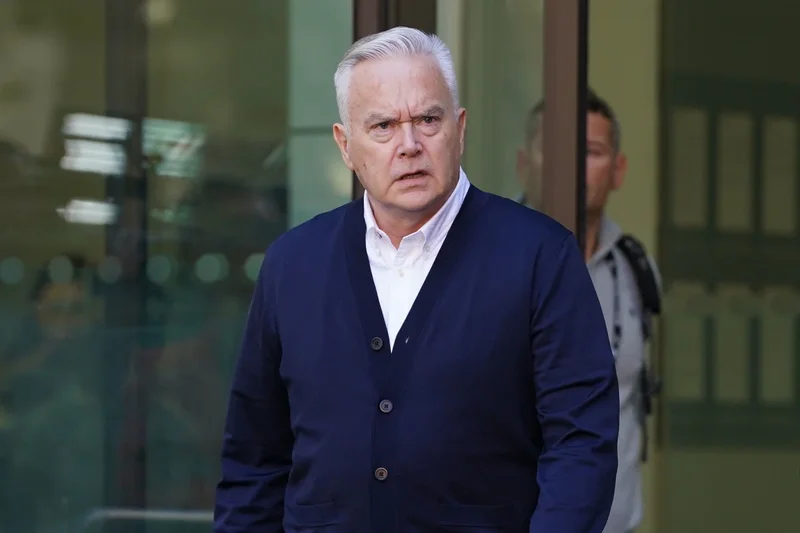
Disgraced BBC newsreader Huw Edwards has come under fire after revealing that he entered a Welsh poetry competition with a pseudonym name in a bid to “correct” the “toxic narrative” about him in the media.
The former presenter, who received a suspended prison sentence in 2024 after pleading guilty to receiving and making indecent images of children, said that he entered a poem into a competition run by the National Eisteddfod – Wales’ biggest cultural festival – under the pseudonym “Gelyn”, which translates to “Enemy” in English.
Writing in his Substack on Sunday (2 August), Edwards said that he drew inspiration from the contest’s theme of “knowing” with his entry, which is a personal tribute to his father.
“I hope readers find it illuminating,” he said. “One of the most distressing episodes in 2024 was seeing the nature of my relationship with my father wilfully misrepresented by the media, and by Welsh-speaking journalists in particular.”
All entrants into the competition submit their work under a pseudonym, with their real identities kept in a sealed envelope and only revealed if they win the £750 prize and its coveted crown.
While Edwards did not win the contest, which was won by journalist Martin Huws, Welsh actor Sera Cracroft said it would have been “catastrophic” had the former BBC presenter taken home the prize.
“Huw has said he is receiving mental health support and to be completely honest, I don't think it's working for him,” the Pobol y Cwm star told Welsh programme Newyddion S4C. “I'm very, very disappointed that he's done that so soon after being convicted of creating paedophilia online. Some of the images were in the worst category possible.”
Edwards later responded to Cracroft’s comments, telling the programme that he intended to correct the “toxic narrative that was propagated by the media two years ago”.
“This wasn't a poem for the sickeningly self-righteous Welsh speakers – Sera amongst them – who take advantage of every opportunity to speak unthinkingly on every subject under the sun.
“She and her type are far too willing to ignore the damaging effects of mental ill health. In that, they are loyal to the heritage of London's tabloid papers.”
In a statement given to the BBC, the National Eisteddfod said: “We have a process in place which ensures nobody, including the judges, know beforehand who has competed.
“After each Eisteddfod, we have a period of appraisal to ensure our processes are appropriate – this year will be no exception.”
The Independent has contacted the National Eisteddford for comment.
Edwards launched his Substack blog back in July, with many calling for it to be taken down in light of Edwards’ offences.
In 2024, he pleaded guilty to receiving and making indecent images of children, with the court being told that he possessed an indecent image of his phone of child as young as seven.
His barrister Philip Evans KC said at the time: “There’s no suggestion in this case that Mr Edwards has… in the traditional sense of the word, created any image of any sort.
“It is only the images that are the subject of the charges that came via a WhatsApp chat. Mr Edwards did not keep any images, did not send any to anyone else and did not and has not sought similar images from anywhere else.”
Last month, BBC chairman Dr Samir Shah demanded that Edwards repay his £200,000 salary to the corporation in light of his crimes. The presenter was once one of the highest-paid names at the BBC and received his salary five months after his arrest.
“I’ve already said that I think Huw Edwards ought to return the money, he hasn’t done so. I read that he’s seeking some kind of redemption,” Shah said at the time. “I think one very good step in that, if he has an ounce of moral rectitude, he would return the money. He hasn’t done so, I think he should.”