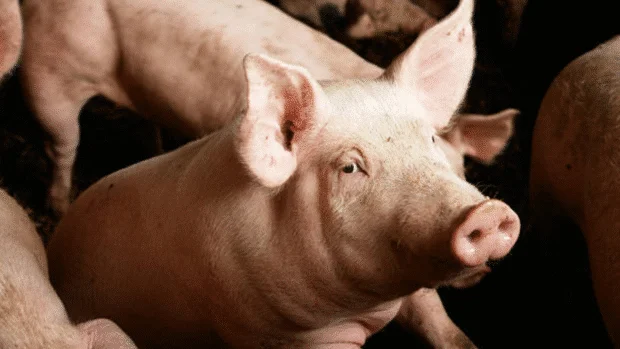
Free from ASF: 16 Cebu Province LGUs cleared to ship, sell hogs
LAPU-LAPU CITY, Cebu — Sixteen local government units in Cebu Province are allowed to move and sell live hogs and pork products after meeting government requirements for monitoring African Swine Fever (ASF).
Provincial Veterinarian Mary Rose Vincoy said the Bureau of Animal Industry (BAI) had granted the following areas Recognition of Active Surveillance on ASF (RAS-ASF) certifications as of Tuesday, August 4:
- Bantayan
- Madridejos
- Santa Fe
- Tudela
- San Francisco
- Pilar
- Poro
- Talisay City
- Mandaue City
- Bogo City
- Carcar City
- Sibonga
- San Fernando
- Cordova
- Tuburan
- Liloan
The status means the LGUs have conducted active surveillance and documented no ASF cases.
This allows local hog raisers to transport and sell their pork products to markets outside their areas, subject to existing regulations.
READ: Cebu bans hogs, pork products from ASF-hit areas
Vincoy said other localities have also applied for RAS-ASF status since July, including Borbon, Tabuelan, Tabogon, San Remigio, and Barili.
She also clarified that the Provincial Veterinary Office (PVO)’s jurisdiction only covers Cebu Province’s component municipalities and cities, while highly urbanized cities fall outside its authority.
Keeping areas ASF-free
The growing number of LGUs seeking clearance comes as the PVO continues regular testing to detect possible ASF cases and maintain the province’s disease-free status.
Vincoy said the province collects blood samples weekly, focusing particularly on LGUs that were previously classified as red zones.
The collected blood samples are sent to the Regional Animal Disease Diagnostic Laboratory for testing.
“This is continuous. It will not stop knowing that we want [the positive areas] tagged before to be in the ‘green zone,’” Vincoy told reporters.
The surveillance follows the Department of Agriculture’s (DA) color-coded ASF zoning system: red (infected zone), pink (buffer zone), yellow (surveillance zone), light green (protected zone), and dark green (free zone).
LGUs previously classified as red zones must renew their RAS-ASF status every three months, while green zones follow a six-month renewal cycle, Vincoy said.
She added that the RAS-ASF status applies to backyard hog raisers, while a Certificate of Free Status for ASF is issued to a specific commercial hog farm or area confirmed to be free of the virus.
Vincoy said commercial hog farms in the province have complied with the certification requirements.
Monitoring hog deaths
Even without confirmed ASF cases, authorities continue to monitor hog deaths and other diseases.
Vincoy said hog deaths can occur as part of normal pig production, with an acceptable level of mortality among animals.
“Right now, we don’t have reports of abrupt mortalities,” Vincoy said.
The PVO also monitors diseases that can cause similar symptoms in pigs, including hog cholera, pseudorabies, swine flu, and porcine reproductive and respiratory syndrome.
When the office receives reports of suspected ASF cases, it immediately assesses the situation to determine whether further investigation is needed.
“Upon initial assessment, if we think we need to send a complete outbreak investigation team, we send a team for ocular inspection,” Vincoy said.
Negros ban remains
Meanwhile, authorities are continuing to monitor neighboring areas where ASF has been detected.
“We continue to monitor the situation in Negros because there are areas with additional positive cases,” Vincoy said.
As part of the province’s preventive measures, Governor Pamela Baricuatro signed Executive Order No. 39 on July 7, 2026.
The order imposes a 45-day ban on the entry of live hogs, fresh pork, and processed pork products from Negros Island and other ASF-affected areas.
The ban is set to expire on August 21, but Vincoy said it may be extended at the governor’s discretion.
The order itself allows the restriction to be extended, shortened, or modified depending on the ASF situation and subsequent advisories from the DA and the BAI.
Vincoy said authorities will continue monitoring animal movement, especially as the “-ber” months approach and pork consumption typically rises.
Disclaimer: The comments uploaded on this site do not necessarily represent or reflect the views of management and owner of Cebudailynews. We reserve the right to exclude comments that we deem to be inconsistent with our editorial standards.