‘People thought I was taking extra breaks’: The hidden pressures breastfeeding mothers face at work
AI generated
SINGAPORE - When finance professional Amanda (not her real name) returned to work four months after giving birth to her first child in 2022, facilities were in place to help her continue breastfeeding.
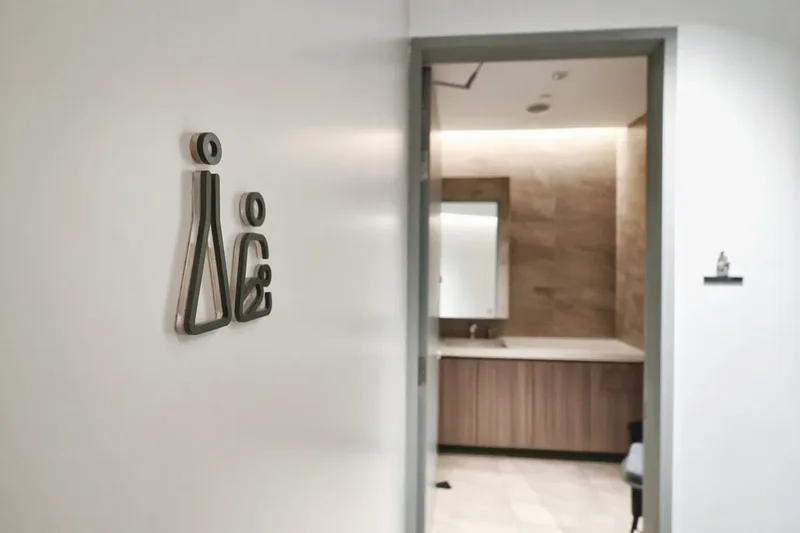
She had access to a dedicated mothers’ room with private cubicles, hot water, sinks and refrigerators for storing breast milk.
But she soon realised that workplace culture was the biggest obstacle. Her boss expressed concern about her visibility in the office, and male colleagues joked about how it must be nice to take breaks in the middle of the workday.
The 36-year-old grew conscious about spending time away from her desk. Each pumping session took about 40 minutes, once she factored in the long walk to the mothers’ room in another office block, setting up her pump, expressing milk, cleaning up and returning to her desk.
Instead of pumping twice at work, she cut back to one session over her lunch break.
“I just couldn’t deal with the perceptions that I had to manage around my breastfeeding. I had to adjust my pumping schedule to fit work rather than my baby’s needs,” she said.
“There were leaders who were more willing to start a meeting late because a colleague was just coming back from their smoke break, but wouldn’t be as understanding about a mother who needed to express milk.”
Amanda gave birth to her second child in March, and is due to return to work soon. Reflecting on her past experience, she has decided to stop breastfeeding once she starts working.
“When the workplace has these microaggressions and they are ignored by management and human resources, that’s when I don’t feel that it’s a safe space to keep pumping,” she said.
Amanda’s experience is far from unique.
A survey commissioned by social enterprise Go!Mama found that close to nine in 10 mothers who had breastfed within the past five years encountered at least one practical work-related barrier, including insufficient time to express milk, difficulty balancing breastfeeding with work commitments or the lack of suitable spaces.
About two-thirds said returning to work changed how they breastfed. This includes shortening pumping sessions, switching feeding methods or stopping earlier than they had intended.
The poll of 202 mothers is part of a larger nationally representative survey that is expected to be released later in 2026.
The interim findings were presented on Aug 4 at the inaugural Global Women’s Health Equity Summit by Go!Mama at the Asian Civilisations Museum. The summit, which also marks Go!Mama’s fifth anniversary, featured panel discussions on women, breastfeeding and parenthood.
In response to queries, KK Women’s and Children’s Hospital told The Straits Times that the proportion of mothers initiating breastfeeding and exclusively breastfeeding upon discharge has remained similar in recent years. In both 2021 and 2026, about 86 per cent of mothers reported exclusively breastfeeding upon discharge.
Singapore General Hospital said its breastfeeding rates upon discharge have held steady at about 90 per cent.
Breastfeeding advocates say the challenge now is helping mothers sustain breastfeeding after maternity leave ends.
The Breastfeeding Mothers’ Support Group said the questions it receives centre on how mothers can fit expressing milk into the workday.
Many struggle to find time between meetings, coordinate pumping schedules, store expressed milk safely or secure suitable private spaces, particularly when travelling for work or attending events outside the office.
Some mothers have adopted wearable breast pumps so they can express milk while working, while others negotiate hybrid work arrangements or delay returning to work. Others resort to expressing milk in toilets, storerooms or cars when no suitable space is available.
The group said inconsistent pumping schedules can reduce milk supply over time, forcing some mothers to supplement with formula earlier than they had planned.
Dr Chua Mei Chien, president of the Association for Breastfeeding Advocacy Singapore, said facilities have improved over the years, helped by enhancements to the Building and Construction Authority’s (BCA) accessibility requirements for lactation rooms.
Under BCA’s Code on Accessibility in the Built Environment, more building types are now required to provide at least one lactation room. Older buildings can tap the BCA Accessibility Fund to retrofit a lactation room.
Chua said mothers more commonly cite difficulties finding protected time to express milk rather than the lack of physical spaces, particularly in client-facing and shift-based roles.
The issue was raised in Parliament in September 2025, when MP Elysa Chen asked whether Singapore should introduce regulations requiring employers to provide protected time during working hours for mothers to pump breast milk.
The Ministry of Manpower said given the varied nature of work requirements and arrangements, it takes an enabling approach to support employers rather than to impose regulations, and work with tripartite partners to promote an inclusive, supportive work culture for nursing mothers.
The Tripartite Standard on Work-Life Harmony specifies workplace practices that employers should implement, like providing lactation support in the form of a breastfeeding-friendly work environment and flexible lactation breaks.
The Employers’ Guide to Breastfeeding at the Workplace, which was jointly produced by NTUC U Family, Health Promotion Board, and the Singapore National Employers Federation, also recommends employers to provide lactation breaks for employees.
Sarah Ariffin, a key account manager, 35, said support from her manager and colleagues after the birth of her first child in 2022 allowed her to continue breastfeeding for about 20 months.
She pumped every four to six hours between meetings, often expressing milk in her car or using a hands-free pump. Her manager was supportive, and colleagues understood when she needed to step away.
But she moved to another company and had a different experience after having a second child in 2024.
The workplace’s refrigerator was often packed with staff lunches, making it harder to keep her expressed milk sufficiently chilled. Combined with work stress, her milk supply dropped significantly within two months of returning.
She eventually supplemented with formula and breastfed her second child until he was 11 months old, shorter than with her firstborn.
Mothers who need breastfeeding support when returning to work or other advice can contact counsellors from the Breastfeeding Mothers’ Support Group between 9am to 9pm at +65 6339 3558 by phone or WhatsApp.