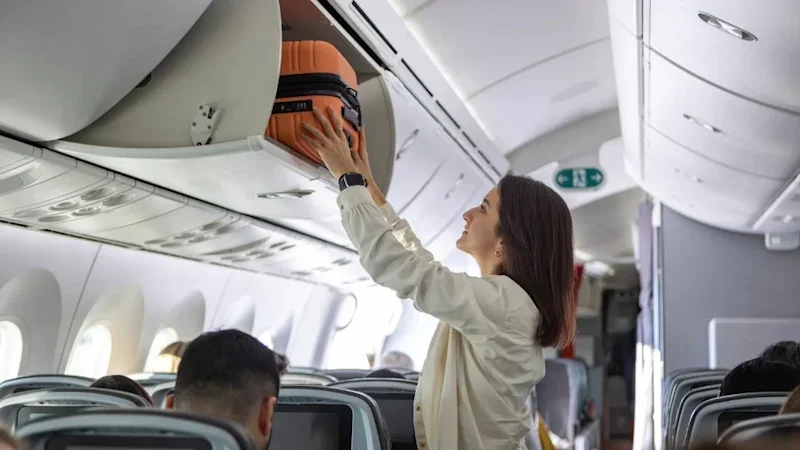
Jetstar will halve the number of carry-on items economy-class passengers can take onto its flights and start charging fees for guaranteed space in overhead bins, even as the budget airline increases the weight allowance for bags in the cabin.
The airline allows passengers on economy fares to take on one main item, which can be stowed overhead, and one smaller item under the seat in front of them. From February, passengers will be allowed just one single carry-on bag and face boarding a flight with full overhead bins if they do not pay for priority access.
The new priority carry-on fees would start at $25 one-way on selected flights and could vary, Jetstar said, providing a range from $25 for Launceston to Sydney and $52 from Cairns to Tokyo.
Customers paying the new overhead compartment fee will get priority access by being allowed to board the plane first. Passengers who don’t pay up will still have access to the overhead bins, but only after those who pay have stowed away their carry-on bags.
While the airline slashes the number of carry-on items passengers can take from two to one, the single carry-on bag can weigh up to 10 kilograms, up from the current limit of seven kilograms. Jetstar will require passengers to store the free item under the seat in front of them.
The change means handbags, laptops, coats, blankets and umbrellas will have to fit into one bag, rather than being the second item passengers are allowed to take on board.
The model of charging for carry-on storage is a model adapted from European no-frills carriers such as easyJet, Ryanair and Wizz Air. It’s a cash spinner, with ancillary fees such as baggage and seat selection fees generating close to a third of Ryanair’s €15.54 billion ($25.5 billion) revenue in the past financial year.
Jetstar said the luggage rule change was aimed at speeding up boarding times, which is a core concern as delays in boarding translate into delayed departures, which can cascade into other issues.
“From February, the main thing customers will need to think about is the size of their carry-on,” said Jetstar chief executive Stephanie Tully. “By giving customers an underseat bag with the option to add priority carry-on, we can make better use of overhead locker space, streamline boarding and help more flights depart on time.”
For passengers on existing bookings including two carry-on items for flights departing before February 2, 2027, the carry-on allowance remains unchanged. For flights departing after February 2, 2027, customers on those fares will get the priority carry-on option.
Jetstar ranked as the nation’s lowest airline for on-time departures in June 2026, according to the Bureau of Infrastructure and Transport Research Economics. It posted a score of 75 per cent, compared with 80.8 per cent for Virgin and 87.8 per cent for Qantas.
Even before the new charges, Jetstar has been a cash-generator for parent company Qantas. In 2025, Jetstar’s domestic network delivered underlying pre-tax earnings of $462 million and a pre-tax margin of 16 per cent, helped by “strong leisure demand and continued strength in ancillary revenue”.
The Business Briefing newsletter delivers major stories, exclusive coverage and expert opinion. Sign up to get it every weekday morning.