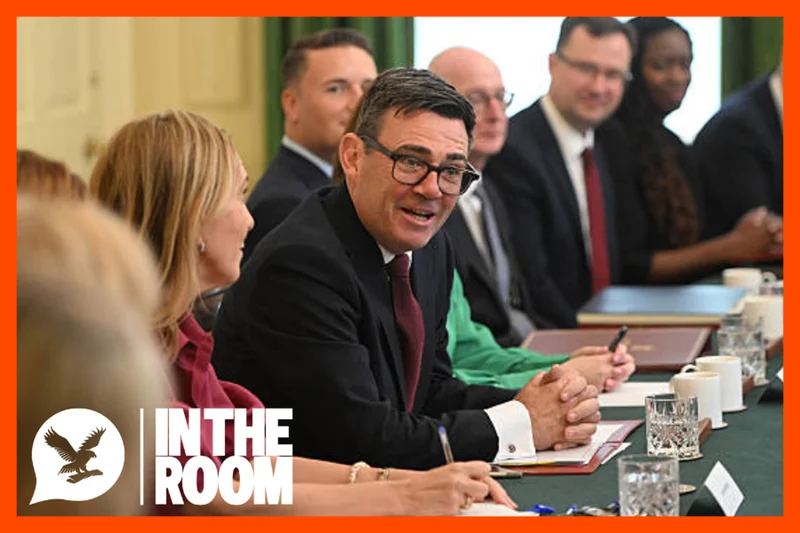
Andy Burnham’s new cabinet has already notched up several milestones. It is the most northern cabinet since the Second World War and includes more women than any before it.
There is, however, one kind of experience in notably short supply: running a business.
Few of the new government’s senior figures have spent significant time building companies or working as entrepreneurs. Jonathan Reynolds, who has returned as business secretary after previously holding the role between July 2024 and September 2025, is a solicitor by training.
Nigel Farage has been among the loudest critics of Labour’s relatively thin private-sector credentials. But does it matter whether ministers have first-hand experience of business?
Jimmy McLoughlin OBE believes it does.
Now the host of the Jimmy’s Jobs of the Future podcast, McLoughlin previously served under Theresa May as a special adviser and director of business engagement at No 10.
Speaking to Helen MacNamara and Cleo Watson on the first episode of the In The Room: Lessons From No.10 series, he argued that ministers need not all have run companies themselves, but must understand the people who do.
Asked whether Nigel Farage was right to criticise Labour for lacking ministers who had run a business, McLoughlin said: “I think it’s a problem that none of them have, yes. I don’t think you need everyone to have run a business or have private sector experience, but I think you do need people that understand business.”
He added that Labour’s relative lack of preconceptions could sometimes work in its favour. “Obviously, the Conservative Party is seen as the party of business,” he said. “That would be a challenge sometimes to the business community because these people would have quite strong views already about business and what business needed.
“So, in some ways, the business community, I think, prefers dealing with the Labour Party because it’s more of a blank canvas.”
The problem, McLoughlin suggested, is not necessarily hostility towards business, but the risk that it becomes an afterthought.
“So much of government is about priorities,” he said. “And business inevitably just falls down the Labour Party’s agenda. It’s just not as intrinsic.”
The divide between politics and business begins long before ministers enter government. McLoughlin argued that too few people with private-sector experience are being persuaded to stand for office in the first place.
At the same time, the path to becoming a successful entrepreneur has changed. The internet and access to global markets mean founders can now build considerable wealth much earlier in their careers.
“You used to have to spend your whole career in business to make the wealth,” he said. “Now, because of the internet and access to global markets, you can do that much quicker. There are entrepreneurs who have made millions of pounds by their mid-thirties.
“I think you’ve got a lot of those people looking at politics and thinking: ‘The country’s not in a great space. I’ve made my money. Should I get involved?’”
McLoughlin credited Labour with attempting to bridge the experience gap by bringing business figures into government.
Poppy Gustafsson, the co-founder of cybersecurity company Darktrace, served as investment minister until September 2025. James Timpson left his role as chief executive of the Timpson Group, which has long employed former prisoners, to become prisons minister in July 2024. He stepped down on 20 July.
“Labour have done quite a good job of trying to fill in the gaps,” McLoughlin said.
But appointments from outside parliament can only go so far.
“I do think, on the politician side, it makes a difference to have people who have run businesses.”
Listen to the full episode of In The Room on Apple Podcasts or Spotify, or watch on YouTube.