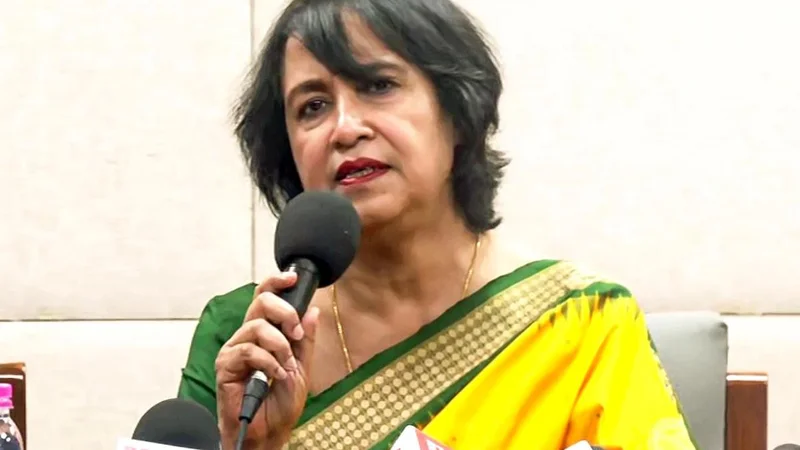
The All India Muslim Personal Law Board (AIMPLB) has condemned the remarks of exiled Bangladeshi writer Taslima Nasrin calling for a ban on madrasas, dubbing them “inflammatory, misleading, and factually baseless”. Ms. Nasrin, who returned to Kolkata last week after nearly two decades, also called for a Uniform Civil Code in the country.
The spokesperson of AIMPLB, S.Q.R. Ilyas, in a statement on Tuesday described Mr. Nasrin’s comments as “an irresponsible attempt by a foreign national to interfere in India’s internal affairs”.
Mr. Ilyas also took objection to the allegation that the Islamic seminaries promote terrorism. “To allege that Islamic seminaries promote extremism or produce the so called jihadis is nothing but a blatant falsehood. It is slanderous and a deliberate attempt to malign an entire religious and educational tradition. Such baseless accusations not only hurt the religious sentiments of millions of Indian Muslims, but also appear to be a calculated effort to vitiate the country’s communal harmony,” Mr. Ilyas said.
He regretted that “a foreign national, who is living in India as a refugee, is making inflammatory comments on the country’s religious, constitutional, and social issues”. The AIMPLB urged the Government of India to ensure that nobody is allowed to spread hatred under the garb of freedom of expression. Mr. Ilyas emphasised that India cannot permit anyone, under the guise of freedom of expression, to spread hatred, defame religious institutions, or interfere in the country’s internal affairs.
Referring to Ms. Nasrin’s comments on Bangladesh, Mr. Ilyas said that her remarks were “equally irresponsible and inconsistent with India’s balanced foreign policy. Such statements have the potential to adversely affect bilateral relations between the two neighbouring countries”.
The board found an echo of its voice in Jamiat Ulama-i-Hind, whose president Arshad Madani also hit hard at attempts to paint madrasas in a negative light.
“Declaring madrasas as hubs of terrorism is the height of communalism and prejudice,” Mr. Madani said on Tuesday. He also took objection to similar remarks made by Uttar Pradesh Deputy Chief Minister Keshav Prasad Maurya. Members of organisations “whose leaders sought pardon from the British are calling madrasas as dens of terrorism,” he said, adding that “labelling the country’s millions of educational institutions, along with their millions of students, teachers, and graduates, as terrorists is highly condemnable and a deliberate attempt to undermine social harmony.” Mr. Madani also took objection to attempts to de-recognise madrasa certificates and degrees of Adib Mahir and Adib Fazil by the Uttar Pradesh government.
Mr. Ilyas reminded that the campaign to malign Islamic seminaries is not new. “Similar allegations have been made repeatedly over the past several decades, yet neither those making these accusations have ever produced any credible evidence, nor has any investigative or security agency in the country substantiated such claims. Despite this, vilifying madrasas has become part of an organised political and ideological campaign,” he stated. He claimed thousands of madrasas across India provide education to millions of children without placing any financial burden on the national exchequer.
Published - August 04, 2026 10:59 pm IST