UN investigators urge Canada to step up protection for threatened Sikh activist
Canada hasn't publicly responded to letter sent 2 months ago
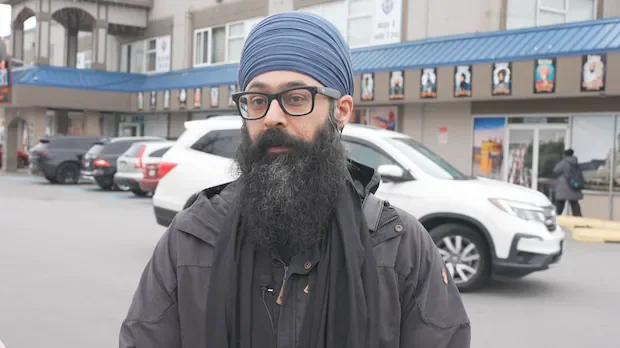
Five UN special rapporteurs have written to the government of Canada seeking answers to a series of questions about threats to the life of a Sikh Canadian activist, Moninder Singh of British Columbia.
The rapporteurs also urge the federal government "to accelerate the investigations into these allegations" and to "hold perpetrators accountable."
They write that they have "serious concern" over what they say is "an imminent threat" to the lives of Singh and his family, and that it falls "within a broader pattern of transnational repression by Indian authorities against Sikh activists in different countries, including Canada."
The letter was written on June 3 but not published immediately, because UN rapporteurs typically give countries 60 days to respond and then publish the letter and the response together.
WATCH | Arrests made in connection to killing of B.C. activist:In this case, the letter was published without an answer from Ottawa.
CBC News has asked the government of Canada about the letter, and the UN's requests for information, but did not receive a response at the time of publication. CBC News also sought a response from the government of India, but had not received one at the time of publication.
The Modi government has never acknowledged any role in the assassination of Hardeep Singh Nijjar or any other acts of violence in Canada.
Detailed threats
The UN communication details the four "duty to warn" letters received by Moninder Singh from Canadian police. The most recent is from February 2026, after the Carney government moved to restore normal diplomatic relations with India.
The rapporteurs note that the duty to warn letter was the most alarming Singh had received to date.
"This warning was reportedly based on intelligence assessed by the Canadian police as sufficiently serious as to require direct notification to his home of a plan to assassinate Mr. Moninder Singh, his wife and two children," the letter said.
"This was the first time that such notice included his wife and children."
Singh told CBC News that he became aware the UN was looking more deeply into his case when the Geneva-based International Service for Human Rights forwarded a report to the UN secretary general.
- AnalysisSenior RCMP officer's 'no evidence' comment about India seems to contradict past statements
- Minister says there's 'a lot more work to do' with India after Canadian official says it's no longer a threat
He was then invited to Geneva and met with the special rapporteurs. "They started collecting information from me. They were doing their own research into this already," he said.
The letter says the alleged threats "may constitute unlawful intimidation and reprisals in direct retaliation" to working with UN human rights bodies.
Singh said he is disappointed that Canada doesn't appear to have responded.
"They still have the opportunity," he said. "And we will be approaching the permanent mission in Canada in Geneva to get a response."
Like other Sikh activists, Singh says the Carney government has been too quick to turn the page with India and accept New Delhi's assurances that it won't interfere or use violence and intimidation in Canada in order to focus on building the trading relationship.
"I think the political brass keeps flipping based on what they think their needs are," he said.
"But I think it's been pretty consistent from law enforcement side.… they still check in, they're still looking for information, they're still working with the community members that are receiving these threats."
Letter urges more protection, investigation
The UN letter is signed by five rapporteurs: Ben Saul of Australia, special rapporteur on the promotion and protection of human rights and fundamental freedoms while countering terrorism; Gina Romero of Colombia, special rapporteur on the rights to freedom of peaceful assembly and of association; Andrea Bolaños Vargas, also of Colombia, special rapporteur on the situation of human rights defenders; George Katrougalos, independent expert on the promotion of a democratic and equitable international order and a former Greek foreign minister; and British Iranian Nazila Ghanea, special rapporteur on freedom of religion or belief.
The rapporteurs remind Canada "of its duty under articles 6 and 9 of the International Covenant on Civil and Political Rights, ratified by Canada on 19 May, 1976, to protect all individuals from all reasonably foreseeable threats to life or bodily or mental integrity by governmental or private actors."
Singh says he appreciates the UN's interest in his case, but it doesn't necessarily make him feel any safer in the short term.
- Sikh advocates, Canadian politicians respond to 'Operation Hard Ball' crackdown on 3 India-based crime gangs
- Carney government says India threat is over — Sikh activists say not so fast
He is also highly critical of the duty-to-warn system, a British Columbia law which requires police to warn an individual when they have intelligence that his or her life may be in danger.
"The duty to warn, unfortunately, is exactly what it says it is. It's a duty to warn. And after that, the individual is kind of left on their own," he said.
The UN's letter calls on Canada to do more to protect Singh and his family along with "similarly situated individuals on Canadian soil" and to report back on steps taken.