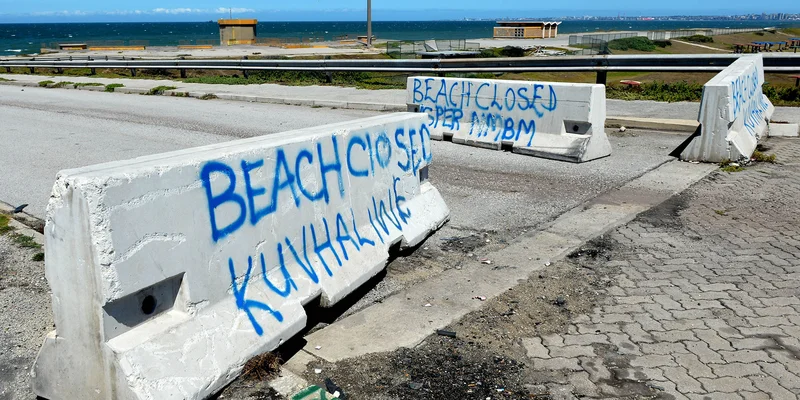
Nelson Mandela Bayâs long-running sewage and wastewater crisis has reached the point where the South African Human Rights Commission (SAHRC) says constitutional rights are at stake, after an investigation found evidence of pollution, inadequate monitoring and failures to prevent wastewater-related contamination.
The commission has given Nelson Mandela Bay Municipality 30 days to submit a remedial action plan, setting out how it will address the findings, including investigating pollution hotspots, strengthening water-quality monitoring and reporting on progress.
The report, released in July, follows years of complaints, stakeholder concerns, public reports and media coverage about inadequate wastewater treatment, effluent contamination, sewage spills, affected beaches and degraded riverine, estuarine and coastal environments in the metro.
The commission found that water-quality problems in Nelson Mandela Bay were not isolated incidents, but part of a broader pattern of sewage-related pollution risks, wastewater infrastructure failures and monitoring challenges affecting rivers, estuaries and coastal areas.
The commission described the results as a material public-health risk signal requiring investigation, repeat sampling and appropriate communication with the public.
Independent laboratory testing commissioned for the investigation found severe contamination at certain wastewater-related sites and riverine areas.
SAHRC Eastern Cape provincial manager Eileen Carter states in the report that the results include extremely elevated faecal indicator organisms, high organic loading, elevated nutrients and critically low dissolved oxygen.
Concern over beaches
The report notes that results from Nelson Mandela Bay beaches sampled on 2 and 16 March 2026 were consistent with sewage-related pollution risks and raised concerns about possible failures across the wastewater system, including treatment, conveyance, containment, maintenance and process control.
The commission cautioned that coastal water quality could change rapidly and that a single lower-risk sample could not be treated as proof that conditions remained safe. For coastal recreational waters, the benchmark is no more than 500 E. coli per 100 millilitres and no more than 185 enterococci per 100 millilitres.
At New Brighton Beach, E. coli increased from 10 most probable number (MPN)/100ml on 2 March to 4,360 MPN/100mL on 16 March 2026 â more than eight times the acceptable coastal recreational-water benchmark.
Enterococci increased from below 10 MPN/100ml to 388 MPN/100ml over the same period, exceeding the benchmark of 185 per 100ml.
Hobie Beach also recorded elevated E. coli levels, with 1 401 MPN/100ml on 16 March 2026 â almost three times the applicable benchmark.
Other beach samples showed lower levels of E. coli, with Kings Beach recording 369 MPN/100ml and Humewood Beach 203 MPN/100ml. Pollock Beach, Bluewater Bay and Wells Estate Beach each recorded 10 MPN/100ml.
Carter said the variation between sites demonstrated why an isolated lower-risk result could not be treated as proof of sustained safety. The report noted that coastal water quality could change materially over a short period and required repeat monitoring, source investigations and appropriate public-risk communication where unsafe or potentially unsafe conditions arose.
The findings come against a backdrop of repeated sewage-related beach closures and public complaints. In June 2025, Brighton Beach was closed following sewage pollution concerns linked to vandalism of municipal infrastructure.
In July 2025, Kings Beach was closed after a sewage spill caused by a sewer pipe failure in the South End area resulted in contamination entering the stormwater system and reaching the beach.
Rivers also a concern
The commission further noted repeated reports and stakeholder concerns relating to contamination of rivers including the Swartkops, Chatty, Baakens and Papenkuils.
The concerns included untreated or partially treated sewage linked to ageing or failing wastewater infrastructure, pump station failures, inadequate maintenance, high levels of faecal contamination, dead aquatic life, foul odours and degraded river conditions.
âThe commissionâs independent testing was finalised on 7 November 2025. The results at the Baakens and Chatty sites reflected pollution pressure, including organic enrichment, nutrient-related stress and faecal contamination indicators.
âThese findings require further investigation, active monitoring and remedial action by the municipality and relevant regulatory authorities,â Carter said.
âConsidered cumulatively, these reports support the conclusion that concerns regarding sewage spillages, wastewater infrastructure failures, beach closures, elevated microbial levels, odour complaints, fish die-offs and contamination of public water environments were repeatedly raised in the public domain over several years.
âThey provide important historical context and demonstrate that the issues investigated by the commission were not isolated, unknown or unforeseeable. â
The commission has given Nelson Mandela Bay Municipality 30 days to submit a remedial action plan setting out how it will address the findings, which the report says implicate constitutional rights.
âThe commission finds that wastewater-related pollution and failures to prevent sewage contamination implicate the right to an environment that is not harmful to health or well-being,â the report read.
The metro has to submit a source investigation plan addressing the Baakens and Chatty sites. The plan must identify probable sewage, stormwater, industrial, urban runoff or mixed-source contamination pathways and set out remedial steps, responsible officials and timeframes.
The City was also directed to conduct repeat water quality monitoring at the Baakens and Chatty sites and submit results to the commission for a period of 12 months, with the first set of results expected within 30 days of receipt of the report.
Additionally, the municipality had to also provide details of pump station failures, sewer overflows, wastewater treatment failures and the remedial action taken in affected catchments.
Risk to beachgoers
Wildlife and Environment Society of SA (Wessa) Eastern Cape chair Gary Koekemoer said the metro had three coastal wastewater discharge outfalls â from Fishwater Flats, Cape Recife and Driftsands wastewater treatment works â and that none was compliant with the required water-quality standards.
âThis is definitely a health risk for beachgoers as they could get sick from the bacteria if they swim. It also impacts on shellfish. The problem with our waste is that itâs not just biological matter, thereâs other chemicals that the municipal system does not filter out, including microplastics,â Koekemoer said.
âWe have a very unique and biodiverse ecosystem. The E. coli can stimulate an algae bloom, which happened a few years ago when the sea turned red. It is highly toxic to fish and humans canât eat the fish because itâs toxic.â
Koekemoer said one of the biggest obstacles to resolving the sewerage crisis was the municipalityâs failure to spend its infrastructure budget effectively and prioritise urgent maintenance and upgrades.
âWe are compiling a report on the state of the sewerage system as the Civil Society Coalition. We are in crisis at this point. The Green Drop report, which is released every two years, on the state of sewerage across the country indicates we went from 81% in 2011 down to 36% currently, and this is not even included in the commissionâs report. We are in a downward loop where we are not doing enough to stop the problem while the system continues to collapse further.â
He said restoring dignity to areas such as the Baakens River was important as they were used for recreational activities. Cyclists and runners often complained about the stench caused by the sewage spills.
Koekemoer stated that the long-term solution is to resolve the suspended city manager issue, appoint a permanent executive director for the infrastructure and engineering directorate and fill the many vacancies to improve service delivery on the ground.
Report welcomed
DA MPL Vicky Knoetze said her party welcomed the commissionâs clear stance and its insistence on measurable remedial action, credible monitoring, public-risk communication and accountability for continued non-compliance.
âIn Nelson Mandela Bay, the report records serious pollution pressure and high E. coli levels. These findings require urgent source investigation, sustained monitoring and timely public warnings when water may be unsafe.
âThe DA will monitor the municipalityâs implementation of the reportâs recommendations, including their respective remedial action plans, ongoing water-quality testing, improved public-risk communication and measures to address monitoring and information gaps.â
Knoetze said the existing interventions had plainly failed to secure sustained compliance.
âI will therefore write to cooperative, governance and traditional affairs MEC Zolile Williams requesting that he urgently convene the Provincial Municipal Infrastructure Technical Task Team and establish a dedicated wastewater intervention and compliance workstream.â
Municipal spokesperson Sithembiso Soyaya said the City had planned an inspection visit to the affected areas.
âWe are aware and are planning an oversight visit and feedback on the matter, where weâll brief the media. Weâll advise accordingly.â DM