‘Fox \& Friends’ hosts discuss the growing popularity of full-body MRI scans for early disease detection. Fox News senior medical analyst Dr. Marc Siegel shares his concerns about the technology.
NEWYou can now listen to Fox News articles!
After a former "Bachelor" contestant said a preventive scan uncovered a brain tumor before symptoms appeared, doctors are once again weighing the promise — and pitfalls — of full-body MRI screenings.
The renewed attention comes as celebrities including Kim Kardashian, Paris Hilton and now former "Bachelor" contestant Josh Seiter have publicly discussed preventive body scans, fueling consumer interest in the technology despite ongoing debate among medical experts about its benefits for healthy people.
Full-body scans use different technologies, including magnetic resonance imaging (MRI), computed tomography (CT) or positron emission tomography (PET), according to the Dana-Farber Cancer Institute.
'BACHELORETTE' STAR REVEALS BRAIN TUMOR DIAGNOSIS AFTER ROUTINE HEALTH SCAN
The goal is to detect early signs of diseases such as cancer, heart disease and other abnormalities.
Dr. Daniel Durand, chief medical officer at Prenuvo, one of the biggest U.S. providers of full-body scans, compared the scan to a "virtual physical" in which a radiologist examines the inside of the body in a way that a traditional annual physical cannot.
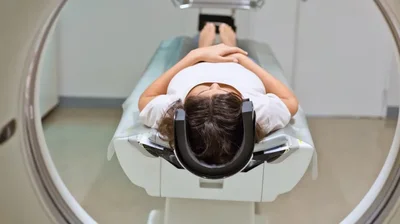
Full-body scans use a variety of technologies, including magnetic resonance imaging (MRI), computed tomography (CT) or positron emission tomography (PET). (iStock)
Prenuvo's scan uses MRI technology to collect a "vast amount of health data," the Maryland-based doctor previously told Fox News Digital.
"Two licensed providers analyze this data, explain its relevance directly to you and offer you guidance on the next steps necessary to optimize your health," he said.
5 CANCER TYPES WHERE SCREENINGS SAVE THE MOST LIVES
Insurance does not typically cover whole-body scans.
"Coverage usually varies widely by insurance plan, jurisdiction, and the specific clinical guidelines for each genetic condition," Dr. Mikhail Varshavski, more commonly known as "Dr. Mike," a podcaster and primary care physician in New Jersey, previously told Fox News Digital.
A chief medical officer compared the scan to a "virtual physical" in which a radiologist examines the inside of the body in a way that a traditional annual physical cannot do. (Prenuvo)
"My general understanding is that for screening purposes, the test is usually not covered, given the lack of documented clinical benefit versus harms."
Some coverage may be offered, however, for those with high-risk genetic syndromes or other specific medical conditions, the doctor noted.
"Our hope is that over time, insurers will see the many benefits of our proactive approach to healthcare and will broaden coverage," Prenuvo’s Durand said.
COMMON CANCER TYPE COULD BE DETECTED WITH NEW BLOOD TEST
"We are actively engaged in several research studies that could provide a foundation for insurance reimbursement."
Depending on the provider and options selected, prices for full-body scans can be as high as $2,500.
The two biggest providers of full-body scans are Prenuvo (headquartered in California) and Ezra (based in New York City).
Potential benefits
Dr. Brett Osborn, a Florida neurologist and longevity expert, has also spoken with Fox News Digital about the benefits of full-body MRI scans.
"Full-body scanning, mainly through MRI, presents a significant advancement in modern medicine's diagnostic capabilities," he said.
"In many cases, the earliest signs of diseases — like cancers, infections or aneurysms — will be seen."
"MRI technology allows for a comprehensive, non-invasive examination of the body to detect a wide range of conditions, including cancer and vascular malformations like aneurysms, without the need for potentially harmful radiation, as is the case with CT scans," he also said.
Durand claimed that a Prenuvo scan can detect many diseases based on changes to the inside of the body that can be detected by MRI.
"MRI technology allows for a comprehensive, non-invasive examination of the body to detect a wide range of conditions, including cancer and vascular malformations like aneurysms, without the need for potentially harmful X-rays, as is the case with CT scans," one neurosurgeon said. (iStock)
"Usually these changes happen before symptoms occur or before there are signs on a physical exam," he told Fox News Digital.
"So, in many cases, the earliest signs of diseases — like cancers, infections or aneurysms — will be seen," he went on. "By seeing them earlier, you can be treated earlier, hopefully before the disease has done little to no permanent damage."
Doctors share concerns
Dr. Mike told Fox News Digital that he has not recommended that any of his patients get an MRI screening scan.
"The high upfront cost and lack of clear medical indication for broad screening (if you’re low-risk and asymptomatic) lead me to agree with the major medical organizations that routine whole-body MRI screening for the general population is not recommended," he said.
CANCER SCREENINGS: HERE ARE 5 TYPES AND CRITICAL INFORMATION TO KNOW ABOUT EACH
Much of the popularity of these scans has been driven by celebrities, who sometimes receive them for free, Dr. Mike said — which he finds concerning.
"My understanding is that even receiving a free scan is a business relationship that the FTC requires disclosing," he said. "My understanding is that the companies themselves cannot claim their tests save lives, so they work with celebs who can make personal claims that are not subject to the same investigational scrutiny."
"With the current level of technology, I am against full-body scans in favor of more directed workups initiated by expert physicians who know what they are looking for," one doctor told Fox News Digital. (iStock)
"This also sends a conflicting message to the consumer and creates confusion."
Dr. Marc Siegel, clinical professor of medicine at NYU Langone Health and Fox News' senior medical analyst, also does not recommend these scans to patients.
"With the current level of technology, I am against full-body scans in favor of more directed workups initiated by expert physicians who know what they are looking for," he has told Fox News Digital.
"If you do a full-body scan, you will be inclined to pursue every positive finding, whether they are really significant or not."
"If you do a full-body scan, you will be inclined to pursue every positive finding, whether they are really significant or not."
Siegel also noted the high expense and the fact that full-body scans are "frequently oversensitive."
TEST YOURSELF WITH OUR LATEST LIFESTYLE QUIZ
"They may take the place of more directed, accurate studies and screening tests that are more suited to the symptoms, history and genetic tests in specific patients," Siegel cautioned.
The doctor also noted the current shift toward more personalized healthcare approaches, "augmented by not just genetics, but also artificial intelligence."
"This will lead to more directed workups, not to more full-body scans."
One doctor warned of mental risks, including anxiety during the procedure (claustrophobia), stress from incidental findings and an increase in health-related worries. (iStock)
The most significant risks that come with these full-body scans, according to Dr. Mike, are the issues that arise with false positives, overdiagnosis and overtreatment.
There are also mental risks, including anxiety during the procedure (claustrophobia), stress from incidental findings and an increase in health-related worries, the doctor noted.
"Some proponents say it can ease health-related anxiety; however, I am pretty skeptical of that claim," he said. "Based on my clinical experience, even getting a clear scan would secure peace of mind only temporarily."
"We don't know if we are saving more people by catching disease early or harming more people with overdiagnosis, false positives and overtreatment."
Research published in 2020 found that imaging abnormalities are expected in about 95% of screened subjects, according to the doctor.
"This means the majority of those scanned will have some sort of finding presented to them," he said. "I can’t imagine how helpful that would be to someone already prone to health worries."
CLICK HERE TO SIGN UP FOR OUR HEALTH NEWSLETTER
During a 2025 podcast interview with Dr. Mike, Andrew Lacy, CEO of Prenuvo, said that long-term data on these screening scans is not yet available.
"So, currently, we don't know if we are saving more people by catching disease early or harming more people with overdiagnosis, false positives and overtreatment," Dr. Mike said.
"Before having a CT screening procedure, carefully investigate and consider the potential risks and benefits and discuss them with your physician," the FDA advised. (iStock)
"Barring emergencies, if I don't have clear data about the harms and benefits of an intervention, especially one that is meant to be used on healthy people, I cannot widely recommend it."
Prenuvo did cite a recent study of over 1,000 patients who were followed over a one-year period.
"In this sample, we found pathologically-proven cancer in 2.2% of Prenuvo patients," Durand told Fox News Digital. "Importantly, most of these cancers were early stage, and the majority were cancer types for which there is no widely accepted screening exam."
Guidelines of health agencies
The most recent guidance from the FDA echoes the doctors’ concerns.
"At this time, the FDA knows of no scientific evidence demonstrating that whole-body scanning of individuals without symptoms provides more benefit than harm to people being screened," the agency stated on its website.
CLICK HERE FOR MORE HEALTH STORIES
The FDA also warned about the "relatively high radiation exposure" from CT scans. While this exposure risk is "greatly outweighed" by the benefits of diagnostic and therapeutic scans, the agency said that for whole-body screening of asymptomatic people, "the benefits are questionable."
CLICK HERE TO GET THE FOX NEWS APP
"Before having a CT screening procedure, carefully investigate and consider the potential risks and benefits and discuss them with your physician," the FDA advised.
The American Academy of Family Physicians (AAFP) also recommends against full-body scans for early tumor detection in asymptomatic patients.
Melissa Rudy is senior health editor and a member of the lifestyle team at Fox News Digital. Story tips can be sent to melissa.rudy@fox.com.