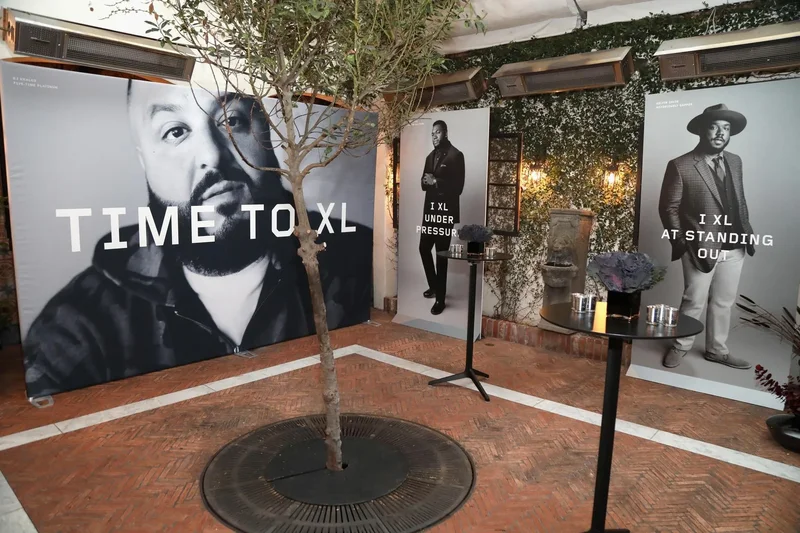
DXL has reconsidered its own merger plan. (Photo by Jerritt Clark/Getty Images for DXL)
getty
Just seven months ago, Destination XL Group was pitching its merger with FullBeauty Brands as a transformational deal that would create a $1.2 billion leader in the fast-growing inclusive apparel market.
Today, the retailer is urging its own shareholders to vote against the transaction that it negotiated.
The reversal is unusual not simply because boards rarely disown their own strategic decisions, but because it shows how quickly the economics of retail acquisitions can change when consumer spending weakens, financing becomes more expensive and debt-heavy balance sheets come under greater scrutiny.
DXL, the parent company of DXL Big + Tall and Casual Male XL, filed a preliminary proxy statement with the U.S. Securities and Exchange Commission recommending shareholders vote against the issuance of shares required to complete the merger with FullBeauty Brands.
That recommendation marks a dramatic change from the enthusiastic endorsement that accompanied the announcement of the "merger of equals" in December 2025.
Since signing the agreement, the directors say they have reassessed the transaction in light of a deteriorating consumer environment, FullBeauty's debt burden, concerns over the private company's potential negative equity value and what they now describe as "substantial economic dilution" for existing DXL shareholders.
The company said that, after evaluating those developments, the board concluded that "the merger and the transactions contemplated by the merger agreement... are no longer advisable and are not in the best interests of DXL and its stockholders."
Destination X Board’s Reasoning Is Blunt
That does not automatically kill the deal. The merger agreement technically remains in place, and shareholders must still vote on the proposal under the existing agreement. But recommending that investors reject the very issuance needed to complete the acquisition appears to make clear that management no longer believes the transaction should proceed on its current terms.
When the companies unveiled the merger, executives described the combination as creating one of North America's largest omni-channel retailers focused on inclusive sizing. Combined annual revenue was expected to reach approximately $1.2 billion, with management targeting $25 million of annual run-rate cost synergies and positioning the enlarged business to benefit from growing demand across both men's big-and-tall and women's plus-size apparel.
Singer Meghan Trainor and Miss USA Nia Sanchez at the FullBeauty Brands launch event in New York in 2015. (Photo by Noam Galai/WireImage)
WireImage
DXL dominates specialty big-and-tall menswear and as of May it operated 293 locations, the overwhelming majority under the DXL banner. FullBeauty, meanwhile, owns a portfolio of online-first brands including Woman Within, Roaman's, Jessica London and others serving plus-size consumers.
What appears to have changed is the board's assessment of FullBeauty's financial position. Although DXL continues to acknowledge the strategic merits of combining the businesses, directors now believe that FullBeauty's leverage materially alters the value equation for shareholders.
Destination XL Sees Consumer Crunch
The company’s own recent performance also reflects some of the current consumer spending pressures. DXL has experienced declining sales, and its shares have lost over 30% in the year to date, leaving management under pressure to pursue strategic alternatives capable of creating shareholder value.
Alongside the merger discussions, DXL has also found itself defending against repeated unsolicited takeover offers from Zodiac Partners II, a private investment firm that has argued shareholders would be better served by an outright sale of the company.
Zodiac initially launched a tender offer valued at $0.82 per share before subsequently increasing its proposal to $0.84 per share. Though the current value sits at around $0.62 per share, DXL's board rejected both approaches, arguing that the offers materially undervalue the business and advising shareholders not to tender their shares.
Only weeks after concluding that the FullBeauty merger required re-evaluation, DXL also rejected Zodiac's higher bid, leaving the company pursuing neither of the strategic paths currently available.
Instead, management appears determined to preserve flexibility while reconsidering longer-term options and instead DXL’ has taken the unusual decision to publicly recommend voting against its own transaction.