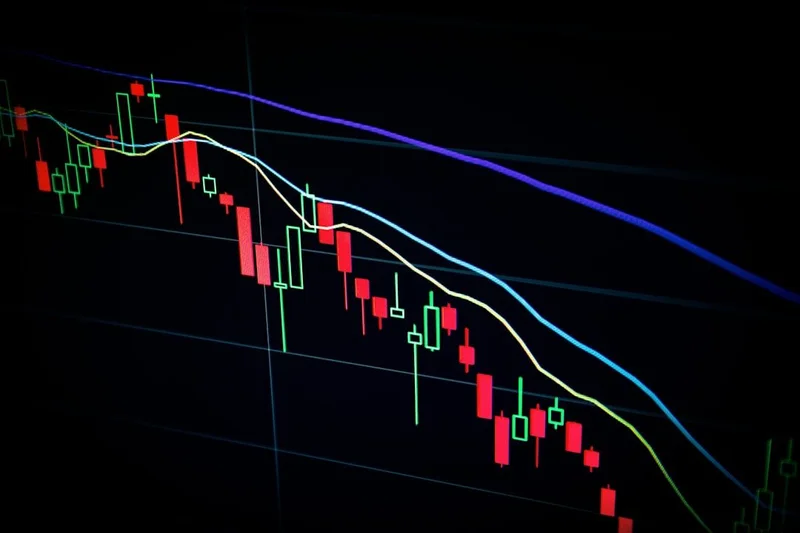
You set a stop at $58,000. Price drifts down to $58,200, and you feel it coming. So you do the reasonable thing. You give it a little room. Move the stop to $57,000. The trade needs space to breathe, right?
That was the moment you lost. Not when price hit your original stop. When you decided your stop was a suggestion.
Here's the thing about a stop-loss you can move: it isn't a stop-loss. It's an intention. And intentions have a terrible track record under pressure. A real stop is a decision you made once, in a calm state, that the market executes whether you like it or not. The second you can override it mid-trade, you've handed the exit back to the version of you that's least equipped to make it — the one currently watching the position bleed and looking for reasons to hope.
Loss aversion is the reason. The pain of taking a loss feels roughly twice as intense as the pleasure of an equal gain. So when price approaches your stop, your brain isn't weighing probabilities. It's trying to avoid pain. Widening the stop makes the pain go away for now. It just moves it somewhere bigger, and later.
This shows up in the data. Terrance Odean's study of thousands of retail accounts found traders are about 1.5 times more likely to sell a winner than a loser, and that this pattern — holding losers, cutting winners — costs somewhere between 3 and 5 percent in annual returns. The disposition effect, it's called. On average, people hold their losing trades two to two and a half times longer than their winners. Every widened stop is a small vote for that outcome.
I did this for years. My stops were promises I made to myself, and I broke them the same way anyone breaks a promise nobody's enforcing. The trade that finally cured me was a short that went 4 percent against me. I'd moved the stop three times "just to be safe." It ended up an 11 percent loss on a position that should have cost me 2. The math wasn't the problem. My discretion was.
Most people think the fix is discipline. Try harder. Respect your stops. Be more professional about it. That advice fails for a specific reason: it asks the emotional brain to overrule itself at the exact moment it's least capable of doing that. Willpower is lowest when fear is highest, and those two events happen at the same time — right when price is testing your line. You're not going to out-discipline a hardwired pain response in real time. Almost nobody does, consistently, for years.
The actual fix isn't better willpower. It's removing the decision entirely. A stop that sits on the exchange as a resting order doesn't care how you feel at $58,200. It doesn't negotiate. It doesn't listen to the story you've invented about why this candle is different. It just does the thing you already decided was right when you could still think clearly.
That's the whole argument for automating the exit. Not that a machine is smarter than you — it isn't. It's that a machine can't be talked out of the plan by the one person with the strongest incentive to abandon it. You take the decision away from your future self, on purpose, because you already know your future self can't be trusted with it.
So here's the one thing worth doing this week: if your stops live in your head, or on a sticky note, or as a number you're "watching," move them onto the exchange as actual resting orders the moment you enter. Set it, then remove your own ability to touch it for the life of the trade. If you can't stop yourself from dragging it, that's not a discipline problem you'll fix with effort. That's a design problem you fix by taking your hands off the wheel.
A stop you can move isn't protecting you from the market. It's exposing you to yourself. And the market has never blown up an account. Traders do that, one reasonable-sounding adjustment at a time.
If removing your own hands from the exit is the part you keep failing at, that's most of the case for systematic trading — the exits execute without you in the loop.