With 90 days until the midterm elections, House Democrats are expanding the map of Republican-held congressional districts they believe they can potentially flip this fall.
The Democratic Congressional Campaign Committee, House Democrats' political arm, announced the addition of 12 new Republican-held districts to its "Districts in Play" list Wednesday, bringing the total number of GOP-held seats the party is targeting to 58. The list could offer clues for which races Democrats plan to spend heavily on as they aim to gain control of the House.
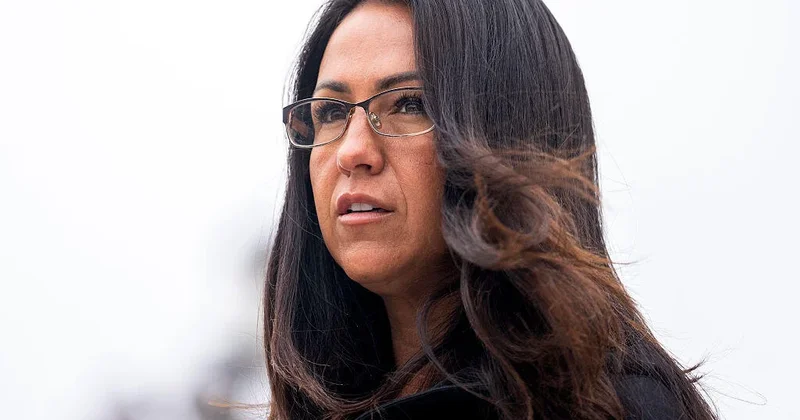
Democrats' new targets include the Colorado seats held by Rep. Lauren Boebert, who won by just over 11 points in 2024, and Rep. Jeff Hurd, who won by five points. North Carolina Rep. Richard Hudson, who chairs the National Republican Congressional Committee, also appears on the list, after he won by more than 18 points two years ago.
Other targets: Reps. French Hill of Arkansas, the influential chair of the House Financial Services Committee who won by just under 18 points in 2024, and Rep. Victoria Spartz of Indiana, who won her last race by almost 19 points.
The DCCC said its latest expansion reflects what it views as a favorable political environment for Democrats, pointing to recent polling and voter enthusiasm.
"House Democrats are expanding the battlefield deep into Trump terrain because we have a winning message focused on fighting for an Affordable America," DCCC Chair Rep. Suzan DelBene said in a statement. "At the same time, MAGA Republicans who historically have considered themselves 'safe' have let down the people they were elected to represent."
House Democrats' target list now spans more than two dozen states and ranges from battleground suburban seats to districts President Trump carried comfortably in 2024. It also includes four open seats that were held by Republicans.
Meanwhile, the National Republican Congressional Committee is targeting 36 districts, after adding seven to its roster two weeks ago. Those include perennially close districts in Washington, Texas, Virginia and Ohio, as well as several recently seats. Several of the Democratic House seats on the NRCC's target list were won by Mr. Trump in 2024.
"Vulnerable House Democrats are stuck defending a wildly unpopular record and a radical socialist agenda," Hudson said in a statement last month.
Republicans are defending a razor-thin House majority, and can afford to lose just two seats without ceding control of the lower chamber to Democrats. Both parties are expected to pour hundreds of millions of dollars into a relatively short list of races over the next three months.
Many Democrats believe the national environment could offer them tailwinds. Historically, the incumbent president's party almost always loses ground in the midterm elections, and polls show mounting voter dissatisfaction with the Trump administration, including its handling of cost-of-living issues and the war with Iran.
A CBS News poll found 47% of U.S. adults want Democrats to control Congress next year, compared to 40% who want Republicans to hold onto control.
Republicans, however, point to the fact that many voters are also skeptical of the Democratic Party's economic and immigration policies, and former President Joe Biden left office last year with low approval ratings. The GOP is also seeking to capitalize on between moderates and progressives within the Democratic coalition.
This year's House races were also shaken up by a mid-decade redistricting push that kicked off with Texas Republicans redrawing Texas' House districts at Mr. Trump's behest last summer, moving five Democratic districts to the right. California reacted by moving five of its GOP-held districts rightward, but several other red states redrew their maps to edge out Democrats.
Several of the NRCC's targets are newly redrawn districts in Texas, Missouri, Florida, Alabama and Louisiana. But Democrats have argued the redistricting scramble could create opportunities for them to pick up seats by making some GOP-held districts less red.