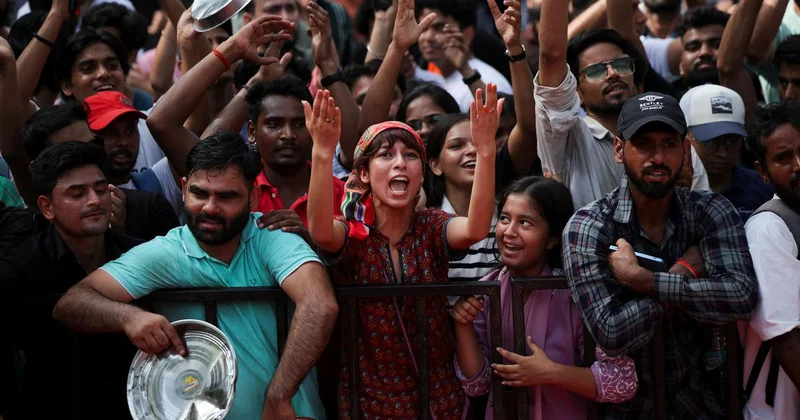
The Supreme Court on Wednesday said that the authorities should seek to understand the concerns of youngsters who had been protesting against alleged irregularities in the conduct of exams, reported Bar and Bench.
“We need to tread carefully so that these youngsters do not indulge in violence,” said Chief Justice Surya Kant while hearing a petition by retired Air Force officers seeking action against the organisers of the protests that spread across the country in July.
Kant added: “The better course is to counsel them and pacify them. The most powerful tool is listening. Listen to them and understand why they are shouting.”
The protests against alleged mismanagement of several competitive examinations had begun on June 6, when the Cockroach Janta Party political campaign staged a demonstration at Delhi’s Jantar Mantar to demand the resignation of Dharmendra Pradhan, the Union education minister at the time.
On July 20, thousands joined the protest. This came two days after the police forcibly took activist Sonam Wangchuk, who had been on a hunger strike for three weeks, to hospital.
The protesters’ march to Parliament was met with a crackdown by the police. Dozens were injured as the police used lathis, fired tear gas shells and pellet guns against the demonstrators. The police action turbocharged the agitation, which spread to other parts of the country. Pradhan resigned as the education minister on July 25.
In their petition, the retired officers said that action should be taken against the organisers of the protest for the violence on July 20. They claimed that allowing protesters to march to Parliament despite permission being denied for it would set a dangerous precedent, reported Bar and Bench.
“What if they had opened fire?” the officers’ counsel told the court. “They were not marching on a national highway. They were not marching on a railway line. They were marching towards the temple of democracy. Everyone must be held accountable.”
However, Kant said that the priority should be to facilitate peaceful protests.
“If some incident takes place, the police also need to exercise a great deal of restraint to ensure that the situation does not go out of hand,” Bar and Bench quoted the chief justice as saying.
He also added that decisions on dealing with such situations should be left to the law enforcement authorities.
On Monday, the Supreme Court said that states can withdraw first information reports filed against youth protesters wherever permissible.
The clarification came in response to concerns raised by petitioners that the court’s July 28 order, which allowed states to continue investigations into the FIRs, could hinder the withdrawal of cases.
In its July 28 order, the Supreme Court had directed that minors who had been detained should be released and no coercive action should be taken against protesting students as long as they did not have any “criminal antecedents”.
Closing the FIRs was part of the Union government’s promise to leaders of the Cockroach Janta Party to end the protests, the petitioners said on Monday.
In response, the bench clarified that the term “criminal antecedents” in the order referred only to “grave and heinous offences”.
Edited by Nachiket Deuskar.
We welcome your comments at letters@scroll.in.