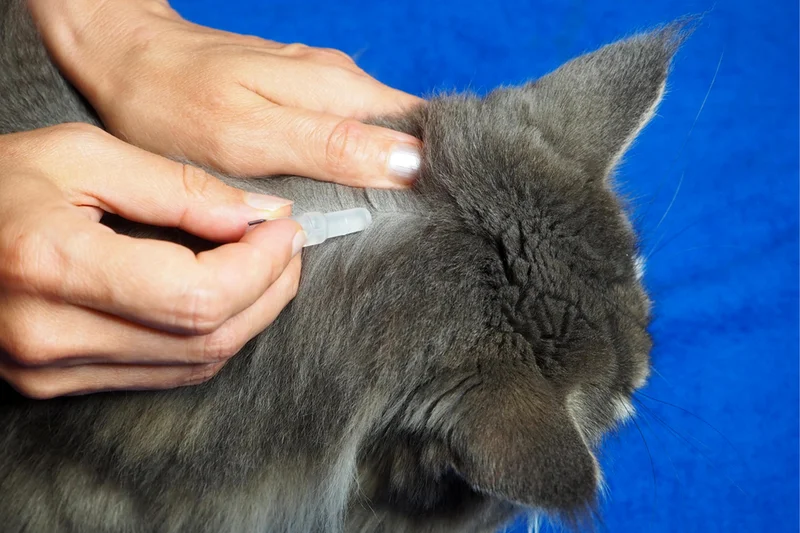
Millions of doses of pet flea treatment are being applied unnecessarily each year, potentially causing widespread damage to the environment, peers have warned.
The House of Lords Environment and Climate Change Committee is calling for a ban on the general sale of off-the-shelf and unchecked online pet treatments for fleas and ticks.
A new report from the committee said the intensive overuse of veterinary medications to treat for parasites such as fleas, ticks and worms in pets is not supported by robust scientific evidence.
It warned the treatments are released into the environment from homes and are potentially causing widespread damage to nature, in rivers and other aquatic systems as well as on land.
Two of the key chemicals used in treatments are fipronil and imidacloprid, which are banned for use as agricultural pesticides because of their impact on wildlife such as bees, while the committee said “very little is known” about the impacts of newer chemicals.
The peers said pet owners should receive a thorough assessment of their animal’s needs and advice about the potential health and environmental risks of pet parasite treatments, with the drugs only distributed through vets, pharmacists and appropriately trained people.
They also raised concerns about how close the pet health industry is to the regulatory and advice-setting frameworks.
The peers called on the Government to establish a clear and comprehensive evidence base on the use of the treatments, and to ensure research addresses significant evidence gaps between environmental impacts and the potential risks to human health.
They said there should be a more precautionary approach to reduce the number of unnecessary treatments, particularly for low-risk animals, including strengthening advice, ensuring they cannot be sold without qualified advice – including online – and making risks more visible on packaging.
The report also called for a review of the relationship between the industry and UK and international veterinary medicine regulators, to ensure appropriate and independent guidance is prioritised.
Baroness Sheehan, chairwoman of the committee, said: “Our report raises serious questions and concerns about the environmental risks of pet flea and tick treatments as well as how they are sold to pet owners.
“Their over-use on household pets is the equivalent of using a sledgehammer to crack a nut.
“The lack of scientific evidence and data, poor customer guidance and the relationship between the pet medication suppliers and regulators appear as murky as the waterways these flea treatments are polluting.
“Pet owners deserve accurate evidence-based guidance on the need for, and risks of, the existing and new chemicals which are being prescribed and the impact they are having on their pets, home and the environment.”
British Veterinary Association senior vice president Dr Elizabeth Mullineaux, said: “Parasiticides, like flea treatments, are vital tools in preventing, treating and protecting people and animals from disease and related welfare issues.
“However, there’s increasing evidence some of these products are damaging to the environment.”
She said the report’s recommendations were in parallel with many of the BVA’s own, saying: “We’ve long called for more research and for a risk-based approach to be taken when using these treatments.
“We also support calls for a ban on over-the-counter sales – it’s important pet owners have access to professional, tailored, veterinary advice on how to use these treatments appropriately, responsibly and safely when purchasing these products.”
George Duncan Jones, biodiversity policy lead at Greenpeace UK, welcomed the calls, saying that banning the sale of the toxic chemicals as part of over-the-counter flea treatments was “long overdue”.
“Reining in the use of these treatments is a crucial step towards cleaning up our degraded river systems and allowing life to flourish again in the water.”
A Veterinary Medicines Directorate spokesperson said: “We recognise that while pet parasite treatments play an important role in protecting pets and people from parasites and the diseases they carry, they are entering our watercourses, which could be contributing to wider environmental impacts.
“That’s why we have consulted on this issue to help us maintain appropriate market availability of these substances while also protecting wildlife and the environment.”
Donal Murphy, deputy chief executive of the National Office of Animal Health, said: “The animal health industry remains open to engage in constructive dialogue with regulatory authorities, the scientific community, vets, animal owners and government on how to address the concerns raised, including on data availability and research gaps, while also ensuring that animal health and welfare needs are catered for.
“NOAH supports the recently launched government ‘Be Spot-On Aware’ public information campaign, which educates pet owners on the careful, responsible application and disposal of flea and tick spot-on treatments.”
And a spokesperson for the Environment Department (Defra) said: “This Government is committed to restoring nature and cleaning up our rivers whilst upholding the highest animal welfare standards.
“While these treatments play a vital role in public and pet health against fleas and ticks, it is right that we assess the availability of these treatments to ensure correct usage by owners.
“The VMD have recently consulted on this as an important step towards reducing forever chemicals in our waterways and protecting the nation’s wildlife.”