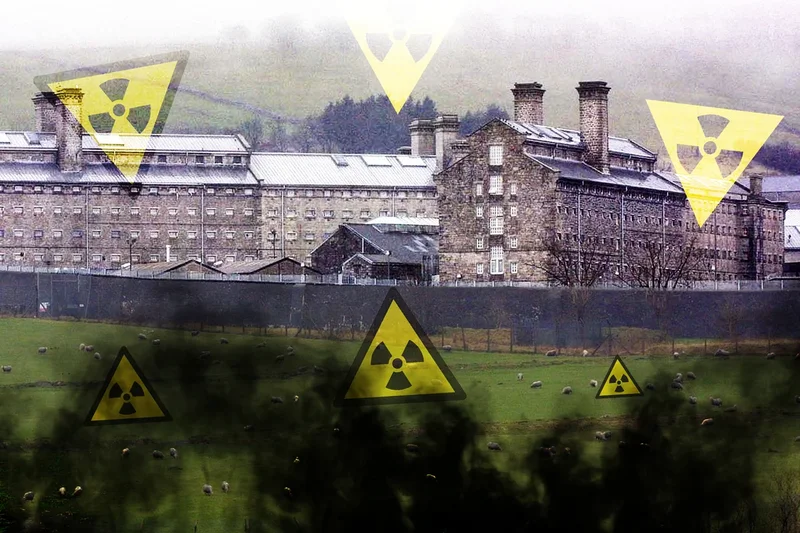
Hundreds more inmates and staff could have been exposed to cancer-causing gas after government testing reveals nine prisons are battling to contain high levels of potentially deadly radon.
The Independent revealed in March that the Ministry of Justice (MoJ) had recorded unsafe levels of the toxin at 42 prison and probation sites across the UK.
It followed the closure of HMP Dartmoor in Devon in 2024 after staff and prisoners were exposed to radiation well above the legal limit over a prolonged period. That prompted hundreds of former prison staff and prisoners have signed up to a group legal action against the MoJ seeking compensation.
Now, new data from the MoJ obtained through freedom of information (FOI) laws reveals that nine prisons have “above actionable” levels of radon as of last month. They include HMP Dartmoor, East Sutton Park, Exeter, Leeds, Lincoln, Maidstone, Parc, Portland and The Verne.
Control measures to limit exposure, such as restricting access to or closing affected areas, have been instigated by the prison service, The Independent understands.
The latest records show that 24 prisons have recorded radon levels above the legal limit at some point – up from the 16 sites that The Independent revealed in February.
The news comes as new prime minister Andy Burnham grapples with a growing prisons capacity crisis, which has prompted the government to release some criminals early to free up much-needed cell space in overcrowded jails.
Sarah Rigby, assistant general secretary at the Prison Officers Association (POA), said she hoped the prison service had “learned from their previous mistakes” at Dartmoor and were not continuing to put staff at risk.
The MoJ said it had put mitigation measures in place at the affected sites, such as ventilation and fans, to try to reduce the levels of the toxic gas. Radiation Protection Advisors have also been appointed to manage the risk, as required under workplace laws.
Mark Day, deputy director at the Prison Reform Trust, said the news underlined “how vital” tackling the demand for prison cells is.
“This concerning disclosure shows how little wiggle room the prison estate has to meet demand on prison places. Dartmoor has already been mothballed because of high radon levels. If further prisons have to close it would place the estate under significant pressure,” he said.
Data released through FOI shows that the most recent tests for high radon at the nine prisons range from between April 2024 for Dartmoor prison, to February 2026 at The Verne.
Asked why some prison measurements were last recorded in 2024 and 2025, the MoJ said all nine prisons had either been tested in the past year, were due to be tested, or were awaiting results.
A spokesperson said: “We routinely monitor levels of naturally occurring radon gas across the HMPPS estate and take action to mitigate risks wherever elevated levels are identified”.
Radon is a colourless, odourless radioactive natural gas, formed when small amounts of uranium in rocks and soils decay, and can build up in indoor areas. While it can be controlled through ventilation, it is known to increase a person’s risk of lung cancer, with more than 1,100 deaths from the disease attributed to radon each year in the UK.
Symptoms of radon poisoning include wheezing, fatigue and coughing up blood.
By law, mitigation measures must be put in place to reduce radon exposure in workplaces if levels are shown to exceed 300 bq/m³, averaged annually. For sleeping areas, such as prison cells, this is lowered to 200 bq/m³, according to UK health security agency guidance. Regulations state that when levels are above 300 bq/m³, a site specific monitoring strategy must be developed and the Health and Safety Executive regulator must be informed.
Officials must also carry out an exposure assessment for affected individuals and share it with them.
Responding to news of high levels recorded at the nine prisons, Ms Rigby, whose members raised concerns about the gas at Dartmoor, said: “These is still no final decision regarding the future of Dartmoor. We can only hope that HMPPS have learned from their previous mistakes in how they mitigate the risks of radon and that staff in the sites where radon is present are not being put at risk.
“The full HSE investigation report into Dartmoor and the subsequent censure received by HMPPS only justifies that our members were right to be concerned.”
Mlader Kesar, of law firm Kesar and Co, which is coordinating the Dartmoor legal action, estimates that there are now close to 900 claimants. It has issued around 700 claims to the MoJ so far, but is waiting on a decision from the legal aid authority about whether they will financially support former prisoners and staff to bring their case against the government.
Mr Kesar estimates that about 150 claimants are former staff members.
Inaam Barkatoolah, a solicitor’s apprentice investigating radon exposure at other prisons, said there should be inspections to check if the MoJ is taking necessary steps to mitigate exposure.
“It doesn’t seem like the remedial work is effective at all. Not only did they delay in shutting down Dartmoor, they’ve continued to keep people in prisons where the levels are still high – such as moving people from Dartmoor to HMP Exeter,” she said.
Senior civil servants at the MoJ claimed as recently as 30 June, that they were still “considering the future of HMP Dartmoor”, despite it closing due to the deadly gas and prisoners being moved elsewhere. In a letter to MPs, permanent secretary Dr Jo Farrar wrote that officials were looking at how much it would cost to make the empty prison fit for use again, as the government grapples with the overcrowding crisis.
In order to make the prison useable, the government will have to explore if it is possible to lower the radon levels through mitigation measures, such as ventilation.
The government pays around £4m a year for the unusable prison, with £1.5m of this spent on rent paid to the Duchy of Cornwall, owned and run by the Prince of Wales. Officials signed the 25-year lease in 2022, despite measurements from 2020 showing it had unacceptably high levels of radon – including one area measuring 10 times the legal limit. They also agreed to pay an additional £68m on improvements to the Dartmoor site over the period of the lease.