Severe storms, heat waves and wildfires can shut down the social life of a community, flooding out festivals, canceling community events and keeping people indoors.
They’re also evidence of how climate change isn’t just changing the environments we all live in, but also impeding our ability to connect with one another.
Around the world, social connection is increasingly recognized as essential to individual and collective well-being. It keeps our brains active and can lower stress levels. During emergencies, social ties can also save lives. Relationships are conduits for timely information sharing, mutual aid and collective action. When temperatures soar, friends and neighbors share heat warnings, check on older adults or other community members who may need help, and coordinate community cooling shelters when formal systems are overwhelmed.
Yet, the effects of climate change may be weakening the very social fabric that helps communities thrive.
As extreme weather becomes more common and disruptive, the effects can impair relationships, interrupt routines and communication, and damage gathering places and the foundations of community traditions.
As an assistant professor of social work at the University of Tennessee, I study converging social and environmental crises, including social disconnection and extreme weather. I’ve found that one of climate change’s most overlooked impacts may be its ability to worsen the continuing loneliness epidemic.
Studies show the amount of time Americans spent interacting with friends and family in person was declining even before the COVID-19 pandemic shut down a lot of social interaction starting in 2020. My team’s recent research in rural Appalachia has found several ways that extreme weather is further hindering social activities.
Extreme weather keeps people apart
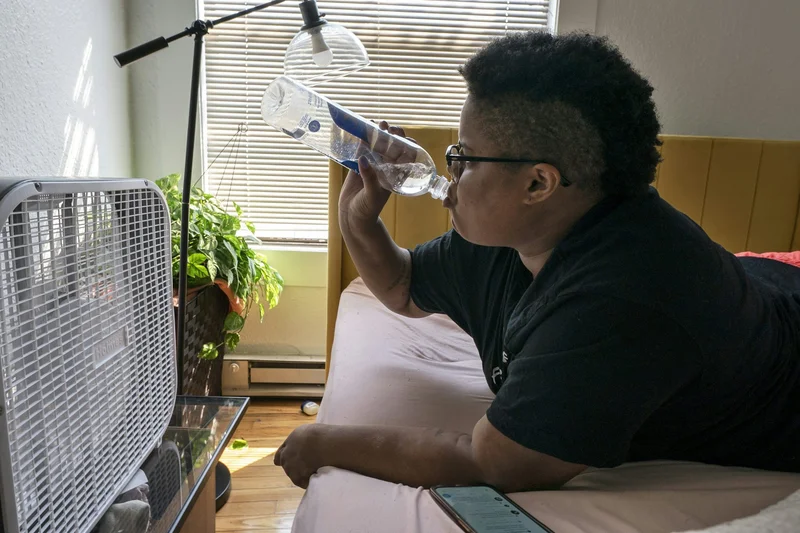
Extreme heat has dominated global headlines this summer. When outdoor temperatures become dangerous, people retreat indoors to stay in air conditioning or near electric fans. This can come with a social cost.
“I don’t remember it being this hot growing up,” one 28-year-old social worker told my research team. “People don’t want to leave their house if it’s that hot. People don’t want to go to community events and be out in the community.”
Severe storms and flooding can make travel unsafe or impossible, preventing people from leaving their homes, reaching family or attending social gatherings. These disruptions can erode the everyday interactions that help people feel connected.
Power outages sever communication
Extreme weather can also cut off the communication channels that help people stay connected. Severe storms, flooding, winter weather and extreme heat are all associated with power outages, which can leave residents without electricity, sometimes for weeks.
Electricity failures are often coupled with internet and cellular service interruptions, hindering communication via text messaging, phone calls, social media and email at precisely the time it’s needed most.
As one 74-year-old rural resident explained to my team: “We’re so isolated. We do not have any cellphone service other than through Wi-Fi. So when the power’s out, we have no cellphone service … without your phone, you really lose all your connections.”
The loss of shared places and traditions
Another way climate change can weaken social connection is by altering places and traditions that hold cultural and community significance.
I witnessed this firsthand when Hurricane Irene and Tropical Storm Lee hit my hometown of Cherry Valley, New York, in 2011. After floodwaters broke the dike, a treasured community place known as “the reservoir” – a small lake where families swam and picnicked – was emptied, leaving our rural community without one of its few gathering spaces.
In my team’s Appalachian study, residents described how an extreme drought paired with prolonged heat affected places where people gather, share traditions and maintain connections across generations.
Water levels in lakes and rivers dropped too low for recreation, wildfires swept through the Wayne National Forest, and crop losses meant fewer of the region’s beloved pawpaw fruit when the annual Ohio Pawpaw Festival arrived.
A 68-year-old resident told us: “I look around and it’s just absolutely horrible. Our streams have gone dry. I had a friend drop off some pawpaws the other night and pitiful … nothing like what normally drops. It’s really bad and I suspect this is going to continue. We’ve got to figure something out.”
This kind of degradation of cherished places and traditions can threaten shared experiences that help communities stay connected.
These disaster often overlap
These fractures of social connection often overlap as communities face increasingly frequent co-occurring weather events. A severe storm, for instance, may trigger flooding and power outages during a heat wave, disrupting transportation and communication during dangerously hot temperatures.
Over time, frequent and consecutive weather hazards can weaken relationships by limiting mobility and social engagement.
People who are already socially isolated, including older adults and those living in rural areas or lacking reliable transportation and internet access, are often most vulnerable. Climate change and extreme weather can leave them even more isolated.
Keeping social connection amid disasters
As global temperatures rise, driven in large part by the burning of fossil fuels, climate change increasingly affects daily life. Social connection is crucial, both for responding to extreme weather and for working together to help the entire community adapt to a changing climate.
One promising way forward is for cities and counties to invest in community hubs, such as public libraries, or create new gathering spaces across communities.
These spaces can bolster social connection year-round by hosting inclusive lifelong learning activities while also serving as cooling shelters and climate resilience hubs, providing resources to help residents prepare for disasters, phone-charging stations when power goes out elsewhere, and an internet connection.
In an era of accelerating climate disruption, social connection may be a community’s greatest asset, and yet one of its most fragile resources to protect.