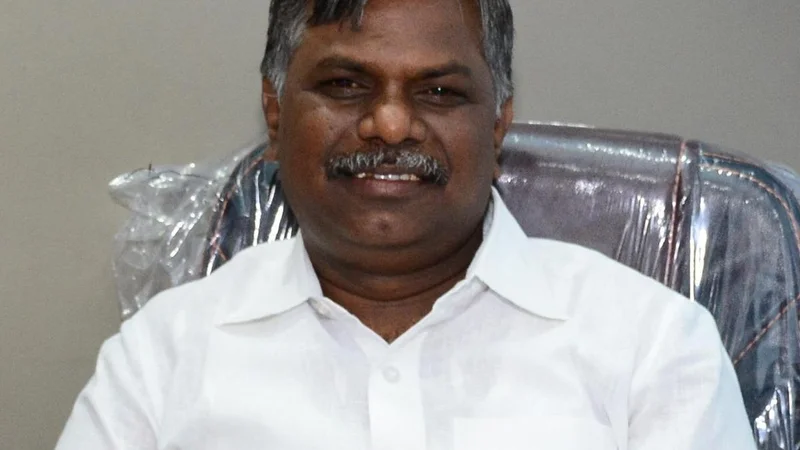
Director of the Central Institute of Indian Languages (CIIL), Mysuru, Prof. Basavaraja Kodagunti, on Wednesday underscored the need for the theoretical isolation and systematic scientific analysis of inscriptions.
Speaking at a workshop organised by the Centre of Excellence for Studies in Classical Kannada here, he said the workshop would greatly benefit teachers, researchers and PhD scholars engaged in epigraphical and linguistic studies.
“Scientific studies on inscriptions are still limited, despite the fact that an eighth-century Rashtrakuta inscription contains precise references to time calculations. Such inscriptions need to be systematically analysed,” he suggested.
Prof. Kodagunti said there is a misconception that Kannada grammar is entirely derived from Sanskrit. “Inscriptions from the Kadamba period clearly demonstrate a highly scientific and systematic use of Kannada grammar. The people of the Sannati and Kanaganahalli regions, where Ashokan edicts were discovered, were the true architects of Kannada script arrangement.”
Prof. Kodagunti said foreign scholars are digitising South Indian inscriptions in Kannada, Telugu, Tamil and Malayalam through the online platform ‘Dharma’. He urged the Centre for Excellence in Classical Kannada Studies to actively participate in similar initiatives to preserve and promote the rich epigraphical heritage.
Published - August 05, 2026 07:30 pm IST