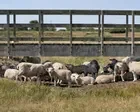
There has been an “alarming” surge in the number of sheep affected by an outbreak of bluetongue in the UK, with farmers whose livestock are at risk being urged to move them out of areas where midges are plentiful.
The virus, which does not necessarily kill sheep but makes them ill and can have a long recovery time, presents as high fever and swelling of the lips and tongue, with a one-week incubation time. The tongue may go blue and even protrude from the mouth. More than 590 cases were reported last week, according to the National Sheep Association (NSA).
It is transmitted via biting midges (culicoides) and its arrival in the UK is associated with global heating. The World Organisation for Animal Health reported a couple of years ago that although the virus had historically “been endemic in the tropics and subtropics where temperature and humidity are ideal for biting midge survival … it began to migrate to the Mediterranean basin and southern Europe in the late 1990s” and was first recorded in the UK in 2006.
The National Farmers’ Union vice-president, Robyn Munt, said: “Bluetongue is continuing to spread at an alarming rate and is a significant concern for livestock farmers across the country. The disease is creating additional uncertainty and financial pressures for many businesses, with members doing everything possible to protect their animals.
“To reduce the risk, farmers are moving high-risk or non-vaccinated stock away from wet, low-lying, or sheltered areas and keeping vulnerable animals housed during dawn and dusk when midge activity peaks, all of which is added pressure on farmers and forage stocks during this challenging weather period.”
The NSA’s chief executive, Phil Stocker, said: “The number of reported cases shot up last week to over 590, from just 115 the previous week. The majority are being seen in the south-west of England – clearly a serious hotspot for this midge-borne virus. As you would expect, calls on stocks of vaccines are increasing and stocks will be reducing but we are assured that vaccine manufacturers are doing what they can to ensure demand can be met.”
He added that there seemed to be some confusion over whether to vaccinate, given that full immunity takes 28 days. He said: “A level of protection is likely to be reached earlier, particularly if stock were vaccinated last season. Additionally, we have several months of midge activity ahead of us and it is highly advisable that breeding males and females are vaccinated ahead of mating.”
A National Audit Office report said last year that the UK may be underprepared for a serious animal disease outbreak. Stocker told Farmer’s Weekly that surveillance had successfully identified infected premises, but testing only three animals on affected holdings meant the true scale of infection was unknown.
An Animal and Plant Health Agency spokesperson said the virus was circulating in England, particularly the south-west, and parts of Wales.
“The recent period of hot and humid weather has been favourable for midge populations, which has likely contributed to increased numbers of cases, in cattle and particularly sheep,” they said.
“Livestock keepers should remain vigilant and report any suspicions of disease to APHA. We encourage all farmers and keepers to discuss vaccination with their vet as this is the most effective way of protecting their animals.”