Spain’s junior government partner is urging the country to reconsider hosting the 2030 World Cup with Morocco, following a significant migration crisis in the Spanish enclave of Ceuta.
Sumar, a small left-wing party that shares power with the leading Socialists, tabled a motion in the Spanish Parliament on Wednesday. The party called on Spain’s sports authorities to revisit plans to co-host the 2030 football tournament with Morocco and Portugal.
Despite holding only 26 seats in the 350-member Parliament, Sumar’s influence is notable due to its ministerial positions within Prime Minister Pedro Sánchez’s government. Mr Sánchez has faced criticism from other European Union members over the Ceuta crisis.
The motion, which would be non-binding, seeks broader parliamentary support, though this appears unlikely beyond other small, left-wing factions at present.
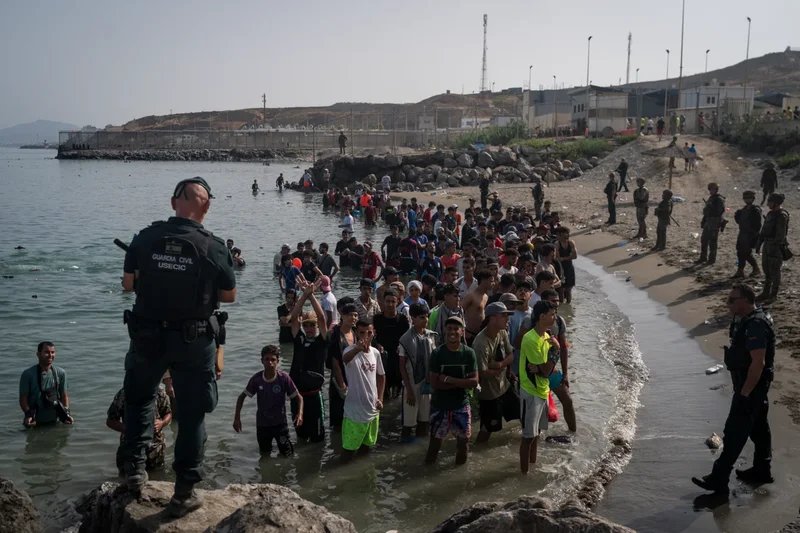
The call for reassessment comes in the wake of last week’s events in Ceuta, where tens of thousands of people surged across the Moroccan border into the European enclave. Mr Sánchez has publicly defended Moroccan authorities, stating they swiftly assisted in the return of nearly all 72,000 individuals who crossed. However, Spain’s Interior Ministry reports that approximately 2,000 people, including 1,000 minors, remain in Ceuta.
Opposition figures and even Spain’s defence minister have demanded a more detailed explanation from Morocco regarding its response to the crisis, which was reportedly fuelled by social media posts encouraging border crossings. Tragically, more than 80 people died attempting to swim across a breakwater and border fence from Morocco into Ceuta last Thursday and Friday.
Nahuel González, a Sumar MP and co-author of the motion, accused Morocco of leveraging migration for political gain. "The Moroccan state, the Moroccan monarchy, does not respect human rights, it uses migrants to exercise political pressure," Mr González told Spanish broadcaster TVE.
While Mr González did not explicitly state whether Sumar sought Morocco’s exclusion from hosting or Spain’s withdrawal from the event, he clarified: "We ask that Spain’s sports institutions reconsider this World Cup that is to be shared with Morocco because we believe that we must defend human rights."
In Portugal, a small parliamentary party named Livre echoed these concerns, sending a letter to Prime Minister Luís Montenegro and the President of the Portuguese Football Federation. The letter called for a reassessment of the World Cup bid, deeming it "unsustainable" after the Ceuta crisis.
The majority of the 2030 World Cup is slated to be co-hosted by Spain, Morocco, and Portugal, with Argentina, Paraguay, and Uruguay each staging a single game. This South American involvement is intended to mark the centenary of Uruguay hosting the inaugural World Cup in 1930.