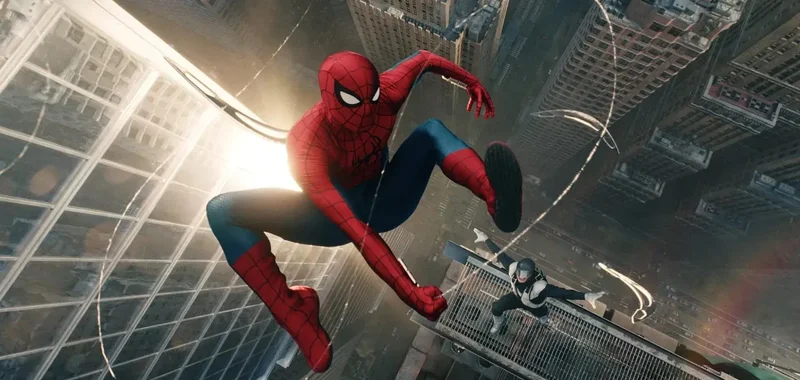
After a mind-blowing $932 million opening weekend, director Destin Daniel Cretton’s Sony/Marvel Studios sequel Spider-Man: Brand New Day easily soared past $1.1 billion on Tuesday, topping Toy Story 5 as 2026’s biggest hit to date. Now, the only question is whether and how fast the film can reach $2 billion.
Spider-Man: Brand New Day - By The Numbers
The blockbuster fourth installment of the Sony-MCU version of the wall-crawler, from screenwriters Chris McKenna and Erik Sommers, is already on track for a massive record-setting second weekend that will inevitably push Brand New Day north of $1.5 billion. This is a conservative estimate, assuming a typically large second-weekend drop after such a massive debut.
But weekday totals are off the charts, and could push the film significantly higher. It’s not impossible that Spider-Man enters its sophomore weekend with $1.3 billion already in the bank, and then holds stronger with perhaps a 55-60% drop, which might result in something closer to a total $1.7 billion gross through end of business Sunday.
On the lower end, if everyone’s already rushed out to see it and gotten their second viewing in during the weekdays, we are still looking at a probable $1.5 billion result after weekend #2, or something very close to it. This also assumes the arrival of IMAX screens into the math won’t offset drop-offs in attendance, which is a dubious proposition.
I think we are most likely to see something in the $1.5-1.6 billion range through Sunday, with bigger drops afterward. IMAX should help sustain enough momentum to carry the film toward right about $2 billion.
If, however, Spider-Man: Brand New Day continues with these enormous weekday totals and then enjoys a strong hold bolstered by IMAX screens, and if third weekend ticket sales see continued interest among those who haven’t ventured out to see it yet, then Spidey could make a run at Titanic’s $2.26 billion #5 spot on the all-time box office charts.
Spider-Man, Avengers, And The Future
Things have been rocky for the superhero genre in the aftermath of Avengers: Endgame and the Covid era. 2021’s Spider-Man: No Way Home came within a hair of $2 billion during the height of the Covid pandemic, while most other films struggled to top $500 million, let alone reach the magical $1 billion threshold.
2022 faired better, with several Marvel movies playing at the $750-950 million range. But then, from 2023 through 2025, only Guardians of the Galaxy Vol. 3 and Deadpool & Wolverine delivered blockbuster results while the other five MCU releases did modest to weak business, with at least one unfortunate flop.
DC movies via Warner Bros. Discovery haven’t fared any better, with a shocking 10 out of 12 feature films severely disappointing or outright flopping from 2020 through 2025. Only The Batman ($772 million) in 2022 and Superman ($618 million) last year delivered success for the studio’s superhero slate.
And while James Gunn’s Superman seemed to successfully reboot the broken DC cinematic shared universe, this year’s Supergirl sadly flopped with a shockingly low $126 million. After the DCEU’s inglorious end, there were high hopes for the newly minted DCU, but audiences still seem reluctant to trust much from the studio yet. We’ll see if Clayface can tap into the popularity of horror and Batman to win over viewers and help put Gunn’s plans back on track again.
Perhaps the combination of Covid and political chaos rising around the world soured audiences on the notion of brightly costumed heroes who show up to save the day, who are capable of rallying the public to a united front against the forces of darkness threatening civilization. Skepticism, cynicism, loss of faith and hope in leadership, and increasing distrust and disagreement with our own neighbors and families seems to have driven many viewers toward genres better at reflecting such realities. Horror has seen quite a resurgence in popularity, after all.
Meanwhile, escapism in the form of family fare now dominates the true blockbuster tier of box office charts, animation and all-ages appeal being the surest best for $1 billion business. Adult viewers also reward a few releases targeted specifically to them, usually thrillers or pure action-driven machismo or the occasional true story/biopic.
But a few characters, like Spider-man and Batman, seem mostly immune to the worst backlash or disinterest in superhero cinema, perhaps because their stories inherently speak to much of the sense of isolation and struggle felt by so many people the past several years. And as the public seems to want to rally again behind having hope about the future mixed with anger at many various conditions and difficulties and injustices, so too does the superhero genre and its myth basis seem relevant again.
The Odyssey from Chris Nolan and Universal is also on course for a $1 billion finish, and already has major Oscar buzz. Again, a film speaking to many of the topics and issues that the public at large faces or thinks about lately, and an example of audiences returning again to myths and heroic tales and redemptions that also reflect the horrors and fears in our modern world.
Spider-Man: Brand New Day should help send anticipation for Avengers: Doomsday this Christmas into overdrive, as will the return of much of the original Avengers cast. These two MCU releases topping $2 billion (as I assume Doomsday will, too) in turn helps set up next year’s Spider-Man: Beyond the Spider-Verse animated sequel for blockbuster success, leading into Avengers: Secret War at the end of 2027.
While that’s a bit of deck-stacking, it’s nonetheless probably going to result in three live-action MCU films topping $2 billion each, and sets up a reboot/reset of the whole Marvel universe afterward. We’ll see whether it all works as planned, but at the moment it’s hard to imagine a scenario where it doesn’t work out as planned, at least for the next couple of years anyway.
Regardless, Spider-Man: Brand New Day proves that the notion of “superhero fatigue” is still a bogus concept, a transient term applied when audiences are disinterested or otherwise preoccupied rather than a true diagnosis of what causes one superhero movie to fail while others set box office records.