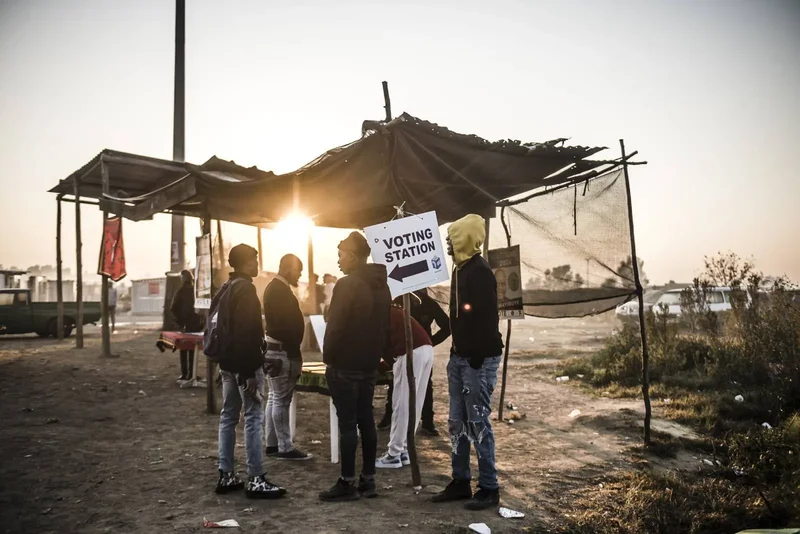
As South Africa prepares for the local government elections on 4 November 2026, we in the African National Congress must speak to the nation with honesty, humility and resolve.
We must resist the temptation to treat municipal elections as merely another contest between political parties. This election must become a national reckoning about the condition of local government and the future of the South African state. Municipalities are not the administrative basement of democracy. They are where democracy becomes visible, practical and measurable.
Parliament may pass laws, Cabinet may adopt policies and presidents may announce ambitious programmes but it is the municipality that must ensure that water flows, sewage disappears, roads are maintained, refuse is collected and streetlights remain illuminated. A citizen does not encounter the Constitution primarily through a policy document in Pretoria. The citizen encounters it through the tap, the road, the municipal account, the robots, the building inspector and the refuse truck.
When these things work, democracy acquires meaning. When they fail, even the most progressive Constitution begins to resemble an expensive menu in a restaurant without a kitchen.
As the ANC, we must acknowledge that too many municipalities under our leadership have failed this elementary test of government. We cannot invoke the achievements of the democratic transition as an alibi for the failures of the democratic state. History may explain how we arrived here but it cannot repair a burst water pipe or the unkept children’s park. Apartheid left us a brutally unequal inheritance, but three decades into democracy, we must also accept responsibility for what we have done, and failed to do, with the power entrusted to us.
We liberated South Africans from an unjust state. We must now prove that we can build a capable one.
In too many municipalities, political instability has paralysed administration. Factional battles have displaced public service. Cadre deployment, conceived as a means of transforming a hostile state, has been vulgarised into the appointment of the connected over the competent. Procurement has become a feeding scheme for political intermediaries that add no value. Councillors have interfered in administration, administrators have behaved like politicians and both have forgotten the citizen standing outside the municipal office.
This is not what generations of ANC members sacrificed for. Our struggle was never for the right of factional zombies and charlatans to inherit the habits of the old order. It was for the creation of a democratic state capable of restoring dignity to ordinary people.
A city cannot grow if it cannot perform its basic functions. It cannot attract investment if electricity is unreliable, roads are deteriorating and sewage flows through communities. It cannot create employment if businesses spend their productive hours negotiating with bureaucratic delay and infrastructural collapse. Investors may agree with our policy documents and liberation history, but capital possesses the irritating habit of asking whether the lights work.
The ANC must therefore advance a new municipal compact. Developmental in ambition, professional in administration, ethical in conduct and measurable in performance.
We will stabilise municipal administrations by restoring the distinction between political leadership and professional management. Councillors must set policy, exercise oversight and represent communities. Qualified administrators must implement policy without improper political interference. A municipality cannot remain a revolving door through which every faction marches with its own municipal manager, consultants and cousins.
We will strengthen accountability by making responsibility unmistakable. Every project must have an accountable executive, an approved budget, measurable milestones and a completion date. Where targets are missed, there must be consequences. Accountability cannot mean appointing a new committee to determine why an old committee ignored the recommendations of an even older committee.
We will restore financial discipline. Municipal budgets must be credible, funded and aligned with actual revenue. Public money is not an abstraction. It is the accumulated labour of workers, households and businesses, entrusted to the government for the common good. Irregular expenditure must be investigated promptly, wasteful expenditure recovered where possible and officials responsible for financial misconduct held personally accountable.
We will professionalise municipal services. Engineers, planners, accountants, electricians, artisans, data specialists, cybersecurity experts and administrators must be appointed because they can do the work. Transformation without competence is ultimately a betrayal of the very people transformation is intended to serve. A water-treatment plant cannot be repaired by revolutionary slogans, nor can a substation be persuaded into operation by a caucus resolution.
We will end the culture in which maintenance is neglected because political leaders prefer the ceremonial splendour of launching new infrastructure. A functioning pump is more valuable than a ribbon-cutting ceremony beside a broken one. Roads, substations, pipelines, wastewater-treatment plants and public buildings must have properly funded maintenance plans supported by modern monitoring systems.
We will introduce rigorous performance-management systems throughout local government. Senior officials and municipal departments must be evaluated against clear indicators- water losses, electricity interruptions, refuse-collection reliability, infrastructure uptime, revenue collection, response times and project completion rates. What is not measured is easily disguised, and what is measured becomes much harder to explain away at the next branch meeting.
We will strengthen anti-corruption measures through independent investigations, protected reporting channels, lifestyle audits for officials in high-risk positions, digital expenditure monitoring and meaningful consequences for misconduct. Corruption is not merely the theft of money from a municipal account. It is water stolen from a household, employment stolen from a young person and dignity stolen from an entire community.
We must also be honest that incompetence and aimless corruption within our ranks has inflicted grave damage upon the moral authority of the ANC. We cannot continue condemning corruption in resolutions while accommodating it in practice. The movement cannot renew itself while protecting those who use its colours as camouflage for private accumulation and collapse of critical institutions. No comrade is more important than the community. No faction is more important than the Republic.
We will make procurement transparent from advertisement to final payment. Tender specifications, bid evaluations, awarded contracts, beneficial ownership, project milestones and payment records must be open to public scrutiny. Technology must be used to detect collusive bidding, inflated invoices, conflicts of interest, repeated awards and suspicious payments. Sunlight remains an excellent disinfectant, a searchable public database is even better.
Our movement must return to the elementary ethic of public service that insists that leadership is a duty before it is a privilege. The ANC was not founded so that its members might become tenderpreneurs, bureaucratic aristocrats or absentee councillors. It was founded to organise the African majority, advance human dignity and build a South Africa belonging to all who live in it.
We therefore ask South Africans not for a blank cheque, nor for forgiveness without reform. We ask to be judged by the seriousness of our programme, the quality of our candidates and our willingness to correct our own failures. Loyalty to the ANC cannot mean indifference to incompetence. Indeed, the most loyal act an ANC member can perform today is to insist that the movement confronts its weaknesses before the electorate does so on its behalf.
The renewal of South Africa will not begin at another conference hall, in another slogan or through another beautifully drafted resolution. It will begin when the tap works, the refuse is collected, the streetlight is repaired, the permit is processed and the municipal official remembers that the citizen is not an interruption of government business but the reason the government exists.
Before South Africa can become a great nation in theory, it must become a functioning country in practice. The ANC once helped give South Africans political freedom. Our historic obligation now is to make that freedom administratively competent, economically productive and materially real.
That work begins in every ward, town and city—one repaired road, one honest tender, one competent appointment and one accountable municipality at a time.