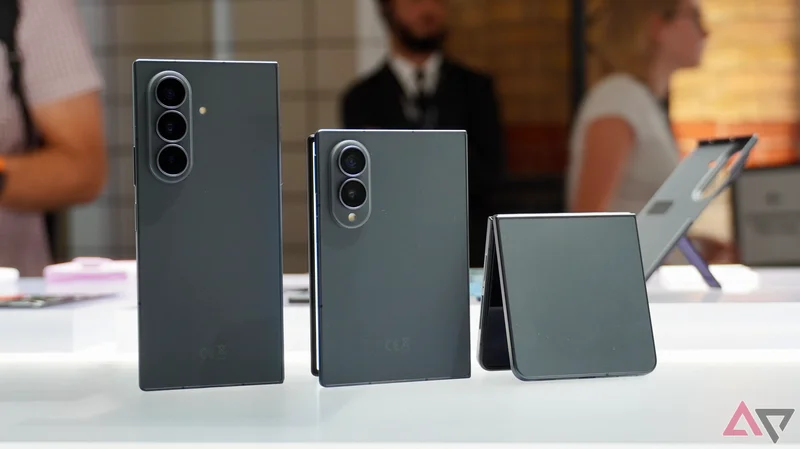
The Samsung Galaxy Z Fold 8, Galaxy Z Fold 8 Ultra, and Galaxy Z Flip 8 have silicon-carbon batteries inside, bringing them right up to date, matching the competition, and finally answering demands from eager buyers.
During a briefing at Galaxy Unpacked 2026, Samsung’s corporate EVP and deputy head of core component technology, BD Yang, explained why it’s a big deal for the company.
Related
Here's everything about the latest in phone battery tech
A long time coming
In-depth research
Samsung Galaxy Z Fold 8 Ultra, Samsung Galaxy Z Fold 8, and Samsung Galaxy Z Flip 8
Samsung's adoption of silicon-carbon batteries goes beyond just a simple anode change, or popping in a new battery and calling it job done. The company spent a lot of time on research and development before launch. BD Yang explained:
We have observed the demand for silicon-carbon batteries, and we are aware of others who already use them. Samsung holds itself to the highest standards in the industry when it comes to battery systems, and this new innovation isn’t only about changing the anode material.
We embarked on system-level innovation that covers all the components that go into the battery end-to-end, and this allowed us to meet our standards.
For the Galaxy Z Fold 8 Ultra, we increased the battery capacity to 5,000mAh, while maintaining a slim design. This required more than a large battery, it required redesigning the entire system.
Samsung has introduced a silicon-carbon anode material. But improving battery performance required more than a new anode material alone.
Silicon-carbon cells must be carefully managed because the performance and durability can vary depending on cell composition. To make them practical for everyday use, Samsung tuned the full cell system.
This tuning involved optimizing the cathode and adding an electrolyte protective layer and separator, ensuring the cell remains stable. Through its engineering, Samsung has balanced the new silicon-carbon cells for usability, long-term battery life, and fast charging. The company would not comment on the percentage of silicon content in the new battery.
New battery, faster charging
What will it mean for performance?
Yang continued, explaining how it has engineered its fastest Super Fast Charging 2.0 technology into the new Z Fold 8 models.
Samsung has introduced 45W fast charging, and rather than sending the full charging power through a single path, the system divides and manages charging across separate paths, reducing electrical stress on each cell.
It enables the Z Fold 8 Ultra to reach 67% charge in 30 minutes. The Z Flip 8 applies the same principle through a charging structure optimized for the compact design.
While charging architecture differs between models, the goal remains the same. To ensure each battery system balances speed, safety and long-term reliability.
By adopting silicon-carbon, Samsung can better compete with other folding phones released this year, including the Honor Magic V6, Oppo Find N6, and the Motorola Razr Fold.
What isn’t clear is how much the increase in capacity for the Z Fold 8 Ultra and the adoption of silicon-carbon will affect daily battery life.
We’ll know more when we review the new phones, but in our experience so far, silicon-carbon batteries, despite often having a large capacity, don’t stretch battery life that far beyond older battery technology.
However, Samsung does appear to have put a lot of effort into optimizing its silicon-carbon batteries, and it’s certainly not the first brand to adopt them, meaning Samsung may have found a way to squeeze more from its new battery cells than the competition.