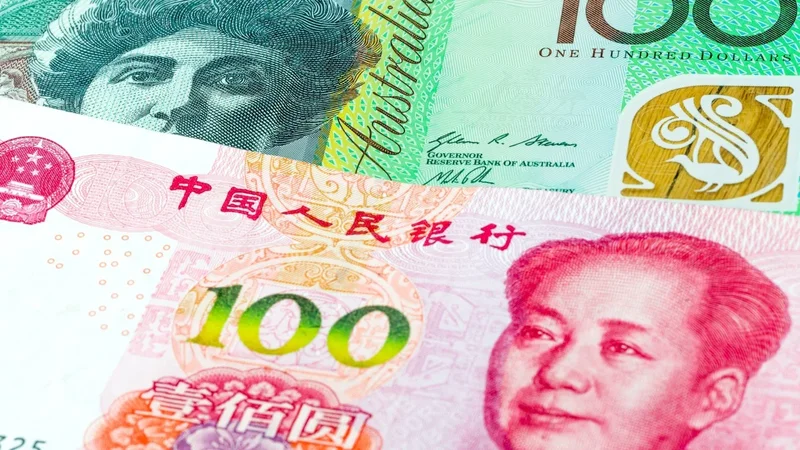
Does Beijing really have the power to lift up the Australian dollar?
Currency traders believe Beijing’s economic policies could give the Australian dollar a boost. Analysts say things are more complex in reality
Some analysts view the Australian currency as particularly sensitive to policy moves in Beijing. If China intervenes to boost domestic growth, that could also lift the Australian dollar, the theory goes.
But in reality, the currency’s exposure to the world’s second-largest economy is more selective than commonly assumed, as the link mostly depends on Chinese commodity demand, Goldman Sachs said in a report released on Tuesday.
At first glance, the Australian dollar “appears among the most China-sensitive” of the G10 currencies, a basket of the world’s most heavily traded currencies, according to Goldman analyst Lexi Kanter.
Australia ranked as the G10 economy most exposed to an acceleration in Chinese final domestic demand, reflecting both direct exports and Australian inputs used by third countries to produce goods ultimately sold to China, the report said.
However, much of the apparent connection between the Australian dollar and the yuan reflects their shared response to broad movements in the US dollar rather than a purely China-specific signal, according to Kanter.
After controlling for the US dollar, only the Australian and New Zealand dollars retained a meaningful positive relationship with the yuan, although the link became “notably weaker”, the report said.