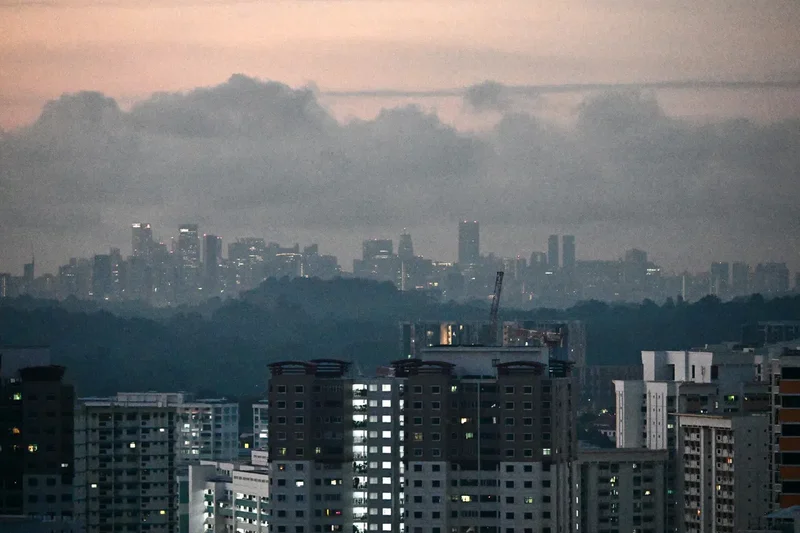
Dry weather next week could increase haze risk in S’pore if burning worsens in Indonesia: Grace Fu
AI generated
SINGAPORE – Dry weather in the coming week could increase the risk of transboundary haze in Singapore should burning intensify in Kalimantan and southern Sumatra, said Minister for Sustainability and the Environment Grace Fu on Aug 5.
In recent days, smoke haze has been seen drifting from Kalimantan into Sarawak, but the prevailing winds have not carried the pollutants to Singapore.
The Republic is monitoring the situation closely, and the Government’s haze task force is ready to roll out its action plans if air quality is affected by transboundary haze, said Fu in a written reply to a parliamentary question from Joan Pereira (Tanjong Pagar GRC).
National mask stockpiles are sufficient, and schools, pre-schools, as well as residential and care facilities, are equipped with air purifiers, she added.
On Aug 3, the ASEAN Specialised Meteorological Centre raised its haze alert for the region, indicating an escalating risk of transboundary haze.
As the region has entered the dry south-west monsoon season, conditions in 2026 are expected to be drier and warmer than usual due to the development of the El Nino climate phenomenon. Scientists have warned that the El Nino could grow into a Godzilla event, with temperatures in the tropical Pacific warming rapidly.
Previous severe haze episodes in 1982, 1997 and 2015 also coincided with super El Nino events.
Hotter and drier conditions make vegetation, peatlands and plantations more flammable, and fires that start from land clearing or burning waste can spread faster.
“Our priority is to protect the health of the public, particularly vulnerable groups, and to ensure that daily life and essential services can continue as normally as possible,” said Fu.
Public communications efforts have also been stepped up in view of the heightened risk of haze affecting Singapore. Timely updates on air quality and health advisories will continue.
In early 2026, Singapore experienced hazy conditions – with a persistent burning odour permeating homes – partly due to wildfires in Johor. However, Pollutant Standards Index (PSI) readings remained in the moderate range. Air quality crosses unhealthy levels when PSI values exceed 100.
Alex Yeo (Potong Pasir) also asked on Aug 5 what indicators, beyond PSI readings, would guide the activation of the haze task force’s plans.
In a separate written reply, Fu said the task force’s response plans are tiered and activated once the relevant 24-hour PSI thresholds are reached.
Besides tracking PSI levels, the Meteorological Service Singapore and the National Environment Agency actively monitor regional hot spots and smoke haze using satellite imagery, as well as weather forecasts such as winds and rainfall, she added.