- Three in four European businesses fear a US tech 'kill switch' as much as they fear a ransomware attack
- Less than half have a continuity plan in place that is tested and documented
- Email and cloud file storage are the two services European businesses have sought sovereign alternatives for
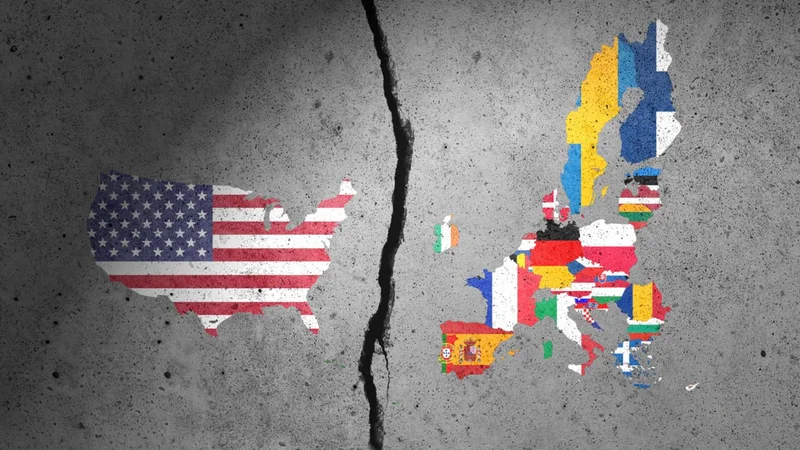
Most European businesses use some form of US-based software in their day-to-day operations. But as tensions across the Atlantic mount, almost 75% of European businesses fear the introduction of a US tech ‘kill switch’.
This is according to new data from Proton, which surveyed 1,500 businesses in the UK, France, and Germany. The data also shows that more than half (54.5%) of European businesses would not survive for more than one day if they lost access to US cloud and digital services.
One in four of those surveyed predicted the losses from a single day of downtime could be as much as €100,000, with half predicting losses of more than €50,000.
Geopolitical tensions have become operational risk
US President Donald Trump has become increasingly critical of his allies across the Atlantic since returning to the Presidency. He has repeatedly questioned NATO contributions, threatening to withdraw unless Europe upped its spending.
But Trump has also criticized European tech regulations for “robbing American companies and, in turn, the American taxpayer”. He has vowed to investigate the European Union for fining US tech companies for anti-competitive practices and GDPR violations, and has placed numerous tariffs on trade partners.
Many US tech companies poured funding into Trump's presidential campaign, with others making voluntary contributions to curry favor immediately after his inauguration. Many complained of the fines levied against them by EU regulations, and Trump has turned this into a sticking point for negotiations with Europe.
The fear is that Trump could use Section 301 of the Trade Act of 1974 to deem the fines from such regulations to be unfair, and stop US companies from paying them, effectively allowing US companies to violate regulations without repercussions. In return, Europe would flip the ‘kill switch’ and stop US companies from operating in their territory.
"The kill switch is no longer an abstract geopolitical concern but a business continuity crisis. The study captures a clear shift in how European businesses perceive operational risk,” said Raphaël Auphan, Chief Operating Officer at Proton.
“The fact that concern about a government-imposed kill switch is virtually indistinguishable from concern about ransomware tells something significant: geopolitical risk applied to digital dependence is no longer a boardroom abstraction. It is joining the same threat register as criminal attacks, with the same sense of urgency and the same expectation that it could materialise without warning."
A sovereign alternative
The EU has already begun taking steps towards developing European alternatives to the cloud, productivity, and other services that many businesses rely on today. A Tech Sovereignty Package, launched in June this year, seeks to reduce the reliance on US hyperscalers and Chinese tech manufacturing.
While the Proton data shows that a majority of European businesses (67.8%) would switch to a sovereign provider if the kill switch was flipped, the availability of European cloud providers is not quite at the same level as rival US services.
But steps are being taken to address this shortfall. Proton has launched a business continuity solution to help businesses continue operating during outages caused by ransomware attacks, software outages, and even a US tech kill switch.
Benedict is a Senior Security Writer at TechRadar Pro, where he has specialized in covering the intersection of geopolitics, cyber-warfare, and business security.
Benedict provides detailed analysis on state-sponsored threat actors, APT groups, and the protection of critical national infrastructure, with his reporting bridging the gap between technical threat intelligence and B2B security strategy.
Benedict holds an MA (Distinction) in Security, Intelligence, and Diplomacy from the University of Buckingham Centre for Security and Intelligence Studies (BUCSIS), with his specialization providing him with a robust academic framework for deconstructing complex international conflicts and intelligence operations, and the ability to translate intricate security data into actionable insights.