’s first privately developed orbital rocket has given the country’s fledgling commercial space industry a long-sought proof point, but analysts say Skyroot Aerospace must now show it can launch regularly, cheaply and reliably enough to win customers in a crowded global market.
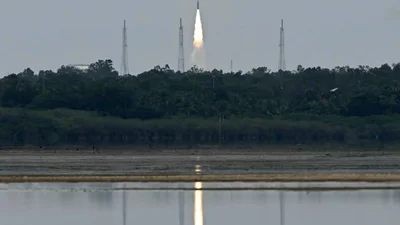
Skyroot’s Vikram-1 rocket lifted off on Saturday from the Satish Dhawan Space Centre in Sriharikota in the southern Indian state of Andhra Pradesh, carrying several customer payloads and in-orbit experiments on its maiden orbital mission, called “Mission Aagaman”.
The rocket injected its payload into a 450km (280-mile) orbit on its first attempt, making India the third country to achieve orbital launch capability through private enterprise, after the US
.
The milestone drew comparisons on social media with
’s Falcon 1, which reached orbit only on its fourth attempt. It was also seen as a step forward in India’s ambition to grow its space economy from about US$8.4 billion to US$44 billion by 2033, targeting about 8 per cent of the global market.
For decades, the state-run Indian Space Research Organisation (ISRO) was virtually the only major player in the country’s space sector.
A Vikram-1 orbital rocket model seen at Skyroot Aerospace’s facility on the outskirts of Hyderabad, India. Photo: AFP
Experts said the launch was significant, but Skyroot still had a long way to go before it could turn a successful test into a commercial business.