Hong Kong preferred base as Chinese SOEs consolidate overseas accounts in treasury hubs
City’s attractions include international banking system, deep capital markets, offshore yuan pool and close links with mainland
China’s central state-owned enterprises (SOEs) are consolidating scattered overseas accounts into unified treasury hubs, with Hong Kong emerging as the preferred base amid a broader crackdown on outflows of state cash.
Decades of overseas expansion had seen many SOEs build up assets in multiple jurisdictions, leaving cash management fragmented and making it harder for regulators and company headquarters to track liquidity, foreign-exchange risk and cross-border financing, analysts said.
Central SOEs now hold nearly 8 trillion yuan (US$1.1 trillion) in overseas assets across more than 180 countries and regions, spanning over 10,000 projects and entities, according to the State-owned Assets Supervision and Administration Commission (Sasac).
Since 2022, authorities in mainland China have pushed central SOEs to build treasury systems offering full visibility and tight control, a mandate later extended to their overseas units.
“Previously, overseas businesses were often managed independently by individual companies, leading to duplicated investment, fragmented assets and inefficient resource allocation,” Zhou Lisha, a research director at Tsinghua University’s Institute for Modern State-owned Enterprises, told mainland media in April.
A coordinated approach helped central SOEs optimise assets, boost returns and better manage geopolitical and operational risks, Zhou added.
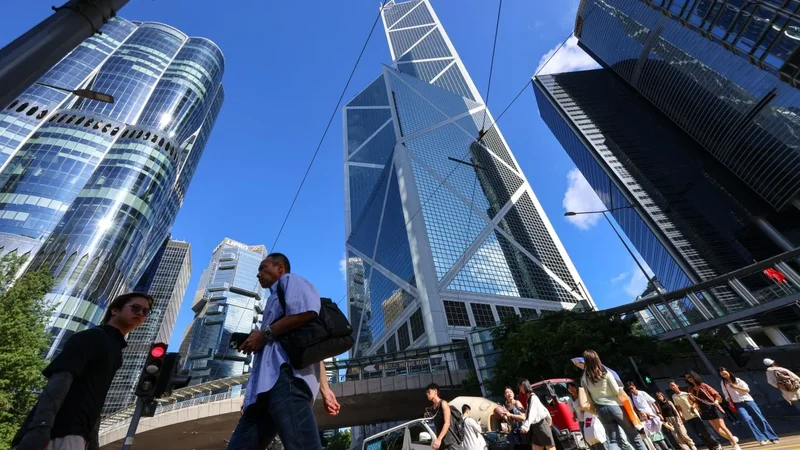
Hong Kong has emerged as the preferred base, benefiting from its international banking system, deep capital markets, offshore yuan pool and close links with the mainland.