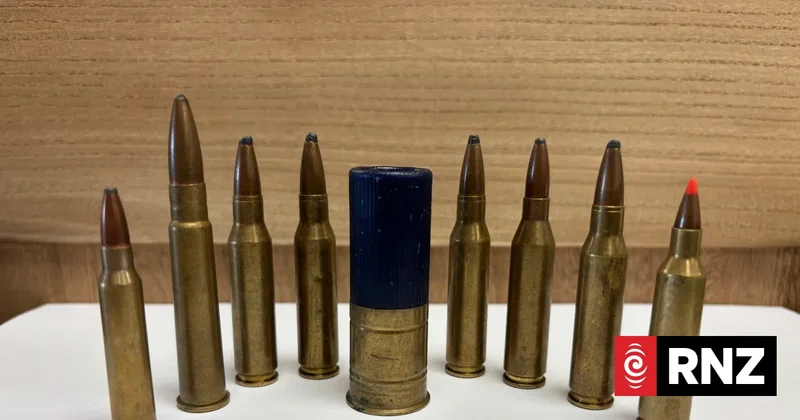
The discovery of rifle ammunition and a shotgun cartridge at a wool processing plant is prompting an urgent safety warning to the wool industry.
The unusual find was made at the Woolworks scouring factory in Hawke's Bay when the bales came in from a farm for processing.
The exact bale and farm the bullets came from cannot be identified.
Chief executive Rosstan Mazey said the undetonated bullets were found along the processing chain, after wool from multiple North Island farms was combined.
He's renewing calls to farmers, shearers and anyone working inside woolsheds to ensure only wool ends up in the bale.
The incident which occurred in May was a frightening experience for staff at the Awatoto factory.
"At the end of the shift cleaning some of the gear, they found eight live rounds of ammunition at the bottom of the tray which sits beneath where we open the wool when it first comes in from the farm," Mazey said.
"The rounds were still live so they hadn't been detonated. There was a real concern that was a major health and safety risk for us."
Mazey said it appeared the duck shooting season was a time of heightened risk, with spent cartridges and live rounds more likely to be in the wool shed.
An alert was also issued to workers through the National Council of NZ Wool Interests.
"During processing on Monday 19th May through to Tuesday 20th, our team discovered live ammunition in the drop tray of an infeed hopper," the statement said.
"Discovering live ammunition that has come in from farm bales is deeply shocking and completely unacceptable."
The New Zealand Wool Classers Association (NZWCA) said it was unfortunate the source can't be identified.
"It is understood that unfortunately the property the wool bale(s) containing the bullets can't be traced because the bullets weren't found in the hopper until further along the processing chain, when wool from multiple North Island farms was combined."
Mazey said the outcome could have been injury to wool workers.
"It's difficult to pinpoint where some of these contaminations have come from," he said.
"What we collectively as an industry need to do here is really try to make sure there is more vigilance in the shed by whoever is in there - be it the farmer, the shearers or the classers, and make sure there is a high quality and safe product coming through the supply chain."
The NZWCA is also aware of other contamination events involving items of clothing and is urging everyone in the wool supply chain to work together to prevent them.