Your support helps us to tell the story
From reproductive rights to climate change to Big Tech, The Independent is on the ground when the story is developing. Whether it's investigating the financials of Elon Musk's pro-Trump PAC or producing our latest documentary, 'The A Word', which shines a light on the American women fighting for reproductive rights, we know how important it is to parse out the facts from the messaging.
At such a critical moment in US history, we need reporters on the ground. Your donation allows us to keep sending journalists to speak to both sides of the story.
The Independent is trusted by Americans across the entire political spectrum. And unlike many other quality news outlets, we choose not to lock Americans out of our reporting and analysis with paywalls. We believe quality journalism should be available to everyone, paid for by those who can afford it.
Your support makes all the difference.
Read more
A slowdown in the loss of Arctic winter sea ice recorded in the early 2020s has ended, scientists have said, after the largest year-on-year winter drop since satellite measurements began.
Researchers at the University of Southampton found that the run of exceptionally low ice in 2025 and early 2026 had pulled the 20-year trend back into significant decline, reversing what had appeared to be a pause.
Their analysis was published in the Proceedings of the National Academy of Sciences.
Arctic sea ice grows through the winter and melts in the summer and its extent is one of the clearest measures of how fast the region is warming.
Research over the past two decades had noted periods when the winter decline slowed or stalled, and a paper last year found no statistically significant fall in winter ice between 2005 and 2024, a surprise given how much the planet had warmed over the same period.
However, adding the 2025 and 2026 winters changed that picture. Between 2024 and 2025, ice cover during the February-March peak fell by 5.8 per cent, the biggest year-to-year winter drop since 1978. Ice recovered slightly in 2026 but remained the second-lowest ever measured.
"This sharp drop changes the way we interpret recent Arctic winter sea ice change," said Duo Chan, the study's lead author, from University of Southampton's School of Ocean and Earth Science.
"What looked like a pause in the early 2020s now appears to have been a temporary slowdown within a longer-term decline associated with global warming."
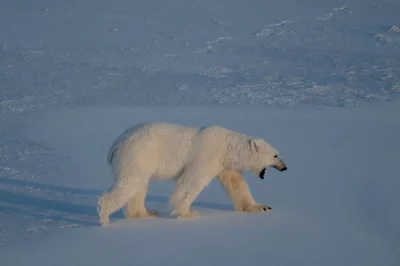
Broken Arctic sea ice (PA)
The researchers said natural swings in ocean currents had probably masked the underlying loss for a time, offsetting the effect of rising temperatures before the ice dropped sharply.
To set the 2025 fall in context, the team compared it with simulations from the latest generation of climate models. The drop was unusual but not outside what the models produce at current levels of Arctic warming, around 2.8C above the long-term baseline.
"By identifying these analogous events, we found that such a sharp drop in 2025 was unusual, but physically plausible under current Arctic warming," said Alessandro Silvano, co-author of the study.
The same comparison suggested the ice was unlikely to bounce straight back.
"The model analogues suggest that, under current levels of Arctic warming, Arctic winter sea ice is more likely to fluctuate around a lower level over the next few years than to quickly rebound to early 2020s conditions," said Simon Josey, another co-author from the National Oceanography Centre in Southampton.
The loss of winter ice carries consequences well beyond the Arctic. The ice serves as a lid between the relatively warm ocean and the colder air above, and as it thins, more heat and moisture escape into the atmosphere. That can alter pressure patterns, storm tracks and the large-scale circulation that shapes weather much farther south, including in Britain and the rest of Europe.
The Arctic has warmed far faster than the global average and the long-term retreat of its ice has been well documented. The area covered at the September minimum, the low point of the year, has roughly halved since satellite records began in 1979.
Mr Chan said the findings were a reminder that the retreat had not stopped.
"Short-term recoveries can temporarily obscure the longer-term direction of Arctic sea ice change," he said.
"The low winter sea ice extents in 2025 and 2026 clearly show that Arctic sea ice loss has not stopped, it is continuing in a warming climate."