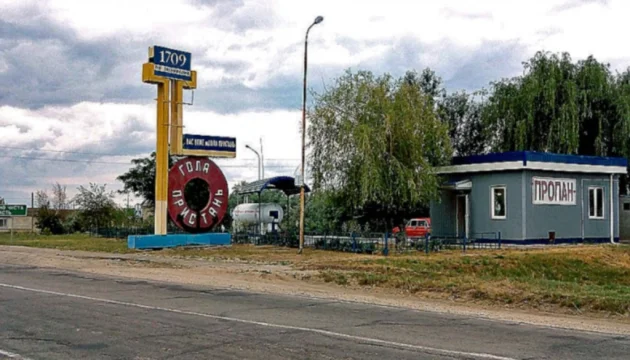
Svitlana Lynnyk, head of the Hola Prystan Military Administration, reported this to Ukrinform.
"There are only two pharmacies left in the community — one in the city and one in Nova Zburivka. There was some supply while people were still being transported, but now they are simply selling what remains. Hospitals are not operating, and first-aid medical centers have not been operating for a long time. In the village of Tavriyske, there is still someone from the medical staff at a medical facility. In Nova Zburivka, there was an ambulance for some time that had been transferred from Hola Prystan, but they have not been there since last year," Lynnyk said.
She added that the nearest places where residents can receive at least some medical assistance are Bekhtery, Zaliznyi Port and Skadovsk. Skadovsk has the nearest hospital.
"The quality of treatment there is at the lowest level. Mortality from 'treatment' has increased, complications arise, and people work unprofessionally. From there, people travel to Henichesk, Kalanchak and Crimea to seek medical care," Lynnyk said.
She said that a mother in the community was unable to take her 12-year-old child to a hospital, and there was no one available to provide medical assistance locally.
Read also:Around 6,000 Ukrainian civilians may remain in occupied parts of Kherson region – Lubinets
According to Lynnyk, the child had a high fever, but there were neither medicines nor medical personnel available. To receive medical assistance, the child would have had to be taken out of the settlement to an intersection, where an ambulance could pick them up. The mother had no way to do this, she added.
The head of the military administration noted that the occupation authorities, including Vladimir Saldo, the Russian-appointed head of the occupied part of Kherson region, only talk about a "difficult situation" and "give instructions," but these are empty words.
The Russians have not distributed humanitarian aid in the villages of the community's administrative districts for at least eight months, while residents of the city have not seen such aid for more than a year.
"The occupation authorities do not go anywhere near Hola Prystan. From time to time, a priest from the Moscow Patriarchate comes and distributes humanitarian aid, but only to those who have a Russian passport. And even then, for the aid to be delivered, people had to contribute 100 rubles each for some time," she said.
According to Lynnyk, during the winter the occupation authorities did not even pretend to be trying to help the population. Another winter will once again bring the challenge of surviving the cold, as there is no gas supply, heating or electricity.
Lynnyk said that residents are installing outdoor summer stoves known as kabytsias in their yards. There is no firewood available to heat homes, and there are no places where residents can safely cut wood because Russian forces have mined the forests.
The head of the military administration, who managed to evacuate members of her family from the occupied territory three months ago, said that they had been forced to survive the winter in apartment buildings where the temperature was as low as 3°C, resulting in frostbite to their toes.
As Ukrinform reported, the bodies of two children were found on a city beach in occupied Henichesk.