Your support helps us to tell the story
From reproductive rights to climate change to Big Tech, The Independent is on the ground when the story is developing. Whether it's investigating the financials of Elon Musk's pro-Trump PAC or producing our latest documentary, 'The A Word', which shines a light on the American women fighting for reproductive rights, we know how important it is to parse out the facts from the messaging.
At such a critical moment in US history, we need reporters on the ground. Your donation allows us to keep sending journalists to speak to both sides of the story.
The Independent is trusted by Americans across the entire political spectrum. And unlike many other quality news outlets, we choose not to lock Americans out of our reporting and analysis with paywalls. We believe quality journalism should be available to everyone, paid for by those who can afford it.
Your support makes all the difference.
Read more
US strikes on Iran are unlikely to impact Tehran or cause it to soften its negotiating demands, according to new American intelligence assessments.
Iran attacked another tanker in the Strait of Hormuz on Tuesday, forcing crew to abandon the ship as both sides traded strikes for a tenth consecutive night.
But Iran’s government is unlikely to be affected by the attacks, current and former US officials told the Washington Post.
Instead, US intelligence officials have briefed the Trump administration that Tehran and Washington are now stuck in limbo, with both sides refusing to deescalate.
The Islamic Revolutionary Guard Corps has said that it will not give up and vowed to fight to the end, saying on Monday: “[Trump] should know that, by God's grace, even if this war lasts for several years, until the very last day, our missiles and drones will rain down on American criminals.”
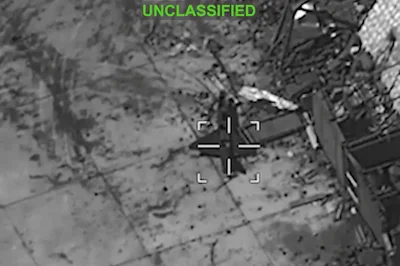
Military equipment targeted at an unknown location, during what U.S. Central Command (CENTCOM) says are strikes on Iran, in this screengrab taken from a handout video released on July 20, 2026. (Reuters)
But Trump has likewise threatened that Iran will pay the price “many times over” for the deaths of three US soldiers – including 19-year-old Isabella Gonzalez – in Iranian attacks on a US air base in Jordan on Saturday.
To complicate matters further, reports emerged on Tuesday that Iran had proposed a 10-day ceasefire in a bid to iron out differences regarding the Strait of Hormuz, sources familiar with the talks told the Jerusalem Post.
Iran has accused the US of violating a ceasefire after commercial vessels appeared to bypass Iranian-approved routes and travelled through a southern corridor by the coast of Oman. But America says that Tehran’s attacks break their promise to allow vessels to pass safely through the waterway.
Vessels at the Strait of Hormuz, as seen from Musandam, Oman, July 21 (Reuters)
Mediators from Qatar, Egypt, Oman and Pakistan are involved in the discussions, with a potential “middle corridor” being floated as a solution to the deadlock.
Other reports suggest that negotiations continue to take place behind the scenes, with Iranian spokesperson Esmaeil Baghaei telling a news conference on Monday that intermediaries in Qatar have passed messages from Washington to Tehran.
“We have received messages, without going into details, but the main point is that the diplomatic apparatus has been active in recent days and ideas have been conveyed to us by certain mediators,” he said.
Tehran amped up its attacks on Monday and Tuesday with strikes on an Amazon data centre in Bahrain and water desalination and power plants in Kuwait.
Israeli finance minister Bezalel Smotrich said on Tuesday that Israel has “no interest” in joining the ongoing confrontation between the US and Iran, in comments made at a conference organised by the Gush Katif Heritage Center. Israeli troops withdrew from parts of southern Lebanon with the Lebanese army deployed in the areas instead.