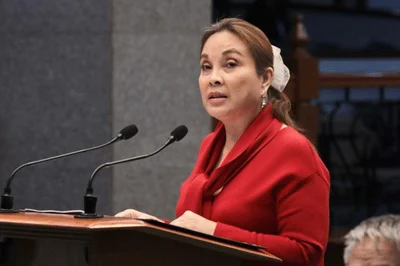
Sen. Loren Legarda —Photo from her office
MANILA, Philippines — Sen. Loren Legarda has filed a tax reform bill to make sure that ordinary workers will have a take-home pay that’s not whittled down by inflation and unfair taxes.
The measure — Senate Bill No. 2255, or the proposed Keeping Incomes Tax-relieved and Augmented (Kita) Act — aims to amend the National Internal Revenue Code of 1997 to raise exemptions, remove unfair taxes on ordinary workers’ earnings, and keep take-home pay in step with the cost of living.
“The bigger portion of what a worker earns should go to him and his family and not eaten up by taxes,” Legarda said in Filipino in a statement issued on Tuesday.
Article continues after this advertisement
“Every overtime pay, bonus, and other additional earnings comes from hard work and sacrifice. This should add to spending for the dinner table, school tuition, medicines — not add to his burden,” she added.
READ: Review of tax laws sought to boost workers’ take-home pay
Response to rising cost of living
The measure is Legarda’s response to the rising cost of living that Filipino households are facing.
Citing Philippine Statistics Authority (PSA) data, Legarda said headline inflation eased to 6.4 percent in June, down from 6.8 percent in May, although the average for the first half of the year still stood at 4.8 percent, well above the government’s 2 to 4 percent target range.
She also noted that the oil price shock triggered by the war in the Middle East, as the World Bank pointed out, remained a direct threat to household budgets.
Article continues after this advertisement
The World Bank, she said, estimates that sustained high global oil prices could shrink nominal household incomes by as much as 3.3 percent, which affects wage earners on fixed monthly salaries the most.
Many employees earning near the minimum wage still have their overtime, holiday pay, and night shift differential taxed under current law. But workers depend on the extra income to cover family shortfalls in spending money.
Article continues after this advertisement
Key provisions
The proposed Kita Act aims to remove that tax, extending tax-free treatment on this additional pay to workers at any salary level. This would mean that, by putting in overtime or holiday work, workers would get real extra income rather than have their pay cut down by tax.
“Extra income is pointless if it gets drained by the rise in prices and unfair taxes. We need to look at the whole picture — from payday to what gets into the pockets of every Filipino family,” Legard said.
The key provisions of the proposed Kita Act include:
- raising the annual income tax exemption threshold to P400,000, so workers earning up to about P33,000 a month would pay no income tax
- increasing the tax-free bonus ceiling to P150,000, so more of the 13th month pay and year-end bonuses stay untouched by tax
- removing tax entirely on service charges for service industry workers, and on overtime, holiday, night-shift differential, and hazard pay, so putting in extra hours actually means taking home extra pay
- exempting the honoraria and allowances of election poll workers from tax, so teachers and volunteers who put in long hours running elections keep the full amount they are paid for that work
Key safeguard
To keep the relief from eroding over time, the bill mandates automatic inflation indexation of income tax brackets every five years. This would prevent what economists call bracket creep, where wage increases push workers into higher tax brackets without any real gain in income.
This automatic adjustment is a key safeguard of the Kita Act.
Without inflation indexation, Legarda pointed out, Congress will have to amend the law repeatedly whenever inflation diminishes the real value of tax exemptions and brackets. This process can take years, considering the slow and uncertain pace of legislation.
“Workers should not always have to wait before the slow process of lawmaking can get to adjust taxes to the rise in prices,” Legarda said.
“The real value of their income should automatically remain. Whenever the prices of goods rise, the tax exemption and income brackets should be able to keep up to safeguard the purchasing power of every Filipino family,” she added.
Legarda emphasized that automatic indexation would make the tax system more responsive and durable, ensuring that inflation would not silently increase the tax burden on workers or gradually take away relief already granted by law.
The bill also restructures fringe benefit taxation, replacing the flat 35 percent rate with progressive brackets, exempting employer-paid insurance premiums, and cutting the tax on life and health insurance premiums from 12 percent to 2 percent value-added tax.
According to Legarda, micro-enterprises will see their VAT-exempt threshold rise from P3 million to P4 million, receive a 50 percent additional deduction on labor expenses, and gain exemption from withholding tax obligations.
Meanwhile, establishments that grant discounts to senior citizens, persons with disabilities, and solo parents will be allowed to claim these as direct tax credits, easing the cost of compliance for small businesses that serve their communities every day.
The measure also carries administrative relief, including extended tax filing deadlines during calamities, simplified registration requirements, and the removal of the tax identification number requirement for cooperative members availing of exemptions.
READ: Increase in taxes pushed to protect youth from vices
Building on past legislation
Legarda’s bill builds on legislation she has already authored or pushed for.
These include the Fuel Tax Relief Act (Republic Act No. 12316), which allows the government to suspend excise taxes on petroleum products during price spikes, and the proposed Differentiated VAT Rates Act, the Murang Bilihin at Serbisyong Medikal Act, and the removal of VAT on electricity charges.
Your subscription could not be saved. Please try again.
Your subscription has been successful.
“Ordinary Filipinos should not suffer the effects of the crisis. It’s the government’s duty to protect the value of workers’ earnings and make sure that they take home a bigger part of their earnings for food, education, health, and other needs of the family,” Legarda said. /atm