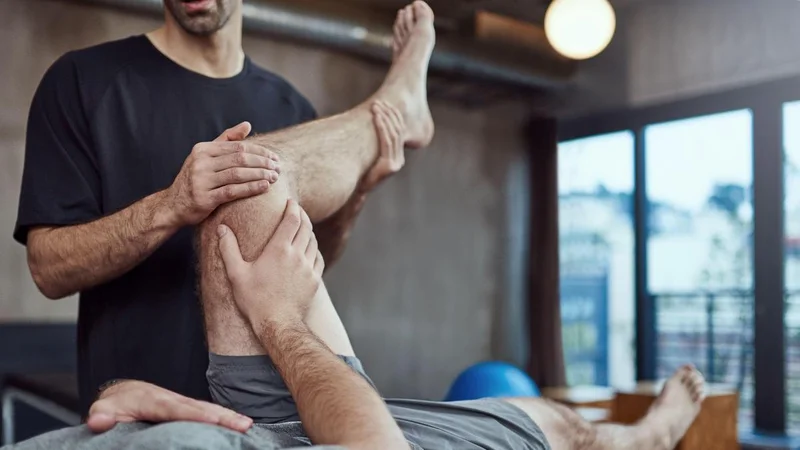
Over the past few years, I have seen a steady stream of patients who have never set foot in a gym, yet present with the kinds of injuries I mostly see in weekend athletes. While the increased awareness about the need to stay physically active and fit is welcome, many young people are now relying on YouTube videos or Instagram reels without fully understanding their body’s limitations.
There is no doubt that home workouts are certainly better than no exercise at all. What began as a necessity during the pandemic has, for many, become a long-term habit and that is a positive development in many ways. However, what concerns me is that many people are training without proper guidance on exercise form, load management, nutrition, or recovery. While the motivation to stay active is commendable, exercising without the right knowledge or supervision can sometimes do more harm than good.
Here are the five most common injuries due to home workouts and how to prevent them.
Shoulder Pain - Rotator Cuff Strain: This is probably the most common shoulder complaint I see in patients who work out at home. It is often caused by overhead presses or push up variations performed with poor shoulder positioning, inadequate shoulder blade control, or the elbows flaring out at an awkward angle.
In most cases, the pain doesn’t begin suddenly. It starts as a dull, nagging ache that many people ignore for weeks. Over time, if left unaddressed, it can progress into a sharp, intense pain that makes simple daily activities difficult,such as lifting the arm, getting dressed, reaching overhead, or even combing hair.
Prevention: Keep your elbows at somewhere between a 30–45 degree angle from your body during pressing movements, and don’t start pushing heavy weights before your shoulder mobility can support the range.
Back Pain: Lower Back Strain: Working out with a rounded spine, especially during exercises such as deadlifts, bent over rows, and even certain sit-up variations is one of the most common causes of back strain. When exercising at home, without a mirror or a trainer to monitor and correct your form, it’s easy to unknowingly round the lower back instead of maintaining a neutral spine.
Prevention: Take a deep breath and brace the core before lifting any weights, keep the spine neutral and if you feel you cannot maintain the position through full movement, then reduce the weight. I usually tell patients to first do a workout out without weights, just to get the correct posture and form initially, before starting with weights.
Knee Injury: High Intensity Interval Training (HIIT) has become one of the most popular workout styles today. However, high impact exercises such as jump squats and burpees are also common causes of knee pain, often leading to conditions including patellar tendinitis and ligament strain. This usually happens because people focus on generating maximum height and power during the jump but pay little attention to how they land.
Prevention: A soft, controlled landing is essential to protect your knees during high impact exercises. Ensure your knees track in line with your toes throughout the movement, and increase your jump volume gradually on a week-to-week basis to allow your body time to adapt.
Wrist and Elbow Pain: Exercises such as push-ups, planks, and mountain climbers performed on hard floors with the wrists held in a fully extended position can place excessive strain on the tendons and ligaments around the wrist and elbow. Over time, this repetitive stress can lead to overuse injuries such as tennis elbow, golfer’s elbow, and even wrist ganglion cysts.
Prevention: Use a soft exercise mat and, if needed, a wrist wrap. Make sure the load is distributed evenly across the entire palm. Maintain proper form and listen to your body’s signals. If you experience pain, burning, or increasing discomfort, slow down, or stop rather than pushing through the pain.
Ankle Sprains: Working out on uneven flooring or in confined spaces without adequate clearance can significantly increase the risk of ankle injuries. Poor landing mechanics, awkward foot placement, and repetitive strain on the ankle ligaments are common causes of sprains during home workouts. Even after recovering from an ankle sprain, many people neglect balance and stability training, which is essential to prevent re-injury. Unlike larger joints, the ankle is supported by relatively small muscles and relies heavily on ligament strength, rather than weight training alone
Prevention: Clear a proper flat space before you start, and if your workout involves any lateral movement or jumping, footwear with real ankle support matters more at home than most people assume.
Why this keeps happening
In almost all the patients I see, the root cause isn’t the exercise itself but not following a proper warm-up routine; skipping the basics and starting with advanced variations; ignoring early warning signs of pain because of not being sure how much discomfort is considered normal during exercise.
Pain is one of the body’s most important ways of communicating with you. A little muscle fatigue is normal but a sharp, localised pain that changes how you move is not something that should be ignored.
Preventing long-term complications
- Warm up for at least 5 minutes before any home routine. This should include dynamic stretches and not static ones.
- Work on form before you increase the intensity - a slow, well-controlled rep is better than fast one ending with an injury
- Progress load by not more than 10% a week - this is the common teaching among long-distance runners and the same applies for strength workouts too
- Don’t train through pain - soreness or discomfort is normal but a sharp pain on one side is a sign of concern - if you experience it, then reach out to a medical expert
- Invest in the right mat/shoes
When you work out at home, you are the trainee and you are the coach - so it is you who should watch and correct your form and understand & listen to your body, because an untreated overuse injury can set your fitness journey back by months.
(Dr. Shriram Krishnamoorthy is senior orthopaedic & sports Injury surgeon, Shri Bone & Joint Clinic, Chennai. skshriram@gmail.com)
Published - August 19, 2026 03:34 pm IST