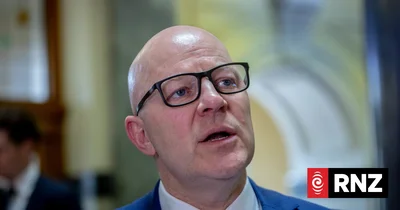
The mental health minister says the government will begin publicly reporting wait times for young people accessing mental health support.
Matt Doocey said he had listened to calls for greater transparency, and the next quarterly report on mental health targets would include youth wait times.
"When I introduced these targets, I was clear that their purpose was to improve transparency and accountability," he said.
"There is nothing that holds me more accountable than publicly reporting how we are tracking for everyone to see."
He said including this metric was "common sense", alongside regional and ethnicity data.
"We know mental health is one of the biggest challenges facing young New Zealanders today, and I am determined to pull every lever available to ensure they can get the support they need."
It comes after a public call from the Mental Health Foundation in June for data to be collected on youth access to services.
"For Māori and young people, their mental health is getting worse, and we are losing ground," it said. "That's why we're disappointed the results have no data on access to services for young people."
Meanwhile, a recent survey had shown only 3.7 percent of young people who needed support said they struggled to access it because they couldn't get an appointment.
Twenty-nine percent said they did not know where to get help, and more than 35 percent said they were too embarrassed to seek it.
"That tells us our work must go beyond increasing access," Doocey said. "We also need to make sure young people know where to go for help and feel confident asking for it."
"I want to especially thank the Mental Health Foundation for their advocacy in ensuring the youth data is publicly released."
As of the most recent quarter the below is how youth are tracking against the targets:
- 77.3 percent of young people accessing specialist mental health services within 3 weeks
- 79.5 percent of young people are accessing primary mental health support within 1 week
- 73.1 percent of young people are being admitted, transferred or discharged from an emergency department within six hours
Chief executive of the Mental Health Foundation Shaun Robinson.
Chris Skelton / Stuff
Shaun Robinson, chief executive of the Mental Health Foundation, said this was good news.
"The system has had a long-term blind spot around responding to young people's health needs, which has been enraging me and many people in the mental health sector, because in fact, young people are experiencing some of the worst mental health issues."
He said close to one in four young people were experiencing significant mental distress.
Producing quarterly stats "makes this issue really visible".
"The system can no longer be blind to it, and there will be a lot more pressure to actually respond."
He said there also needed to be work done to reduce stigma, and introduce services in places where they could be easily accessed, like schools.