More Singapore landlords turn to multi-tenant rentals for higher returns
As Singapore's private rental market stabilises after years of rising rents, some landlords are moving away from leasing entire homes to a single household in favour of multi-tenant rentals.
SINGAPORE: More landlords in Singapore are converting their properties into multi-tenant rentals as they seek to boost rental income. Some co-living operators say they have seen up to a fourfold increase in such enquiries from property owners over the past year.
The shift comes as the private rental market stabilises after years of rising rents, prompting some landlords to rethink the traditional single-tenant model.
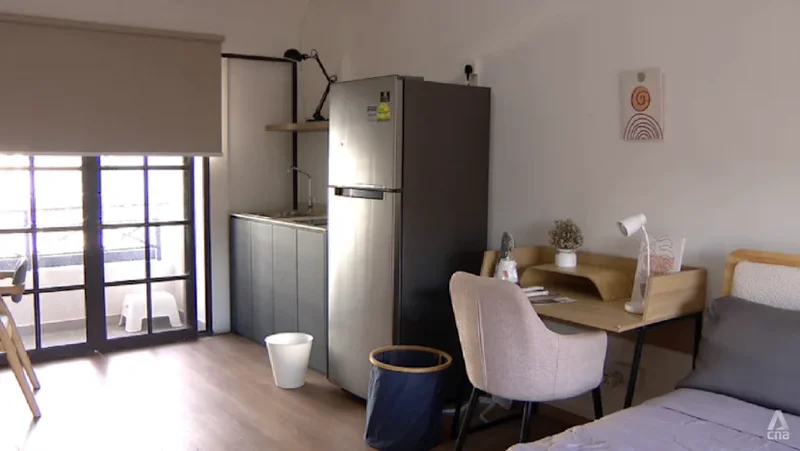
Ms Josephine Liu is among property owners making the shift. She spent S$200,000 (US$155,000) converting her 30-year-old landed home in Pasir Panjang into eight rental units. Most of the units look similar to a studio apartment, with its own kitchenette, bathroom and washing machine.
Ms Liu said she decided to switch to the multi-tenant model after finding that renting to a single family did not generate enough income to cover her mortgage.
“I had a condo unit before, (from) 2020 to 2023, renting out to a family. I would be at least 20 to 30 per cent short in terms of paying my mortgage,” she said.
As she has a full-time job, Ms Liu engaged a co-living operator to manage the property. Before proceeding with the renovation, she carefully worked through the finances to ensure the higher rental income could justify the investment and management costs.
“I (went) through the numbers repeatedly, and after paying off the management company, the remaining amount is still way better than if you rent it to (one) family,” she said.
Ms Liu said the model has paid off, with her rental revenue increasing by about 50 per cent.
Property investor Arthur Lim also opted for the multi-tenant model, after identifying a city-fringe condominium with a layout allowing him to carve out two extra rooms with only minor renovation works.
“I saw potential to create additional rooms in the large living area that is enough for me to place the basics – a bed, a study table, a wardrobe,” said Mr Lim.
His six-room rental unit is now almost fully occupied throughout the year.
ARE HIGHER RETURNS GUARANTEED?
Property analysts say that strong demand for affordable, flexible and furnished room rentals, coupled with the growing presence of established co-living operators, has encouraged more landlords to consider the model.
“We've seen private rents increase (by) around 50 per cent over the last five years,” said Mr Josh Rose-Nokes, head of living research for Asia Pacific at Cushman & Wakefield.
“Affordability is really critical and renting a room is a much more affordable entry point for tenants into the private rented sector.”
Mr Rose-Nokes said the co-living model may bring in more rental income, but that does not necessarily mean landlords will earn more money because it also comes with higher operational and management costs.
Bespoke Habitat, which manages more than 600 co-living units in Singapore, said enquiries from homeowners looking to maximise rental income from their houses have grown significantly over the past three years.
Its founder and CEO Ernee Ong said the company previously managed fewer than five properties on behalf of landlords but now oversees about 50.
NOT EVERY PROPERTY MAKES THE CUT
But not every property is suitable for the multi-tenant rental model, said Mr Ong.
“A lot of people feel that it's simple. You just get the units, rent out to individual tenants, and (you) make money on it. It doesn't work that way,” he said.
He added that operators assess factors such as location, nearby schools and business parks, and tenant demand before taking on a property.
Condominium by-laws are another consideration, as some management corporation strata titles (MCSTs) do not permit co-living arrangements.
“We will usually go down and ask what the application’s requirements are. Each MCST has its own workflow. If the MCST says no, we respect that,” he said.
The tenant profile has also begun to evolve, with more young Singaporeans enquiring on co-living concepts as they seek greater independence, noted Mr Ong.
“People who (have just) started working and are financially independent want to test it out (to see) how it looks like without staying near their parents.”