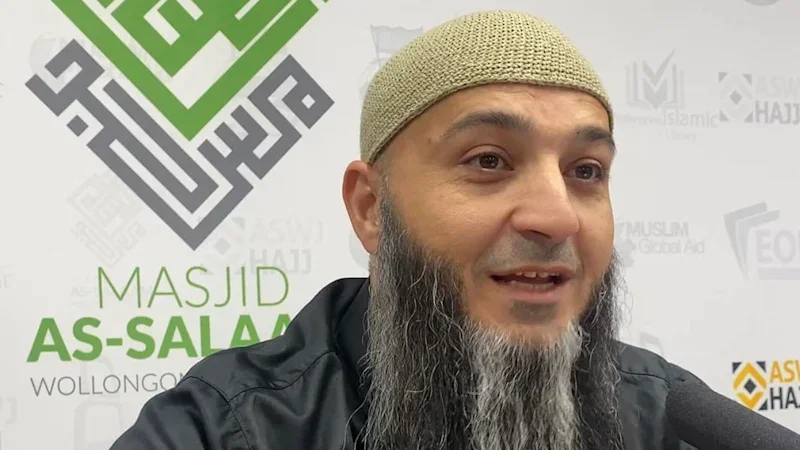
A regional NSW Islamic school principal who once shared inflammatory anti-Zionist social media posts was denied procedural fairness when he was stood down, the NSW Supreme Court has found, paving the way for his potential return to the job.
The principal of New Madinah College in Young, Sheikh Abdulghani Albaf, launched the action after he voluntarily stood down while earlier social media posts, including one where he said “Zionists should burn in the pits of hellfire”, were subject to renewed investigation after the Bondi Beach massacre that claimed 15 lives.
Acting Justice Monika Schmidt ruled that Albaf’s case succeeded on two grounds: that he had been denied procedural fairness, and that the NESA committee’s conclusion that he was not a fit and proper person to be a principal was, on balance, “legally unreasonable”.
“The evidence does establish that the sheikh was denied the procedural fairness he was entitled to receive, before the committee made and published its determination that he was not a fit and proper person,” Schmidt found.
Albaf was first investigated by the NSW Educational Standards Authority (NESA) in January 2025 over posts he made before becoming principal at the school.
In these posts, he was highly critical of Israel and Zionism, calling Zionists “absolutely worse than Nazis. The Zionist terrorist regime is more devilish, evil and atrocious than any other terrorist in history.”
In October 2025, he shared a post stating: “May Allah destroy the Zionist terrorist regime”.
He was cleared of any wrongdoing and took down the posts, acknowledging that while he had a right to political opinion, his language was inappropriate for a school principal.
He was investigated by the authority again in December 2025, after media inquiries following the Bondi terror attack. NESA contacted then-acting education minister, Courtney Houssos, who advised the regulator to keep her informed on the process.
NESA told the school it was investigating if the sheikh was still a fit and proper person and demanded the school respond by January 19, threatening to cancel its registration.
During the case, Albaf argued the committee bowed to the education minister’s wishes and fired him despite having no fair grounds to terminate his employment.
The court heard evidence the committee was inappropriately influenced by political pressure from Houssos. A spokesperson for Houssos declined to comment because the matter was still before the court.
Evidence in court showed that on January 16, NESA chief executive Paul Martin called New Madinah board chairman Mohammed Barghachoun and told him “there was a lot of political pressure” and that Albaf should stand down and that he could be reinstated when the matter “went to sleep”.
According to the evidence, Martin was being “pretty adamant” that the college’s registration would be cancelled if Albaf did not do so.
Albaf voluntarily stood down from his role, after which the authority gave the school an extension to provide its response and the school formally issued the sheikh a show-cause notice asking him to explain himself.
In his response, the sheikh defended his right to political speech but acknowledged his language was inappropriate.
The school decided the sheikh was a “fit and proper person” and that it had “no reason to terminate his employment”. However, it had “concerns” which resulted in him being placed on six months’ probation.
In February, NESA’s senior investigator produced a report which was not shared with the sheikh or the school. In it, she concluded she did not agree with the school’s findings. The report was shared with the committee, who voted to overrule the school, ultimately finding him to not be a fit or proper person.
Minutes from this meeting reveal the committee found the sheikh to “lack remorse”, and that his public commentary was of “a concerning and hateful tone”.
However, the court found the committee gave “no consideration to the actions he had pursued when the Authority’s concerns came to his attention, or what he had accepted after the College made its decision”.
The committee also raised concerns about the school’s registration, noting “the failure of the school’s investigation report to demonstrate an adequate understanding of the serious nature and ongoing pattern of the behaviour” and “its lack of confidence in the school’s capacity to monitor and address behaviour, in accordance with previous assurances made by the school”.
Albaf’s lawyer, Stephen Blanks, said his client welcomed the verdict and hoped to return to his job.
“The court has held that NESA failed to provide procedural fairness to Sheikh Albaf and that it acted in a legally unreasonable way. The court found that the New Madinah College and Sheikh Albaf were denied the opportunity to respond to adverse findings by the school inspector.
“Sheikh Albaf hopes that he can now return to his position as principal of the New Madinah College and continue his positive work with the school.”
On February 3, NSW Premier Chris Minns said teachers and school staff who “poison young minds” with hate speech in the classroom or outside school could be sacked by the state schools’ regulator.
A NESA spokesperson said the organisation acknowledged the judgment. The parties are required to confer on orders within 14 days.